She looks like the wizened old crone in that painting Jilly did for Geordie when he got into this kick of learning fiddle tunes with the word ‘hag’ in the title: ‘the Hag in the Kiln,’ ‘Old Hag You Have Killed Me,’ ‘The Hag With the Money,’ and god knows how many more. Just like in the painting, she’s wizened and small and bent over and … dry. Like kindling, like the pages of an old book. Like she’s almost all used up. Hair thin, body thinner. but then you look into her eyes and they’re so alive it makes you feel a little dizzy. — Charles de Lint‘s ‘The Moon is Drowning While I Sleep’ story, which is collected in Dreams Underfoot

Impressive sunset, isn’t it? When we built the new Library in the late nineteenth century, we moved the Pub here to top floor of the cellar. And we made sure the Greensward facing side had as much glass as possible. So that means for you that every sunset, barring inclement weather, is visible here and with all of them being spectacular indeed as is tonight’s sunset.
The chair you’re sitting in facing that sunset is commonly known as The Falstaff Chair as Estate lore has him telling tales in it one winter’s night. Yes I know he’s fictional but I’ll bet you’ve got characters and stories you believe strongly are real. So do be careful what you think of while here as nightmares as well as dreams can come true and often do…
Geographies, both those in the mundane world and the imaginary ones as well, have something within them that fascinates readers. Cat starts us off with a look at Stefan Ekman’s Here Be Dragons: Exploring Fantasy Maps and Settings: ‘Now we have a really detailed look at the role of fantasy maps and the settings they help create in fantasy literature. (Though weirdly enough, Here Be Dragons has only three such maps in it suggesting the author either had trouble getting permission to use more such maps or the use of them was deemed too costly.) It is not the usual collection of edited articles but appears an actual cohesive look at this fascinating subject.’
The Whovian Universe is vast and has grown increasingly complex over the fifty years that it’s been evolving. Torchwood was one of its spinoffs, the secret agency that fought alien invasions from its Cardiff base. So he reviewed the James Goss authored Torchwood India audio adventure and had this to say about it: ‘Golden Age is the story of Torchwood India and what happened to it. It is my belief that the best of all the Torchwood were the audio dramas made by BBC during the run of the series. Please note that it was BBC and not Big Finish that produced these despite the fact that latter produces most of the Doctor Who and spinoff dramas. This is so because the new Doctor Who audio dramas was kept in-house and these productions were kept there as well though Big Finish is now producing the new Doctor Who adventures as well.
But first, for something new — and more than a little out of the ordinary: Cat R. takes a look at, not a book but a genre, in her survey titled An Armload of Fur and Leaves: ‘In the last year or so, I found a genre that hadn’t previously been on my radar, but which I really enjoy: furry fiction. Kyell Gold had put up his novel Black Angel on the SFWA member forums, where members post their fiction so other members have access to it when reading for awards, and I enjoyed it tremendously. The novel, which is part of a trilogy about three friends, each haunted in their own way, showed me the emotional depth furry fiction is capable of and got me hooked. Accordingly, when I started reviewing for Green Man Review, I put out a Twitter call and have been working my way through the offerings from several presses.’
That Charles looks at Charles Vess’ Drawing Down the Moon: The Art of Charles Vess. Now as his detailed review’s as much about the friendship that grew between them, I’ll let you read this charming tale of friendship and art without further ado. Oh and the book itself is simply stunning — truly an art gallery in a book form!
Iain was, perhaps not surprisingly, favorably impressed by a critical study of Patricia McKillip, Audrey Isabel Taylor‘s Patricia A. McKillip and the Art of Fantasy World-Building: ‘We’ve reviewed damn near every book that Patricia A. Mckillip has published over the many decades she’s been writing. Indeed the editing team is updating the special edition we did on her so that it can be republished this Autumn, as many of us here think of her as befitting the Autumn season. And so it is that I’m reviewing what I think is the first academic work devoted to her.’
Kestrell has a look at a novel that mixes magic and science and a bloody big squid as well: ‘Don’t let the tentacles fool you — yes, China Miéville’s Kraken takes as its starting point a tentacular god of the deep reminiscent of the stories of H. P. Lovecraft, but then Miéville adds to it the baroque psychogeographies of Moore and Moorcock, the whimsy of Neil Gaiman’s Neverwhere and American Gods, the surreal imagery of a Tim Powers novel, and a dizzying barrage of geeky pop culture references, not to mention what is probably the best use of a James T. Kirk action figure ever.’
Marian looks at a trilogy by Jane Yolen that deserves to be a classic. First up is ‘The Books of Great Alta which is the compilation of Yolen’s two books in the series, Sister Light, Sister Dark and White Jenna. It is the story of the women of Dale, who worship Great Alta, the mother goddess and what happens to them for better or worse.’ If you’ve read these already, then do read Marian’s review of the final volume, The One-Armed Queen, but otherwise do not as it has major spoilers about what happens in the first two novels.
One of my fave Autumn reads gets a look-see by Mia, a Charles de Lint novel to be precise: ‘Seven Wild Sisters advertises itself as a modern fairy tale. Including the seven sisters, it certainly has all the trappings: an old woman who may be a witch, an enchanted forest, a stolen princess. But Sisters is not just borrowing the clothes of fairy tale. It sings with the true voice of fairy tale: capricious, wild, and not entirely safe, but rich and enchanting.’
An (un)novel set in a future Tel Aviv caught the eye of Richard: ‘Lavie Tidhar’s Central Station is barely a novel, and there’s nothing wrong with that. Instead, it’s a loosely connected series of stories featuring a rotating cast of characters, and the gently ramshackle DIY nature of the narrative structure matches up perfectly with the DIY, maker-centric vision of the world that Central Station presents.’
Robert has a review of Winter Rose: ‘The story is told in McKillip’s characteristically elliptical style, kicked up an order of magnitude. Sometimes, in fact, it is almost too poetic, the narrative turning crystalline then shattering under the weight of visions, images, things left unsaid as Rois and Corbet are drawn into another world, or come and go, perhaps, at will or maybe at the behest of a mysterious woman of immense power who seems to have no fixed identity but who is, at the same time, all that is coldest and most pitiless of winter.’
He also looks at Solstice Wood, a sequel of sorts to Winter Rose: ‘McKillip has always been a writer whose books can themselves be called ‘magical,’ and it’s even more interesting to realize that she seldom uses magic as a thing of incantations and dire workings, or as anything special in itself. It just is, a context rather than an event, and perhaps that’s the way it should be.’
He next offers a look at a SF collection that sounds rather cool: ‘A while back, Baen Books reissued the stories of James H. Schmitz, concentrating on the cycle centered around the Hub and the adventures of Trigger Argee and Telzy Amberdon, super-heroines who are somewhere between Barbie and Wonder Woman. We’ve also been rewarded with Schmitz’ stories of the Vegan Confederacy in Agent of Vega and Other Stories. This group, including works first published between 1943 and 1968, is delightful.’
He finishes off with a book that is radically different,David Wojnarowicz’ Close to the Knives : ‘The book is subtitled “A Memoir of Disintegration.” So powerful and so lucid is the author’s voice that we become c.onvinced that it is not Wojnarowicz who is disintegrating, but our own safe, respectable world.’ He warns us that this is not an easy book.
Warner leads off with an English mystery: ‘The entertaining setting and characters, along with twisting plot, makes The Widow of Bath an exceptionally interesting choice. The volume hooks the reader quickly and then takes just enough time to introduce major players before the first body hits the ground, showing masterful pacing. While not a perfect work, it is a great mystery novel and a solid introduction to the work of Margot Bennett.’
A cold climate mystery is next up for him: ‘Arnaldur Indridason’s The Darkness Knows is a fascinating example of the Icelandic detective story. Starring a retired police detective named Konrad, an old man with unsolved cases under his belt and a fractured history, this volume by it’s very nature digs into the past.’
Sherlock Holmes down the years has developed some interesting riffs and he has one for us one for us here as his final review this time: ‘Nancy Springer’s Enola Holmes and the Black Barouche is the latest in a long running series, yet in the interesting position of being published after a long gap. Within the pages Enola, now on good terms with her brothers, finds herself and Sherlock wrapped up in a case involving a missing twin, with the titular clue coming into play sometime later.’
Hot chocolate is our focus this time for our culinary reviews as the weather has turned decidedly colder, so let’s lead off with Richard who has a recommendation on where you can find great hot chocolate in a place called Matthews: ‘Now, North Carolina’s not what you’d call a hot chocolate hotbed, at least east of the mountains, on account of the fact that it’s generally pretty warm. Which is why I never expected the hot chocolate in this shop which my wife practically dragged me into (she’d done some scouting, having previously infiltrated Hillsborough with friends on a yarn-shopping expedition) would blow my socks off.’
Next up April looks at a trio of ready to use cocoa packets: ‘For hot chocolate to be good — really good — it needs to be rich, creamy and full of flavor. It always seems doubtful that any one of these three qualities, let alone all three, can come out of a little paper packet. So how do the Gourmet du Village varieties hold up? Very well, as it turns out. When prepared with skim milk, all three mixes result in a marvelous mouth feel, smooth and silky and an absolute pleasure to sip contentedly (would whole milk or cream intensify the texture, one wonders?).’
Denise takes a look at Trader Joe’s Organic Hot Cocoa Mix. She found it a lovely way to start the day, and perhaps even enjoy the evening; “…if you’ve a mind, a splash of Kahlua and/or Bailey’s wouldn’t be amiss.” Now go see what she thinks cocoa lovers should give this one a try.
Great hot chocolate needs a great topping and Denise has one in Smashmallow’s Cinnamon Churro marshmallows: ‘ ‘Tis the season for warm festive beverages! And for all the things to top ’em. Nutmeg for nog, a cinnamon stick for mulled goodness, and for folk who partake of animal products (ex: gelatin), marshmallows for coffee and chocolate-centric libations. I have a love-hate relationship with marshmallows. I love how they bob on the top of my drink, but hate that most of the time I’m left with a soggy bit of ‘mallow bloof (it’s a word because I just used it) as I empty my mug. However, that’s about to change, thanks to Smashmallow.’
Russell Davies has just been rehired as the Showrunner for Doctor Who so I’m including Cat’s review of a Tenth Doctor story done during his previous tenure, ‘The Unicorn & The Wasp’: ‘One of my favourite episodes of the newer episodes of this series was a country house mystery featuring a number of murders and, to add an aspect of metanarrative to the story, writer Agatha Christie at the beginning of her career. It would riff off her disappearance for ten days which occurred just after she found her husband in bed with another woman. Her disappearance is a mystery that has never been satisfactorily answered to this day.’
David looked at Pascal Blanchet’s White Rapids, a graphic telling of the story of a Canadian town that was created to build and run a hydroelectric power plant in Quebec, flourished for a few years and then died. ‘Planchet mixes the tragedy of the political reality, with some well imagined fictions describing the lives lived in Rapides Blanc, and this makes White Rapids a stunning, moving little book.’
Mia didn’t expect Holly Black and Ted Naifeh’s The Good Neighbors, Book One: Kin, to be a graphic novel, and also didn’t expect to like it as much as she did: ‘Slightly darker than her Spiderwick series yet not as dark as the Tithe novels, Kin is very much a Holly Black story – her view of Faerie is always complicated, generally creepy, and never likely to mesh with, say, Cicely Mary Barker’s Flower Fairy art. Holly’s fey are not pink and they do not sparkle.’
American double bass player Devin Hoff recruited singers and players from the indie, jazz, and world music ranks for his new album Voices From the Empty Moor (Songs of Anne Briggs). Gary says, ‘The songs of Anne Briggs are perfect for the somber colors and textures of the multilayered bass arrangements, and Hoff has found the appropriate voices and players to bring these songs and tunes fully to life. If you’re looking for a new disc of atmospheric autumnal music, this is it.’
Gary confesses to a mad bout of toe tapping while listening to a band that’s been around for a half-century. ‘Not many bands make it to 50 years (we won’t get into the Rolling Stones, those great outliers). That’s what the Western swing band Asleep at the Wheel has achieved as of 2021, so of course they made a record to celebrate. And what a record Half A Hundred Years is!
Gary was moved by Iranian-American vocalist Katayoun Goudarzi and Indian composer and sitarist Shujaat Husain Khan’s new album This Pale. ‘This time out they elected to perform nothing but love poems by Jalal ad-Din Muhammad Rumi, a 13th-century Persian mystic bard and Sufi master who has been the best selling poet in the U.S. for 20 years running. They’re joined by Iranian Shaho Andalibi on the ancient end-blown flute known as the ney, and Shariq Mustafa, a fifth-generation Indian tabla player. The four musicins – Goudarzi, Khan, Mustafa and Andalibi – expertly translate Rumi’s shifting flow of emotions through their vocals and instruments.’
Gary also reviews jazz pianist Helen Sung’s Quartet+, on which she fronts her own quartet and is joined by the Harlem Quartet, a classical four-piece string ensemble, on which they honor a number of pioneering women in jazz. ‘Quartet+ is just a quality project all around. You’ll seldom hear jazz and classical idioms integrated so seamlessly and organically.’
As the weather’s taken a turn toward the autumnal, we got in the mood for some music from the northern climes. Digging through the archives we found some tasty reviews of Nordic music:
Barbara takes us on a musical tour of the Nordic lands with an omnibus review of Alicia Björnsdotter Abrams’ Live at Stallet, Marianne Maans’ Marianne Maans, Majorstuen’s Jorun Jogga, Jan Beitohaugen Granli’s Lite Nemmar, and Kristine Heebøll’s Trio Mio. ‘The five CDs reviewed here are a miniscule sampling of violin/fiddle music from Nordic countries. With this group, the versatility of the violin is evident as we move from solo settings to a sextet and everything in between. Through all of it, the violin is the binding force. The geographical areas represented include Norway, Sweden, Finland and Denmark.’
Richard delighted in the Nordic-adjacent Mither o’the Sea by Jennifer and Hazel Wrigley, who he says belong in the group of young musicians reclaiming and expanding folk music in northern Europe. ‘The Wrigley twins, Jennifer and Hazel, are also members of this new generation born in the final quarter of the twentieth century. They come from the Orkney Islands that lie off the northeast coast of Scotland, on the way to Scandinavia. The geography and history alone are enough to guarantee a fusion of Celtic and Nordic musical traditions, although the latter influence is possibly a little more Scottish in flavour in Orkney than in the Shetland Islands further to the northeast, which are very Nordic in character.’
Scott says, ‘The contemporary folk music emanating from Scandinavia in general, and Finland in particular, has branched out from home-grown traditions to incorporate a great variety of musical styles across the globe, from Western pop and rock to Balkan and Middle Eastern folk music. The Finnish band Vilddas goes even further than most of their compatriot folk performers in this regard.’ To find out what he means by that, read his review of Vilddas’ Háliidan.
Scott found mixed results from a disc by the Finnish avant garde group Alamaailman Vasarat, but recommends it anyway: ‘The Helsinki-based sextet loves to experiment with unusual sonic combinations, most specifically when they plug their cellos into amplifiers and crank up the distortion. If you’re the kind of person who likes the idea of cellos crunching out killer riffs while the drummer attacks his kit with reckless abandon, then you will find plenty to like in Alamaailman Vasarat’s second album, Käärmelautakunta.
Our What Not this time Reynard’s review of two characters that inhabit his office space: ‘Well back in 2003, Stronghold Group released two characters based on the sort of people that inhabited the CBGB club, one being Maxx, a singer, and the the other being, Bad Apple, who is less clearly defined though he too could be a musician, a fan, and even perhaps a CGBG bouncer. One site claimed these are ‘extreme look-alikes of Sid Vicious and Johnny Rotten’ but the manufacturer doesn’t say who they based on.’
Okay, let’s see if there’s any Old Hag tunes on the Infinite Jukebox, our media server, as they’re what I consider proper autumnal tunes. I’ve got one by the Bothy Band whose Old Hag You Have Killed Me is one of best Irish trad albums ever done, and we’ve audio of them performing ‘Old Hag You Have Killed Me’ which we’ll share with you as it’s very splendid. No idea when it was done, though nineteen seventy six is the most common guess, or where it was recorded for that matter. But here it is for your listening pleasure.


 Kinrowan Hall’s a vast sprawling edifice going back far longer than one would suspect and it’s been added unto more often than perhaps was for the better. What that means is that we who are staff here each have private space that’s unique.
What’s New for the 17th of October: A Plethora of Neal Stephenson novels, Several Things of a Jethro Tull Nature, Elizabeth Bear on all things culinary, an ex-Beatle and an ex-Monkee and a bunch of Wicked Tinkers
Crop handle carved in bone,
sat high upon a throne of finest English leather.
The queen of all the pack;
this joker raised his hat and talked about the weather,
All should be warned about this high born Hunting Girl;
She took this simple man’s downfall in hand,
I raised the flag that she unfurled.
Jethro Tull’s ‘The Hunting Girl’
What am I eating this fine afternoon? That’d be blueberry jam tarts with a sprinkle of chocolate powder on them. Most delicious. I’m very fond of autumn weather coming upon us as it means lots of delicious warm food coming out of our Kitchen like these tarts. I’ve paired these tarts with an oversized mug of cocoa.
Here in this quite remote Scottish Estate where the nearest town’s a good thirty-five miles away, the group of thirty or so souls here year round forms a community that’s at its most cohesive when the weather turns decidedly cold and oftimes unfavourable to travel. This ‘hunkering down’ is a gradual process that starts in early Autumn and doesn’t really end ’til after lamb season in April as it’s hard to be a good host when you’re covered with blood, shit and other stuff that’s unpleasant in general.
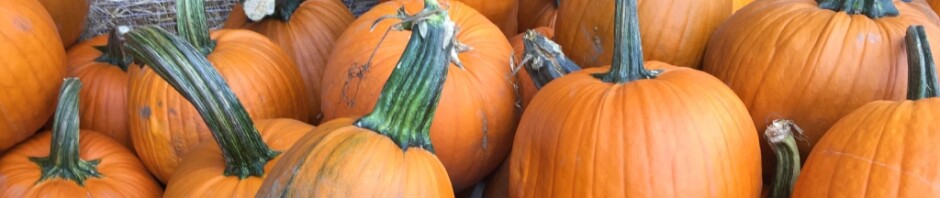
Pumpkins are versatile food here, so you can help us harvest them now that our first light frost has passed; likewise apples and potatoes need harvesting and proper processing for the uses they’ll be put to. Gus, our Head Gardener, uses for staff anyone able to be properly picky at what they’ll be doing.
Christopher had some thoughts about a mid-2000s revival of an early Stephenson novel, Snow Crash. ‘What Stephenson does in Snow Crash is combine the better attributes of an action adventure SF page turner (cyber punk division) with some fairly dense and intriguing explorations into religion, language and socio-political history and theory. Depending on a given reader’s taste, some of this may seem too tangential, but various readers will no doubt find particular threads “tangential” that other readers find central to their enjoyment of the book.
Gary spent some time catching up with Stephenson’s 2015 hard-sf tome Seveneves. ‘Neal Stephenson starts his big books in one of two ways. Either slowly with a lot of character introductions and scene setting (Reamde) or with a bang, hurling you headlong into the action such that the first time you come up for air you’re on about page 100. Seveneves is that second kind.
Speaking of Reamde, Gary was quite pleased with that book, as he says in his review. ‘Stephenson is a straightforward writer with a good ear for dialogue and a good hand at action scenes. He engineers the story so plausibly that I willingly suspended my disbelief at the way all the surviving major characters came together for the climax. He doesn’t lard his prose with adjectives or similes, and he injects a good deal of wit into the proceedings.’
Kestrel had high praise for one of Stephenson’s most enigmatic (and also most popular) books: ‘How to describe Anathem? This is how I took to explaining it to my friends: if Gödel, Escher, Bach and The Name of the Rose had gotten together to produce literary offspring, the result could well have been Anathem, complete with wordplay and quirky dialogue.
Wes offers an enticing description of Stephenson’s feats in the writing of Crytonomicon: ‘He explores basic fundamentals of information theory through analogy to bicycle chains; tears through a brilliant and amusing synopsis of how Athena is the Greek goddess of hacking; and in between serves up a script of PERL that produces a nice little encryption program, which can also be duplicated with a pack of playing cards. Then end result is that this book reads like something Thomas Pynchon and Stephen J. Wolfram might have co-authored, were they to have vacationed together on Midway Island.’
Iain has a rather special treat for us as he interviews one of favorite authors: ‘We here at Green Man remember the winter afternoon that Elizabeth carefully tended a pot of turkey stock that many hours later would become one of the most tasty turkey veggie soups ever encountered by anyone ‘ere. Later that week, I got to interview her about all things culinarily that interested here ranging from her ideas picnic basket and what make a great winter hearty meal to the perfect brownie.’
From the archives, a couple of graphic novels in the world of Hellblazer: John Constantine.
April was pleased with the book titled The Roots of Coincidence, which brings together several issues of the Hellblazer comic, with two stories, both written by Andy Diggle. ‘In “The Mortification of the Flesh,” Constantine teams up with an old friend to manipulate a very wayward priest into giving him a very old and powerful book in the Church’s possession, a lost Gospel. A very interesting lost Gospel at that! … “The Roots of Coincidence” finds Constantine getting to the heart of all the coincidences in his life.’
And Cat reviews Hellblazer: Lady Constantine, written by Andy Diggle with art by Goran Sudzuka. He found it to be ‘a delightful romp,’ and says that … ‘Lady Johanna Constantine herself is witty, sexy, and a truly kickass character? Though I will stress strongly that she shares the Constantine family trait of never, ever being someone you should trust not to stab you in the back if need be.’
What else was Gary listening to in 1971 besides All Things Must Pass? A lot of Michael Nesmith, it turns out, and here he tells us about the three albums loosed upon the world by Nesmith and the First National Band, Magnetic South, Loose Salute, and Nevada Fighter. ‘I suspect I was not alone in 1970 and ’71 in being a fan of both classic country and modern rock, who discovered the joys of country rock through Nesmith & the First National Band’s records. These three albums were a brief flash in the pan of popular music of that era, but they’ve had a long legacy and remain in print, followed by faithful fans worldwide.’
Gary reviews Norman Blake’s Day By Day, the latest album from a living legend in American roots music. ‘Day By Day was recorded in a single afternoon at an Alabama studio just a half-hour from his home. It was recorded with loving attention to detail, which shows in the way Blake’s warmly worn voice comes through, the long fade-outs on final notes, and the lovely tones of his instruments.’
I went down a bit of a rabbit hole in the Music Archives (as usual) this time. It started with Michael’s impassioned omnibus review of an independent Celtic artist, which led to a whole series of releases and live appearances by a madcap Celtic pipe-and-drum outfit, and it all somehow led to Big Earl (which frequently happens, trust me) and a blues compilation:
Big Earl was almost totally thrilled by a reissue of music by “Mississippi” John Hurt. ‘Rediscovered (as if he was ever lost!) is a collection of Hurt’s 1960s output for Vanguard. Twenty-four tracks, one voice and one guitar. We should be grateful that no one opted to “fill out” his sound during recording with other instruments. Hurt’s music makes any listener smile; it’s so gentle, so comfortable, even when he deals with the darkest subjects. Part live, mainly studio, with some spoken parts, it’s a great overview of the man’s music and legacy.’
Michael’s review of three discs by Celtic fiddler and singer Heather Alexander awakened memories of his discovery of Celtic music via … I’ll let him tell you: ‘Through sheer random chance, I stumbled across Mercedes Lackey’s first book Arrows of the Queen. That in turn led me to discover the musical paradise that is Firebird Arts and Music, who at the time distributed a lot of Mercedes-related books, music, art, and god-knows-what-else. I found myself with this driving thirst for all things Celtic, especially music.’
Peter fell under the spell of the American band Wicked Tinkers when he listened to their third CD, aptly titled Loud. ‘On this album you have what the Wicked Tinkers call Gaelic bagpipe music, not the refined playing of a normal pipe band, but their own version of what the ancient tribal bands might have been like. It’s the sort of sound you might have heard at Scottish weddings, ceilidhs, or around the campfires of a highland raiding party.’
Cat reviewed two Wicked Tinkers albums, Wicked Tinkers and Hammered, and was quite enthusiastic. ‘Wicked Tinkers is one of the best albums I’ve ever heard — and after hearing literally thousands of Celtic CDs in the past twenty years, I’m more than a bit jaded. From the opening set of jigs titled “The Bird Set” (“The Hen’s March/The Seagull/The Geese in the Bog”) to the “Wallop The Cat” jig (“We do not advocate cruelty to cats, hares or any other creatures, for that matter. In fact, we hope this tune is about a cat named Wallop …”) with its gratuitous silly sound effects, to the closing jig/hornpipe combo of “The Man From Skye/The Judge’s Dilemma,” this is a damn near perfect album.
Mia had the time of her life at the Portland Scottish Highland Games, where she took in a few sets by the Wicked Tinkers. ‘The Wicked Tinkers are crazy in the way that only very, very good performers can be, with a nuttiness that is enticing rather than intimidating. Consummate performers, they work together like the proverbial well-oiled machine, albeit one oiled with mutton grease and lubricated with plenty of ale.’
Mia also reviewed a live CD from the same band, Wicked Tinkers’ Banger for Breakfast. ‘The recording is really well done for what must have been almost entirely outdoor, open air shows. Wayne Belger’s didgeridoo on “Those Marching O’Neill’s” from Hammered rumbles through the speakers like doom … you’ll want to turn up your bass when you listen to the Tinkers as their music is an incredibly visceral experience.’
Denise really enjoyed her new puppet from Folkmanis, the Chipmunk in Watermelon. ‘This company makes the most adorable puppets, and this one’s no different. There’s wonderful attention to detail, and the colors on the melon have a lovely blended watercolors look. And don’t get me started on the “vine”; it’s twisty and sproing-y and had me stretching it out just so I could watch it snap right back into place. I’m one for the simpler pleasures in life.’ Is it perfect? Not quite, read her review for more on that.
I personally have a keen liking for the Tull of the Sixties and early Seventies, which is why you’re getting a cut off their 1976 album, Songs from The Wood. The cut I’ve selected is ‘The Hunting Girl’, a fine pagan story about boy meets girl riding horse and … Oh just go give it a listen! It’s a soundboard recording done forty three years ago at the Los Angeles Sports Arena.