To absent friends, lost loves, old gods, and the season of mists; and may each and every one of us always give the devil his due. –Hob Gadling’s toast in Neil Gaiman’s The Sandman: Season of Mists

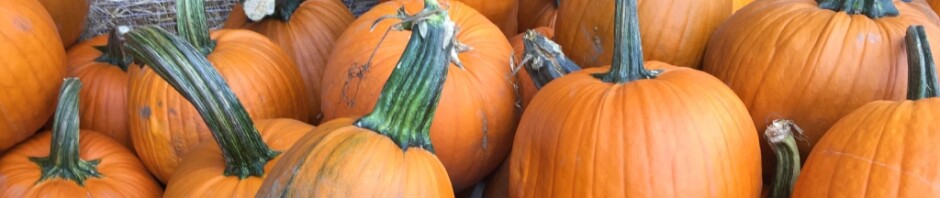
It’s quite cold and blustery here on this Scottish Estate so we’re all thankful that the Fey provide the lighting for the exterior pumpkins as candles of a conventional nature wouldn’t stay lit at all. But the lighting of a supernatural nature is perfect. We here on the Estate will be celebrating by attending a concert by the Neverending Session in which they perform Halloween music, both classical such as ‘Danse Macabre’ and more contemporary tunes such as ’The Great Pumpkin’ and one by the Red Clay Ramblers, ‘The Pumpkin Dance’.
Roast pumpkin soup with smoked ham, sourdough rolls shaped like skulls courtesy of an idea by a Several Annie decades ago, Indian-spiced veggie hand pies and nutmeg pumpkin ice cream will be our eventide meal tonight which will be perfect for working off when we have an evening contradance by Chasing Fireflies In the Great Hall which tonight is Ingrid, my wife who’s our Steward, on hand drums, Bela, our Hungarian violinist, Finch, one of our barkeeps, on Border smallpipes and Iain, our Librarian on violin.
Now let’s turn to our more or less Halloween-centric edition. To start things off, how about a lovely reading of ‘Halloween‘ by Robert Burns? It’s a poem perfect for the season, and read by David Hart with just a wee touch o’ the brogue. As for the rest of the haunts in this issue? Oh I think you’ll find much to check out later. I think there’s even going to be some food and drink of a Halloween nature courtesy of, well, let’s keep that a secret …
So how about a Day of The Dead set story that involves a small town mechanic called Grace who discovers the man she loves is dead? And that she can cross over when the veils are thin to see him? Such is the premise of Charles de Lint’s The Mystery of Grace which Cat notes that ‘It is a perfect introduction to de Lint, as it doesn’t requite you to have read anything else by him at all, but gives you a good feel for what he is like as a writer, as it has well-crafted characters, believable settings, and a story that will hold your interest. And it is a novel that you will read again to get some of the nuances that get missed in the first reading.’
Cat brings us a full-cast audiobook production of a landmark graphic novel: ‘It’s hard work to adapt the Sandman graphic series to another medium, but I’ll say that Audible, with the participation of the author as the narrator, has done it most excellently. It’s a full cast production with the usual exceedingly high production value that I’ve come to expect from Audible. This is the second Gaiman audio-drama that I’ve listened to recently as I experienced the recent BBC production of Neverwhere as well, which I highly recommend. And I recommend this as well, as long as you’ve got a strong stomach, as this is a dark fantasy with more than a touch of horror.’
Cat next looks at Smoking Mirror Blues, a novel by Ernest Hogan. Cat says of it that ‘In the very near future, the citizens of Los Angeles are preparing to celebrate Dead Daze, a bacchanalian rave of a holiday that’s an over-the-top merging of All Hallows Eve, the Mexican Day of the Dead, and Mardi Gras. The reawakened Aztec god Tezcatlipoca, riding the body of a human, is feeling quite well, thank you! And let’s not forget that the Day of the Dead, which forms part of Dead Daze, is at its heart a time when the barriers between the dead and the still-living are all but completely erased. So maybe the gods do walk again … And this holiday, not dissimilar to the one in the Strange Days movie, needs National Guard troops to prevent rioting!’
Grey say that ‘Clare Leslie and Frank Gerace have provided a wonderful resource in The Ancient Celtic Festivals and How We Celebrate Them Today. This slender book (fifty-eight pages) can be read by anyone from upper elementary school on, but younger children would also enjoy it if it were read to them. It is clearly designed primarily for the school and library markets, but “folky” families and those interested in Celtic traditions will also want it for their own libraries.’
Possibly the earliest example of the American ghost story gets reviewed by Kestrell: ‘It is difficult to think of an American ghost story more well-known than that of Washington Irving’s short story ‘The Legend of Sleepy Hollow’. Though Irving’s original sources for the stories may have been local folklore based on the same stories which the Grimm Brothers would collect and publish back in the Old World, Irving’s tale would emerge as one of America’s first and most familiar stories until, like the best stories, it seeped into the American consciousness the way well water rises from some hidden source deep underground.’
Nellie found much to appreciate in The Pagan Mysteries of Halloween: ‘Jean Markale’s telling of many traditional stories illustrates this history vividly and causes us to reflect on the essential nature of the holiday. Identifying, through Markale’s exploration, with our pagan ancestors, gives Halloween the serious reflection it deserves. We can look now at this black and orange night and see beneath the mischievous spectacle, a holiday of changes, of reverence, of comprehension and wisdom.’
A fine version of the Tam Lin story is reviewed by Richard as he looks at a Pamela Dean novel: ‘An early part of Terri Windling’s Fairy Tale series, Tam Lin is by far the most ambitious project on the line. The story of Tam Lin is one of the better known ones to escape folklore for the fringes of the mainstream; you’ll find references scuttling about everywhere from old Fairport Convention discs to Christopher Stasheff novels. There’s danger inherent in mucking about with a story that a great many people know and love in its original form; a single misstep and the hard-core devotees of the classic start howling for blood. Moreover, Dean is not content simply to take the ballad of Tam Lin and transplant it bodily into another setting.’
We look at Ray Bradbury’s quintessential Autumn novel and film which gets an appreciative review by the same reviewer: ‘By right and nature, all October babies should love Something Wicked This Way Comes. It is a love letter to autumn, and to the Halloween season in particular, a gorgeous take on maturity and self-acceptance and all the dark temptations that come crawling ‘round when the calendar creeps close to October 31st.’
Books can get successfully turned into other forms as we see in a review by Vonnie of an interesting performance of an Ellen Kushner novel: ‘Ellen Kushner and Joe Kessler at Johnny D’s. Kushner performed Thomas the Rhymer as a combination reading/musical performance at Johnny D’s, the synergy between the songs and the narrative was much stronger. The pauses, in particular, highlighted the words far better than the end of a paragraph on a page ever could. Kushner sang and played guitar, whilst Josef Kessler played fiddle and mandolin.’
William rounds out these reviews with a look at Ray Bradbury’s The Halloween Tree: ‘A must for young and older readers alike, this book belongs in your hands right now. Run, skip, leap to your book seller! Jump into it as you would a great heap of October leaves. If you begin to look at Halloween or yourselves in a secret, new way, then thank the grand old man of Fantasy for the privilege.’
Festive Samhain, everyone! Denise here, and I’ve stolen away the food and drink section this issue. Why? Because ghoulish delights abound! I’ve stuffed my face with all sorts of seasonal delights … though not everything was particularly delightful. Come along and see, won’t you?
First off, in a nod to the spirit of the season, Dunkin’ Donuts released a slew of themed donuts. I tried their Spider Donut, but I wasn’t particularly impressed. “It’s a mess. Somewhere, Mary Berry is sobbing.” Read on to learn more!
Still got a touch of a sweet tooth? Well, why not try a Cadbury Screme Egg? ‘…I prefer the protoplasm look of that gooey sugar goodness. I’ve always been a weird kid.’ Check out this treat to see if it’s something you’d fancy!
Want something savory instead? How about Transylvanian cheese? Happy Farms Preferred Transylvanian-Romanian Cave Cheese, to be exact. Let’s just say that if you’re able to get your hands on some, you should. There’s more to be had in the review, but for now let’s just leave it at this; ‘Thank you, Transylvania.’
And what better way to wash things down this spooky season with a Harry Potter themed drink? Flying Cauldron’s Butterscotch Beer is just the thing. ‘A nice quaff when you’re feeling Potterish. And this time of year, especially with #HarryPotter20, who isn’t?’
Cheetos’ Bag of Bones is a suitably spooky entry into the holiday snack aisle, and a perfect go-to for the season. And I’m pleased: ‘When you queue up a spooky movie this season, grab some of these to really get into the spirit.’
Cat now first looks at a Doctor Who adventure that’s a horror story which is beloved by many fans of the series: ‘The Talons of Weng Chiang featured Tom Baker, one of the most liked of all the actors who’ve played The Doctor, and Leela, the archetypal savage that British Empire both adored and despised, played by Louise Jameson. That it is set during the Victorian Era is something that British have been fond of setting dramas in, well, since a few years after the era ended. Doctor Who has had stories set in this era myriad times.’
Babylon 5‘s ‘Day of the Dead’ as written by Neil Gaiman is a study of what happens when an alien race creates their own strange version of that Hispanic holiday on that space station. Read Asher’s thoughtful look at this episode. This being a Neil related thing, it won’t surprise you that there’s an annotated script which Grey reviews here.
Denise looks at two classics in the horror film genre: ‘Halloween and its sequel Halloween II put their own spin on the Boogeyman. This Boogeyman is Michael Myers, locked up in a mental institution after stabbing his sister to death on Halloween night when he was six years old. The house where Michael and his family lived remained empty ever since. Well, until the night HE came home (sorry, but I had to use that line somewhere in this review.) Anyway, Michael comes back home fifteen years after his murderous deed, seeking vice-minded teenagers (and unlucky adults) to add to his body count.’
Robert looks at the Justice League Dark film: ‘Once I got started on the Justice League Darkcomic, I had to go back and check out the 2017 animated film. If anyone is expecting a film version of the new comic series, guess again: the film was released before the new series was even announced, and while there are similarities, they are very different sorts of critters.’
Charles Vess in his most excellent Book of Ballads illustrates Sharyn McCrumb’s take on the Halloween tale of Thomas the Rhymer. It’s the only All Hallows’ Eve related story here but everything here is well worth your reading time. Cat has a second opinion on it here.
Cat next has a look at a lavishly illustrated edition of Neil Gaiman’s Neverwhere: ‘So if you’re looking for a new edition for yourself, I wholeheartedly recommend this edition. Indeed if you’ve got a fan of dark fantasy and horror, this is a perfect gift for them as well. With Halloween needing new traditions this year with the lockdown screwing it over, why not give yourself or them this book?’
And since we’re doing Gaiman, Rebecca takes a detailed look at his groundbreaking — and quite eldritch — series, The Sandman: ‘I admit to some trepidation about writing this review. So many authors, editors, musicians, and reviewers have said so much about these books. This series altered the face of the comics industry. It’s drawn in thousands of people who had never read a comic book before.’
In line with our mini-theme of Neil Gaiman, and slightly offside of our “autumn/Halloween” theme, Robert had a look at a whole complex of graphic works that started with Neil Gaiman’s The Books of Magic: ‘Neil Gaiman’s The Books of Magic — the original story, not the series — began when DC Comics approached Gaiman about doing a series that would bring together the “magic” characters of the DC Universe. Gaiman created the character of Timothy Hunter, a twelve-year-old boy who has the potential to become the greatest magician of the age — our age. Gaiman’s story became the basis for the ongoing DC/Vertigo series of the same name.’
John Ney Rieber continued story, and developed a series: ‘John Ney Rieber’s continuation of Neil Gaiman’s The Books of Magic is a complex, multilayered story that focuses not so much on Gaiman’s mythic connections (although they are there in full measure) as on Tim Hunter: finding his magic, and his bearings in the world(s) he inhabits is intimately tied in with growing up, which Tim does a lot of in this series.’
Si Spencer took the idea one step farther: ‘Life During Wartime represents a distinct break with The Books of Magic as it had been developed by Neil Gaiman and John Ney Rieber. Si Spencer, working with Gaiman, “updated” the characters and took them into a new set of trials that speak strongly to a contemporary audience.’
Lets offer up a lively bunch of Autumnal music this outing. Well Autumnal music in a loose sense I grant you…
Jay Ungar and Molly Mason’s Harvest Home: Music For All Seasons is to the liking of Brendan, who says, ‘With their 1999 release Harvest Home, they have given themselves a new challenge. Arranging a set of tunes from the broad variety of American rural music traditions, designed to celebrate the seasons and labor of farm life, they also decided to try their hand at incorporating these folk themes (both original and traditional) into an orchestral piece called “The Harvest Home Suite.” The result is a beautiful, surprising complex CD which showcases the many rural traditions of the United States while, just as Ungar and Mason hoped, giving all of these pieces a new energy.’
Next up Cat has a look at a recording from Andrea Hoag, Loretta Kelly and Charlie Pilzer’s Hambo in the Barn: ‘Back in the twentieth century, a lot of Scandinavians relocated from Sweden and the surrounding countries to the upper Midwest where they became farmers and shopkeepers for the most part. Naturally they brought both their instruments and their music with them. Not surprisingly, this music has persisted to this day which is why this lovely CD exists.’
Dave leads off our music reviews with a look at the Burning Bright box set: ‘The title comes from the William Blake poem, “Tyger, Tyger” and the reason is…that Tyger is Ashley Hutchings’ nickname. Having said that…let me next alert all and sundry that Free Reed is the greatest box-set compilation maker in the world, nay, universe! There is such a wealth of material in one of their sets that to properly appreciate it one must spend quality time with it to savour each mouth-watering delectable. And it’s not simply the music, although they are called Free Reed MUSIC, but the posters, and especially the books that are prepared and accompany each package are filled with enough photos, posters, memorabilia and biographical text to keep all your senses busy. Stick your nose in the book…it even smells good! One warning though…if you don’t like the sound of the concertina, approach this one carefully…but…the concertina grows on you, and this is five hours of definitive British folk music.’
He also has a look at another box set, The Time Has Come: 1967-1973, by another band that evokes Autumn for me: ‘By my recollection it was The Pentangle when they started. And then they lost the definitive article and were just Pentangle. Whatever they called themselves, they were like fish out of water at the time. My friends didn’t listen to them at all. We were all more into The Who, The Rolling Stones, Jimi Hendrix. The loud stuff. The flashy stuff. But now, years later, I find myself listening to this mix of jazz, folk, blues, and traditional music far more than I listen to those other bands.’
Deborah offers up the best look ever at Fairport Convention’s Liege and Lief: ‘1969 saw the release of two albums that gave me a case of musical whiplash: Pentangle’s Basket of Light and Fairport Convention’s Liege & Lief. (If memory serves, the third leg in that triad of bands, Steeleye Span, was still a year away from formation.)’ Go ahead and savour every word of this fascinating remembrance of things long past.
If there be a First Lady of English Folk Music for the past near fifty years, it must be Maddy Prior, whose singing has defined this tradition more than any other vocalist has. Deb has two looks at her, …And Maddy Dances and Comfort and the Unexpected: In Conversation with Maddy Prior. Trust me when I say that each of these articles will enlighten you more about Maddy than a hundred articles in the English music press ever could!
Gary has a recording for us that sounds like a lot of fun: ‘Waltzing in the Trees is a delightful record that brings lively contra dance music into your home. Amarillis is a Pennsylvania-based trio: Maro Avakian on piano, Donna Isaac on fiddle and Allison Thompson on accordion and concertina. They play a mixture of traditional and contemporary Irish, Scottish, English and North American jigs, reels and slip-jigs in medleys or sets. Of course, no contra dance is complete without a few waltzes now and then, and this collection has several good examples.’
English folk singer Fay Hield’s new release Wrackline seems suited to the season, with its songs of selkies and witches and cruel mothers. Gary says it’s ‘a beautifully realized album of traditional and trad-style folk song steeped in English lore.’
Gary also has a review of the latest release from the Montreal band Suuns. It’s an EP titled Fiction that features Arabic-colored indie rock, riotous Frank Zappa raps, and more kinds of experimental post-rock made with guitars, drums and analog synthesizers.
Looking At Sounds is a new album from a quartet led by French-Algerian bassist Michel Benita. Gary notes that it includes some fine contributions from Swiss flugelhornist Mitthiew Michel and especially Belgian keyboardist Jozef Dmoulin on Fender Rhodes. ‘All in all this is a lovely album full of intricate textures and rhythms and sturdy melodic explorations.’
I know it’s early Autumn but I have a Autumnal shopping idea so I devidently to include this release here, so let me quote myself: ‘Are you looking for that perfect Winter Holiday gift for your lover of English folk rock? Oh, do I have a gift that’s perfect! EMI has just served up A Parcel of Steeleye Span. This triple disc set contains the entirety of their first five albums for Chrysalis, from 1972’s Below The Salt to 1975’s All Around My Hat with Parcel of Rogues, Commoners Crown, and Now We Are Six being the recordings in between. This completely remastered collection has 46 tracks in all, including a number of very tasty bonus tracks.’
Jennifer gives us detailed instructions on how to make disembodied heads to hang about in our grounds and messuages, the better to purify the sluggish livers of friends and visitors who might visit during the macabre season and come upon them unawares.
The season in turning, so why a song to see you off that celebrates it that turning? It’s ‘Turn, Turn, Turn (To Everything There is a Season)’ by Judy Collins who sung it at The Newport Folk Festival, fifty five years ago. It was written by Pete Seeger in the late Fifties and first recorded in 1959. The lyrics save for the title, which is repeated throughout the song, and the final two lines are the first eight verses of the third chapter of the ‘Book of Ecclesiastes’. The Byrds aLao recorded it and you can hear them sing it here. This version was recorded at the Boston Tea Party fifty one years ago.





What’s New for the 1st of November: A Space Opera That’s Not, Earthsea Illustrated, Rhubarb, A Zombie Romance, Live Tull, Live Fiddles, and more. . . .
It is early November, which means the weather has lost whatever warmth early Autumn had. All the Russian design fireplaces in Kinrowan Hall are on for the season, to the gratitude of everyone here. The Kitchen is preparing a classic Autumn evening meal of beet and tomato salad with sour cream, beef stew with mushrooms, American-style biscuits, and a dark chocolate raspberry tart with vanilla ice cream for dessert.
I can hear the wind-driven sleet hitting on the windows, so I’ll limit my wandering to the inside of Kinrowan Hall, but first I think I’ll sit down in the Kitchen, get some breakfast — a bacon cheddar bap and a big mug of Darjeeling tea with cream will do — and watch what’s going on there.
I see a book Reynard reviewed, Big Book of Bacon, is now sitting on Mrs. Ware’s corner desk. I think he got it from her so it’s come full circle. And I see several bottles of our Kinrowan Special Reserve Pear Cider on her desk with a note from our Steward that they’re to be packaged up and sent to Riverrun Farm in appreciation for their providing honey for our ciser (half cider, half mead) bottling this year.
Hmmm… I spot a copy of Sleeping Hedgehog that has a loving look at a recent book, Children’s Games in Street and Playground by Ioan Opie, the British folklorist who we’ve reviewed here. Been meaning to read our copy of that work.
Oh, I do have a link for you — Time magazine under the capable editorship of N.K. Jemisen, the first author to have won the Hugo Award for Best Novel in three consecutive years, for all three novels in a trilogy, has stitched together the best one hundred fantasy novels of all time. It’s already been attacked by conservatives as being anti-white male, so you know it’ll be interesting.
Ahhhh, I see they’re discussing how many American style buttermilk biscuits they’ll need with that beef stew for the eventide meal. And I see one of my Several Annies, Rebekah, is being asked by Mrs. Ware if she’d like to join her staff when she gets done with her Estate, errr, Library apprenticeship in two years. She’s the one who introduced us to wonderful Jewish baked treats. Oh, and I see that someone has been mushroom hunting, so the beef stew will have these tasty morels in it. Barrowhill beef is always a treat no matter how it’s used.
Now let’s get started with this edition…
Cat really loved Arkady Martine’s A Memory Called Empire, Book One of the Teixcalaanli Empire series: ‘To say more about this not-a-space opera would spoil it. The improbable friendship that forms between our Ambassador and her Imperial liaison is still intact at the end of this first book, but I’m sure it’ll be tested in the second. It’s a wonderful novel that’s a great start of a hopefully long series. The setting, the characters and even the story feel fresh, quite unlike the usual riff on interstellar empires. It certainly doesn’t hurt that many of the characters are women and they are quite capable at what they do.’
He next has a collection with an an interesting premise: ‘Now we can add to the list of great Sf and fantasy pub tales this Larry Niven collection, The Draco Tavern, which collects all of the previously printed Draco Tavern tales, with a few new pieces thrown in for a bit of value added like all the extras we get on DVDs these days.‘
Chris has a lovely book for us, The Books of Earthsea: The Complete Illustrated Edition: ‘Saga Press has released Ursula LeGuin’s collected Earthsea works, beautifully illustrated by Charles Vess. This collection includes the original trilogy: A Wizard of Earthsea (1968), The Tombs of Atuan (1971 ) and The Farthest Shore (1972), as well as the novels in which LeGuin revisited the trilogy, Tehanu (1990) and The Other Wind (2001), which conclude the saga many years after the events of the originals. Also included are Tales from Earthsea, LeGuin’s 2001 collection, and four other stories, including the never before published “Daughter of Odren.” Her illuminating essay, “Earthsea Revisioned,” which she delivered as a lecture in Oxford in 1992, is also here, along with an introduction from the author. In short, this giant of a volume includes everything you need to know about Earthsea, and it’s a delight to see it all collected in one place.’
Robert takes us through Roger Zelazny’s last novel,Lord Demon: ‘Roger Zelazny is one of the few writers in any genre that I think honestly deserves the sobriquet “visionary.” My first contact with Zelazny was “A Rose for Ecclesiastes,” first published in The Magazine of Fantasy and Science Fiction in 1963 with the best cover I had ever seen. It is still a brilliant and haunting story. By the time “The Doors of His Face, the Lamps of His Mouth” won the Nebula award in 1965, Zelazny was a major noise in the genre.’
He goes on to look at another book that might leave you scratching your head, Gene Wolfe’s Castleview: ‘I think one thing the reader must keep firmly in mind when reading anything by Gene Wolfe is that Wolfe likes to play with your head — and he seems to have developed an admirable store of ways to do it.’
Warner looks a classic: ‘Robert Jordan’s The Eye of The World (30th Anniversary Edition) brings an impressive new copy of a classic volume of fantasy to readers. Like many anniversary editions, this volume includes not only the classic book but also a number of little details that make it a good get. As with any book new or old, the question of quality overall remains.‘
Next he has another great story for us: ‘Christopher Paolini is known for having started the Eragon series when he was quite young, and falling into a startling amount of success with it. To Sleep in a Sea of Stars represents not only his first novel targeted towards adults, but a shift to science fiction from what was previously a well-known fantasy author. The result is strikingly different from his previous work, a risky wndeavor for a man with a existing fan base.’
He finishes off our reviews with a collection from a master storyteller: ‘Jane Yolen’s The Midnight Circus is an appropriately titled collection of down of her darker stories, featuring sad endings. Disturbing implications, and utter beauty. While almost all qualify as dark, other genre’s they might be seen as range a gamut of genre’s, and more than one deals with the perils of actual historical events, albeit often in a somewhat fantastical way.’
Denise digs into Chocolats Passion’s Dark Chocolate Skulls; she says it’s a tribute to Day of the Dead, but we have a feeling her review has more to do with delicious chocolate. ‘I’ll try my best to keep the last two bites for later…but I make no promises. They’re here, they’ll have to understand my willpower is nonexistent. Their lives are forfeit.’
Remember rhubarb? That huge tropical-leafed plant in your grandmother’s garden with red, red stems, and you chew the stems and your mouth goes dry for the next three days? Jennifer reviews Red Ass Rhubarb wine and gives us a recipe for dark chocolate mousse to eat with it.
Robert brings us a look at a film that’s more than a little appropriate for the Day of the Dead — a romantic comedy featuring zombies: ‘I saw the trailer for Warm Bodies when I had gone to see something else, and thought “Cute, but probably not something I’ll want to see.” Well, I was looking to kill a couple of hours and discovered that it was at my favorite theater — 15 minutes away, cheap admission for early shows. So I went.’
And another film that’s more than a little fantastic. Says Robert: ‘The films of Guillermo del Toro have often dealt with innocence in a corrupt world; sometimes the innocence is found in surprising places, as in Hellboy, in which a demon becomes a savior. He also plays with the idea of redemption through transformation in such a way that the concept becomes almost Wagnerian in scope. And in Pan’s Labyrinth, he hinges these ultimately profound themes on a child’s belief in fairy tales.’
Cat has some horror for us in a DC series: ‘Gotham By Midnight centers around Precinct Thirteen, the GCPD Detailed Case Task Force. It’s just a handful of personnel — a Catholic sister and a forensics expert, both consultants, a GCPD Lieutenant, and of course, Jim Corrigan aka The Spectre. But this is not The Spectre as traditionally depicted in flowing robes and such with a hooded cloak. No, this is a much horrifying Spectre — one that lives just within the skin of Corrigan who himself is far less handsome than he was in the DC Showcase I previously reviewed. Of course, this is Corrigan in the dark nights of Gotham City, not the sunny vistas of Los Angeles.’
Gary tells us about a new record from an old soul, Felix Hatfield’s False God: ‘Hatfield is a remnant of the “old weird” Northwest, and his music – lyrics, delivery, arrangements and all – has that rough around the edges feel to it.’
Gereg says of a CD he reviewed before the artist passed on that ‘Let’s start with the obvious. David Bowie is a genius. Musician, composer, actor, and mime, his versatility is always impressive. He defined — and very nearly created — glitter rock; he was the first white man inducted into the Soul Hall of Fame; he narrated a superb version of Peter and the Wolf; his film performances have ranged from Pontius Pilate to the Goblin King to the most alienated alien in cinematic history.’ So now you’ll need to read his review of David Bowie: Rare and Unseen to see why it left him rather underwhelmed.
Kage and Kathleen have a look at Jethro Tull’s Live at Montreux 2003. ‘Montreux is no longer just about jazz. However, if you like jazz but are in the dark about rock and roll… . no, there is no Jethro in Jethro Tull — the group was named long ago for an 18th century agronomist. Even if you are totally befuddled about rock, you may well recognize Ian Anderson, the lead singer, lead writer and — well, leader: he’s the cold-eyed Scottish flautist who has been fronting the band (mostly standing on one foot) for the last 40 years.’
Lars has an in-depth look at two recent British folk recordings: ‘Both bands have fairly recently released new albums. Steeleye’s ”Est’d 1969” came in time for their 50th anniversary tour last autumn. Fairport’s ”Shuffle and Go” was released early this year, to be sold at the group’s traditional British winter tour. These albums show to illustrate how the bands have moved in different directions.’
Robert starts off with something traditional, more or less: ‘When our Editor and Publisher (also known as “the Chief”) first broached the idea of my reviewing a Blazin’ Fiddles release, I was hesitant. “A whole orchestra?” said I. “Of fiddles?” (Well, that’s what he said it was.) Somehow I knew it wasn’t going to be Henry Mancini.’
He then brings us something a little off the beaten track — Down the Track’s Landscapes (see what we did there?): ‘There is, in the history of “classical” music a — call it a “genre” — of what is known as “program music” going all the way back to Vivaldi’s Four Seasons (at least), and including works by such luminaries as Richard Strauss (who can forget Also Sprach Zarathustra?), Hector Berlioz, and even Beethoven (Symphony No. 6, the “Pasorale”, with a really spectacular summer storm). It was with that in mind that I approached a new album by Down the Track, Landscapes.’
And he goes even farther afield with D1V1N1T1’s Terra Divina: ‘I’ve encountered several collaborations between Canadian musician Tim Clément and other artists. . . . Clément’s latest effort is a collaboration with Ben Watson; calling themselves D1V1N1T1, the two have created Terra Divina, which they describe as “a balanced exploration of what the external world offers our soul and the introspective space of our individual acquiescence.”‘

As we bid October farewell, we don’t leave behind holidays. In fact, one is upon us this very day. Día de Muertos (more commonly known in the US as Dia de los Muertos), the Mexican All Saint’s Day/Day of the Dead, is a celebration of our loved ones who have passed away. Remembering them, celebrating them, and gathering together is a beautiful way to recognize those who have come before us. While the pandemic may make large gatherings difficult, it’s easy to have a bit of a celebration by yourself. Me? I’ll be thinking about friends and family that I love but are no longer here, enjoying the beautiful colors of marigolds, lighting a candle or two, and perhaps making a toast with some tequila. May you and yours – both here and on other planes – have a lovely start to this month.
Now let’s have some music to finish out this edition. It’s Northumbrian piper and fiddler Kathryn Tickell performing ‘The Pipes Lament’, a tune written by her, which was recorded at the Shoreditch Church, London on the 15th of June a decade, should do nicely. Tickell, by the way, connects indirectly to Charles de Lint’s The Little Country novel as smallpiper Janey Little in the novel lists Northumbrian Bill Pigg as one of her inspirations to become a musician, something that Tickell also adknowledges.