Some stories are literally true; some of them are figuratively true; some of them are wrong. That’s the nature of stories, isn’t it? They show us all the highlights of the world, but they never leave us certain we can trust the things we know. We listen because they delight us, and mind them as much as they illuminate our hearts; but no one with a lick of sense ever trusts a tale he can’t verify himself. — Alan Rodgers in his Bone Music novel.

It’s deep into summer here, which means everyone pitches in to assist Gus, our Estate Head Gardener, with needed work around the Estate. Weeding, harvesting, deadheading flowers in the formal gardens — the list is almost literally endless. And it’s conference season here, which means extra work for the Kitchen and a need to check the Guest Yurts to make sure they’re in good repair.
So I’ll be busy with helping the Several Annies, my Library Apprentices, on the updated map they’re doing of the pathways, both the commonplace and magical, on this Estate of somewhat indeterminate borders, and that means that I’m putting this together some days ahead of time.
Jeannine says that ‘Any seasoned teacher knows better than to answer the question, “Who is your favourite?” in a class of children, and, so, too, does any seasoned reader feel about a good collection of fantasy short stories. Each one is a gem with its own colour, sound, and emotion. To pick a favourite or two is to do mortal insult to the others, I know, but due to space I’ll have to risk it. Intertwining the powers of Music and Story makes for some magical experiences, and it is on this basis that the editors have collected these fifteen tales from Elfland.’ Read her review of The Horns of Elfland anthology to see what tickled her fancy!
Kestrell looks at a novel of decided Shakespearean tones: ‘Elizabeth Hand’s new novel Illyria follows in a long tradition of science fiction and fantasy stories which reference the works of Shakespeare, particularly the romances, and Hand’s lyrical writing style is a wonderful fit for the dark romance she sets out to tell. The romance tells of the relationship between two cousins, Maddy and Rogan, but like that of the twins Viola and Sebastian in “Twelfth Night” to which the title Illyria alludes, the relationship between Maddy and Rogan proves to be a powerful touchstone for drawing together all the “big ideas” of love, ambition, and conformity to family and social expectations.’
Kestrell also has this memorable lead-in for her review of Theodora Goss’ In The Forest of Forgetting: ‘Every book is a grimoire, a witch’s recipe book for summoning thoughts and feelings, travels and transformations. Books of different genres can be used to invoke different seasons: horror for the haunted harvest time of late autumn, mysteries for the long nights of winter, and ghost stories to accompany the thunderstorms of spring. But fantasy — with its bewitching call to be out and away — is for summer.’
Diana Glyer’s The Company They Keep: C.S. Lewis and J.R.R. Tolkien as Writers in Community gets a look-see from Kim: ‘Anyone who has ever read of the legendary group of writers called the Inklings, about their friendship and lives as Oxford academics, has likely wondered about the nature of this long standing group. Its two most commercially successful authors, Tolkien and Lewis, at times seemed to play down the idea that the group, which existed for some three decades, had influenced them in their writing, as did other members of the group. Yet something was clearly going on in these weekly meetings.’
Stories come from a deep need for people to explain things, preferably while being entertained. This thought crossed Robert’s mind while he was reading through Daithi Ó hÓgáin’s The Lore of Ireland: An Encyclopedia of Myth, Legend and Romance: ‘The Lore of Ireland is a magical phrase, calling up images of heroic deeds and fey enchantments, bloody treachery and shining honor, great warriors, cold queens of the Sidhe, leprechauns, cattle raids, enchanted groves, bards, prophecies — it’s sobering to think how much of our collective folklore, our everyday vernacular imagery, comes from Ireland.’
Robert has a cheerful film offering for us today: ‘Gakuen Heaven started off as a computer game called Gakuen Heaven Boy’s Love Scramble. The franchise also includes three PlayStation 2 games, drama CDs, a manga series, and this anime. It’s a delightful bit of BL fluff, and everyone I know who’s seen it adores it.’
Not quite so cheerful is another DVD anime series, The World of Mirage of Blaze: ‘Mirage of Blaze began as a series of boys’ love novels by Mizuna Kuwabara, later adapted to manga with art by Shoko Hamada, finally becoming an anime television series. Rebels of the River’s Edge, also included in this set, came from the same series of novels and was released as an OVA (original video animation). It’s a dark and twisted tale of ancient feuds, possession, obsession, and love gone bad.’
It’s summer here which means lots of fresh hand churned ice cream with various fruits, principally the Border strawberries that start out blood red and turn as white as bleached bone as they ripen. So it’s apt that Richard has this book for us: ‘Ask anyone waving around a Drumstick cone or Klondike Bar where ice cream comes from, and you’re lucky if you get a smart-aleck response like “the freezer”. Ice cream may be near-universally loved (there’s an ice cream truck going down my block as we speak, and it’s not being shy about it), ice cream has an oddly shrouded history. Admittedly, most consumers of ice cream wouldn’t care if the first ice cream cone sprang, fully formed, from the forehead of Zeus, but for those who are actually curious about where their double-dip hot fudge sundaes originated – and who don’t want to read a tome the size of a cinderblock – there’s Ivan Day’s slender Ice Cream.’
Robert has a graphic novel twofer for us, involving none other than Conan the Barbarian — but first, a story: ‘Once upon a time there was a young English illustrator who wanted to draw comics. He wanted to draw comics badly enough that he came to America with little more than the clothes on his back and a sheaf of drawings, and went to the offices of Marvel Comics. They thought the drawings were OK, and managed to find a few jobs for him here and there, but. . . .’ Click through to see how it ends.
Irish musician Jennifer really, really likes this album: ‘Fierce Traditional is the long anticipated new solo album from Frankie Gavin, and it sees him paring the sound right down, getting back to the essence of the music. With the usual stalwart suspects in the studio, long term partner Alec Finn, piano/banjo extraordinaire Brian McGrath and brother Sean Gavin, this album is all about the tunes, pure and simple.’
Gary takes a look at Music of Weather Report in which bassist Miroslav Vitous revisits and updates the music of that groundbreaking ensemble. The Czech-born Vitous was co-founder of the progrgressive jazz-rock fusion group, along with Austrian-born keyboardist Joe Zawinul and African-American saxophonist Wayne Shorter. Among the pieces reworked on this release is the group’s one hit single, Zawinul’s ‘Birdland’. Gary says, ‘Rather than trafficking in nostalgia, Miroslav Vitous and this group pay homage to Weather Report by displaying the same forward-looking spirit the original band stood for some 40 years ago.’
Gary also reviews the newly reissued The Traveling Wilburys’ Collection, a box set originally released in 2007 that includes the entire recorded output of this supergroup plus a DVD with a mini-documentary and several music videos. ‘The Wilburys were a complete surprise and delight when their first album was released in 1988,’ Gary says. ‘Most of these songs hold up surprisingly well, and the best of them would probably be pop/Americana hits if released today.’
Shouting at Magpies found favor with Harpist Jo: ‘It is really refreshing to see top-caliber pipers taking the bagpipe to new horizons. In the past, many Great Highland bagpipers that have pursued the bagpipe beyond the strictly traditional have tended to be the pipers that didn’t have enough talent to cut it in the highly competitive, strictly traditional bagpipe world. Recent years have seen a new trend of interest in music outside of the Highland pipe’s traditional milieu. One such piper to break new ground is Ann Gray.’
Robert (as happens fairly often) has something that stretches our idea of “traditional” a bit: ‘I’ve often maintained that tradition is a living thing — it grows and changes, or it dies. Another example of the truth of that idea crossed my desk in the form of the CD Endah Laris & Dedek Gamelan Orchestra. Laris and her collaborator, Dedek Wahydi, have both been building reputations as innovative creators, and this disc offers a good showcase for their talents.’
And since we’re in Indonesia right now, Robert has another selection for us, Uun Budiman and the Jugala Gamelan Orchestra’s Banondari: New Directions in Jaipongan. Now, if that sounds mystifying, all will be made clear. As Robert notes: ‘One realizes, after a while, that popular music, while it may appear in many guises, has certain things in common. Sometimes it is subject matter, sometimes it is more elusive. But, more on that later.” Read the review — he does explain it, I promise.
Sometime ago a writer by the name of Elizabeth did a great favour for us and narrated a story of hers, ‘The Chains That You Refuse.’ When doing some cleaning up of our media server, the Infinite Jukebox, I found it again, so here it is for you to enjoy! Please do not repost it without the express permission of the author.
And now for something rather different, I’ve got ‘Blue Suede Shoes’ which isn’t performed by Elvis as you might well expect, but rather by The Byrds! It’s from their concert at the Avalon Ballroom in San Francisco, California on the 2nd of November 1968. Recorded directly off the soundboard, it’s a nigh unto perfect recording.


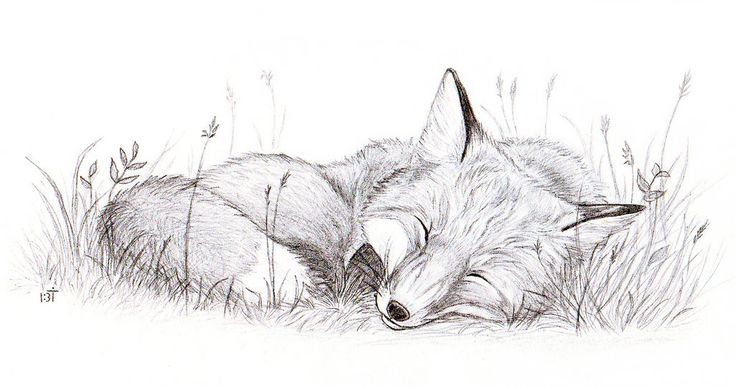

What’s New for the 9th of June: Byrds live, C.S. Lewis and J.R.R. Tolkien, Conan the Barbarian, Indonesian Pop, Elizabeth Bear reads us a story, a history of ice cream and other tasty matters…
Some stories are literally true; some of them are figuratively true; some of them are wrong. That’s the nature of stories, isn’t it? They show us all the highlights of the world, but they never leave us certain we can trust the things we know. We listen because they delight us, and mind them as much as they illuminate our hearts; but no one with a lick of sense ever trusts a tale he can’t verify himself. — Alan Rodgers in his Bone Music novel.
It’s deep into summer here, which means everyone pitches in to assist Gus, our Estate Head Gardener, with needed work around the Estate. Weeding, harvesting, deadheading flowers in the formal gardens — the list is almost literally endless. And it’s conference season here, which means extra work for the Kitchen and a need to check the Guest Yurts to make sure they’re in good repair.
So I’ll be busy with helping the Several Annies, my Library Apprentices, on the updated map they’re doing of the pathways, both the commonplace and magical, on this Estate of somewhat indeterminate borders, and that means that I’m putting this together some days ahead of time.
Jeannine says that ‘Any seasoned teacher knows better than to answer the question, “Who is your favourite?” in a class of children, and, so, too, does any seasoned reader feel about a good collection of fantasy short stories. Each one is a gem with its own colour, sound, and emotion. To pick a favourite or two is to do mortal insult to the others, I know, but due to space I’ll have to risk it. Intertwining the powers of Music and Story makes for some magical experiences, and it is on this basis that the editors have collected these fifteen tales from Elfland.’ Read her review of The Horns of Elfland anthology to see what tickled her fancy!
Kestrell looks at a novel of decided Shakespearean tones: ‘Elizabeth Hand’s new novel Illyria follows in a long tradition of science fiction and fantasy stories which reference the works of Shakespeare, particularly the romances, and Hand’s lyrical writing style is a wonderful fit for the dark romance she sets out to tell. The romance tells of the relationship between two cousins, Maddy and Rogan, but like that of the twins Viola and Sebastian in “Twelfth Night” to which the title Illyria alludes, the relationship between Maddy and Rogan proves to be a powerful touchstone for drawing together all the “big ideas” of love, ambition, and conformity to family and social expectations.’
Kestrell also has this memorable lead-in for her review of Theodora Goss’ In The Forest of Forgetting: ‘Every book is a grimoire, a witch’s recipe book for summoning thoughts and feelings, travels and transformations. Books of different genres can be used to invoke different seasons: horror for the haunted harvest time of late autumn, mysteries for the long nights of winter, and ghost stories to accompany the thunderstorms of spring. But fantasy — with its bewitching call to be out and away — is for summer.’
Diana Glyer’s The Company They Keep: C.S. Lewis and J.R.R. Tolkien as Writers in Community gets a look-see from Kim: ‘Anyone who has ever read of the legendary group of writers called the Inklings, about their friendship and lives as Oxford academics, has likely wondered about the nature of this long standing group. Its two most commercially successful authors, Tolkien and Lewis, at times seemed to play down the idea that the group, which existed for some three decades, had influenced them in their writing, as did other members of the group. Yet something was clearly going on in these weekly meetings.’
Stories come from a deep need for people to explain things, preferably while being entertained. This thought crossed Robert’s mind while he was reading through Daithi Ó hÓgáin’s The Lore of Ireland: An Encyclopedia of Myth, Legend and Romance: ‘The Lore of Ireland is a magical phrase, calling up images of heroic deeds and fey enchantments, bloody treachery and shining honor, great warriors, cold queens of the Sidhe, leprechauns, cattle raids, enchanted groves, bards, prophecies — it’s sobering to think how much of our collective folklore, our everyday vernacular imagery, comes from Ireland.’
Robert has a cheerful film offering for us today: ‘Gakuen Heaven started off as a computer game called Gakuen Heaven Boy’s Love Scramble. The franchise also includes three PlayStation 2 games, drama CDs, a manga series, and this anime. It’s a delightful bit of BL fluff, and everyone I know who’s seen it adores it.’
Not quite so cheerful is another DVD anime series, The World of Mirage of Blaze: ‘Mirage of Blaze began as a series of boys’ love novels by Mizuna Kuwabara, later adapted to manga with art by Shoko Hamada, finally becoming an anime television series. Rebels of the River’s Edge, also included in this set, came from the same series of novels and was released as an OVA (original video animation). It’s a dark and twisted tale of ancient feuds, possession, obsession, and love gone bad.’
It’s summer here which means lots of fresh hand churned ice cream with various fruits, principally the Border strawberries that start out blood red and turn as white as bleached bone as they ripen. So it’s apt that Richard has this book for us: ‘Ask anyone waving around a Drumstick cone or Klondike Bar where ice cream comes from, and you’re lucky if you get a smart-aleck response like “the freezer”. Ice cream may be near-universally loved (there’s an ice cream truck going down my block as we speak, and it’s not being shy about it), ice cream has an oddly shrouded history. Admittedly, most consumers of ice cream wouldn’t care if the first ice cream cone sprang, fully formed, from the forehead of Zeus, but for those who are actually curious about where their double-dip hot fudge sundaes originated – and who don’t want to read a tome the size of a cinderblock – there’s Ivan Day’s slender Ice Cream.’
Robert has a graphic novel twofer for us, involving none other than Conan the Barbarian — but first, a story: ‘Once upon a time there was a young English illustrator who wanted to draw comics. He wanted to draw comics badly enough that he came to America with little more than the clothes on his back and a sheaf of drawings, and went to the offices of Marvel Comics. They thought the drawings were OK, and managed to find a few jobs for him here and there, but. . . .’ Click through to see how it ends.
Irish musician Jennifer really, really likes this album: ‘Fierce Traditional is the long anticipated new solo album from Frankie Gavin, and it sees him paring the sound right down, getting back to the essence of the music. With the usual stalwart suspects in the studio, long term partner Alec Finn, piano/banjo extraordinaire Brian McGrath and brother Sean Gavin, this album is all about the tunes, pure and simple.’
Gary takes a look at Music of Weather Report in which bassist Miroslav Vitous revisits and updates the music of that groundbreaking ensemble. The Czech-born Vitous was co-founder of the progrgressive jazz-rock fusion group, along with Austrian-born keyboardist Joe Zawinul and African-American saxophonist Wayne Shorter. Among the pieces reworked on this release is the group’s one hit single, Zawinul’s ‘Birdland’. Gary says, ‘Rather than trafficking in nostalgia, Miroslav Vitous and this group pay homage to Weather Report by displaying the same forward-looking spirit the original band stood for some 40 years ago.’
Gary also reviews the newly reissued The Traveling Wilburys’ Collection, a box set originally released in 2007 that includes the entire recorded output of this supergroup plus a DVD with a mini-documentary and several music videos. ‘The Wilburys were a complete surprise and delight when their first album was released in 1988,’ Gary says. ‘Most of these songs hold up surprisingly well, and the best of them would probably be pop/Americana hits if released today.’
Shouting at Magpies found favor with Harpist Jo: ‘It is really refreshing to see top-caliber pipers taking the bagpipe to new horizons. In the past, many Great Highland bagpipers that have pursued the bagpipe beyond the strictly traditional have tended to be the pipers that didn’t have enough talent to cut it in the highly competitive, strictly traditional bagpipe world. Recent years have seen a new trend of interest in music outside of the Highland pipe’s traditional milieu. One such piper to break new ground is Ann Gray.’
Robert (as happens fairly often) has something that stretches our idea of “traditional” a bit: ‘I’ve often maintained that tradition is a living thing — it grows and changes, or it dies. Another example of the truth of that idea crossed my desk in the form of the CD Endah Laris & Dedek Gamelan Orchestra. Laris and her collaborator, Dedek Wahydi, have both been building reputations as innovative creators, and this disc offers a good showcase for their talents.’
And since we’re in Indonesia right now, Robert has another selection for us, Uun Budiman and the Jugala Gamelan Orchestra’s Banondari: New Directions in Jaipongan. Now, if that sounds mystifying, all will be made clear. As Robert notes: ‘One realizes, after a while, that popular music, while it may appear in many guises, has certain things in common. Sometimes it is subject matter, sometimes it is more elusive. But, more on that later.” Read the review — he does explain it, I promise.
Sometime ago a writer by the name of Elizabeth did a great favour for us and narrated a story of hers, ‘The Chains That You Refuse.’ When doing some cleaning up of our media server, the Infinite Jukebox, I found it again, so here it is for you to enjoy! Please do not repost it without the express permission of the author.
And now for something rather different, I’ve got ‘Blue Suede Shoes’ which isn’t performed by Elvis as you might well expect, but rather by The Byrds! It’s from their concert at the Avalon Ballroom in San Francisco, California on the 2nd of November 1968. Recorded directly off the soundboard, it’s a nigh unto perfect recording.