What’s New for the 3rd of November: Boston fiddler Katie McNally’s new album, Ray Bradbury’s Something Wicked This Way Comes, Ashley Hutchings: The Guv’nor & the Rise of Folk Rock, The Pagan Mysteries of Halloween, ‘Tam Lin’ as performed by Fairport Convention, Ancient Celtic Festivals, Pamela Dean’s Tam Lin, two essays on Maddy Prior, Fairport Convention’s Liege and Lief revisited and other matters…

O I forbid you, maidens a’,
That wear gowd on your hair,
To ameome or gae by Carterhaugh,
For young Tam Lin is there.

Child Ballad 39A

image

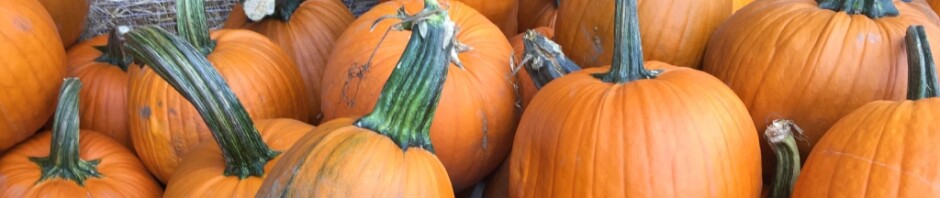
It got sharply colder on this Scottish estate over the past week so Mrs.Ware, our Head Cook, decided to have the staff of Gus, our Estate Head Gardener, prepare the fire pit for slow cooking a meal. The meal she has planned is slow roasted lamb spiced with garlic and cumin, buttered potato chunks and sautéed spinach with coarse ground black pepper and aged Riverrun Farms feta cheese. For dessert, there will be pumpkin turnovers served with fresh churned Madagascar vanilla ice cream.

Meanwhile I’ve been organising the reading groups, which always gear up as the weather gets colder, with of course the usual Norse language study group, ones devoted to works by Patricia McKillip,  JRR Tolkien, Dorothy Sayers, Robert Holdstock and Diana Wynne Jones. Of course there’s a Harry Potter group too, as a new book came out this past June in the series, though I’ll freely admit find her writing style incredibly pedestrian.

(Grey has an interesting essay on writing that was originally in the Sleeping Hedgehog which didn’t fit neatly anywhere, so I’m putting it here. Go ahead and read it as it’s her usual eloquent writing. I’ll wait.)

This edition was to be themed around the holidays of All Hallows Eve, All Souls Day and Samhain, but it ended up reflecting what we as editors think befits this time of the year when Summer is past, Autumn is fully upon us and Winter is still quite a bit off… So give a listen to ‘The Pumpkin Dance’ by the Red Clay Ramblers off their unreleased The Merry Wives of Windsor album as I get started on this edition…

image

Fairport Convention and Steeleye Span always seem to evoke Autumn for me, so it’s fitting that Lars has a review of Brian Hinton and Geoff Wall’s biography of Ashley Hutchings: The Guv’nor & the Rise of Folk Rock as he helped birth both of those groups: ‘To some of us the subject of this book is, if not God, at least the musical equivalent to the pope. Name a group you like and have followed over the years, and there is a fair chance that Mr. Hutchings was there to start it, or at least influence the starting of it. He is in one way or another responsible for a very large number of the records in my collection, and yes, we are certainly talking three figures, here.’

Triskell Press has released a digital edition of Charles de Lint’s Yarrow: An Autumn Tale, which Grey delightfully notes is ‘set in de Lint’s Ottawa, the one he first envisioned for his novel Moonheart, and expanded in its sequel, Spiritwalk. Those readers who have fallen in love with the wonderful Tamson House of these two novels will be delighted to note its brief appearance in Yarrow as well. However, the characters in Yarrow are part of different story than the residents of Tamson House and their associates, and Yarrow is a stand-alone novel.’

Grey say that ‘Clare Leslie and Frank Gerace have provided a wonderful resource in The Ancient Celtic Festivals and How We Celebrate Them Today. This slender book (fifty-eight pages) can be read by anyone from upper elementary school on, but younger children would also enjoy it if it were read to them. It is clearly designed primarily for the school and library markets, but “folky” families and those interested in Celtic traditions will also want it for their own libraries.’

The Ballad Book of John Jacob Niles, says Kim, answers a question you might’ve had: ‘Ever wonder what happened to the Child ballads that came across the water? Have you been curious about the lives of the folks whose wavery voices emerge from Lomax’s home recordings? This book contains the answers, plus over one hundred New World cousins to those ballads collected by Child, transcribed by balladeer John Jacob Niles in his trips through the southern Appalachians during the 1920s and 1930s.’  You can here Niles singing ‘The Carrion Crow’ here. It’s better known as Child 26, ‘Twa Corbies’ which is here performed by the Old Blind Dogs.

Nellie found much to appreciate in The Pagan Mysteries of Halloween: ‘Jean Markale’s telling of many traditional stories illustrates this history vividly and causes us to reflect on the essential nature of the holiday. Identifying, through Markale’s exploration, with our pagan ancestors, gives Halloween the serious reflection it deserves. We can look now at this black and orange night and see beneath the mischievous spectacle, a holiday of changes, of reverence, of comprehension and wisdom.’

A fine version of the Tam Lin story is reviewed by Richard as he looks at a Pamela Dean novel: ‘An early part of Terri Windling’s Fairy Tale series, Tam Lin is by far the most ambitious project on the line. The story of Tam Lin is one of the better known ones to escape folklore for the fringes of the mainstream; you’ll find references scuttling about everywhere from old Fairport Convention discs to Christopher Stasheff novels. There’s danger inherent in mucking about with a story that a great many people know and love in its original form; a single misstep and the hard-core devotees of the classic start howling for blood. Moreover, Dean is not content simply to take the ballad of Tam Lin and transplant it bodily into another setting.’

We next look at Ray Bradbury’s quintessential Autumn novel and film which gets an appreciative review by the previous reviewer: ‘By right and nature, all October babies should love Something Wicked This Way Comes. It is a love letter to autumn, and to the Halloween season in particular, a gorgeous take on maturity and self-acceptance and all the dark temptations that come crawling ‘round when the calendar creeps close to October 31st.’

Books can get successfully turned into other forms as we see in a review by Vonnie of an interesting performance of an Ellen Kushner novel: ‘Ellen Kushner and Joe Kessler at Johnny D’s. Kushner performed Thomas the Rhymer as a combination reading/musical performance at Johnny D’s, the synergy between the songs and the narrative was much stronger. The pauses, in particular, highlighted the words far better than the end of a paragraph on a page ever could. Kushner sang and played guitar, whilst Josef Kessler played fiddle and mandolin.’

image

Pumpkin Ale has been a staple of the Autumn season for at least twenty years on both sides of the Atlantic. Much of it is bloody awful — over-spiced sweet shit. Well it turns out that it’s not a new fad ‘tall as  a letter from Lady Alexandra Margaret Quinn, Head Gardener here in the Reign of Her Majesty Queen Victoria to her close friend Tessa some one and fifty years ago demonstrates that pumpkin ale has a long existence.  You can read her letter here.

image

Dave leads off our music reviews with a look at the Burning Bright box set: ‘The title comes from the William Blake poem, “Tyger, Tyger” and the reason is…that Tyger is Ashley Hutchings’ nickname. Having said that…let me next alert all and sundry that Free Reed is the greatest box-set compilation maker in the world, nay, universe! There is such a wealth of material in one of their sets that to properly appreciate it one must spend quality time with it to savour each mouth-watering delectable. And it’s not simply the music, although they are called Free Reed MUSIC, but the posters, and especially the books that are prepared and accompany each package are filled with enough photos, posters, memorabilia and biographical text to keep all your senses busy. Stick your nose in the book…it even smells good! One warning though…if you don’t like the sound of the concertina, approach this one carefully…but…the concertina grows on you, and this is five hours of definitive British folk music.’

He also has a look at another box set,  The Time Has Come: 1967-1973, by another band that evokes Autumn for me: ‘By my recollection it was The Pentangle when they started. And then they lost the definitive article and were just Pentangle. Whatever they called themselves, they were like fish out of water at the time. My friends didn’t listen to them at all. We were all more into The Who, The Rolling Stones, Jimi Hendrix. The loud stuff. The flashy stuff. But now, years later, I find myself listening to this mix of jazz, folk, blues, and traditional music far more than I listen to those other bands.’

Deborah offers up the best look ever at Fairport Convention’s Liege and Lief: ‘1969 saw the release of two albums that gave me a case of musical whiplash: Pentangle’s Basket of Light and Fairport Convention’s Liege & Lief. (If memory serves, the third leg in that triad of bands, Steeleye Span, was still a year away from formation.)’ Go ahead and savour every word of this fascinating remembrance of things long past.

I know it’s early Autumn but I have a Winter Shopping Holidays idea as I had to include this band here, so let me quote myself:  ‘Are you looking for that perfect Winter Holiday gift for your lover of English folk rock? Oh, do I have a gift that’s perfect! EMI has just served up A Parcel of Steeleye Span. This triple disc set contains the entirety of their first five albums for Chrysalis, from 1972’s Below The Salt to 1975’s All Around My Hat with Parcel of Rogues, Commoners Crown, and Now We Are Six being the recordings in between. This completely remastered collection has 46 tracks in all, including a number of very tasty bonus tracks.’

If there be a First Lady of English Folk Music for the past near fifty years, it must be Maddy Prior, whose singing has defined this tradition more than any other vocalist has. Deb has two looks at her, …And Maddy Dances and Comfort and the Unexpected:  In Conversation with Maddy Prior. Trust me when I say that each of these articles will enlighten you more about Maddy than a hundred articles in the English music press ever could!

She finishes off her reviews with ‘Dear Richard, Please Will You Play…?’, with  the subtitle of Three shows, three settings, one happy woman which is her loving  look at three shows by Richard Thompson, founding member of Fairport Convention who has gone on to a long career as an artist of sterling repute.

Although it focuses more on the music from the Peanuts Christmas program, Gary notes that the Vince Guaraldi Trio’s Peanuts’ Greatest Hits does include “The Great Pumpkin Waltz,” as well as selections from several other television programs that Guaraldi scored.

Boston fiddler Katie McNally’s new album, her second, focuses on the music of Cape Breton Island (which is home to the Celtic Colours International Festival every fall), particularly the music made by expatriate fiddlers who lived and worked in “the Boston States” in the 20th century. Gary says ‘McNally continues to grow into an impressive fiddler’ on this album, aptly titled The Boston States.

Gary also reviews the Kari Ikonen Trio’s Beauteous Tales and Offbeat Stories. He says, ‘This album is about equal parts upbeat swinging jazz, icy Nordic soundscapes, and pensive, occasionally dark excursions into modernist interpretations of European folk music,’ which sounds like perfect autumn fare to me!

And Gary reviews Finale: An Evening With Pentangle, which draws on the performances from the English folk-jazz supergroup’s 2008 reunion tour. ‘And what performances they are!’ he says. ‘Excellent musicians in the ’60s, they seem at the height of their powers on these recordings. It helps that the recordings themselves are beautifully done, but McShee doesn’t sound a day older than 21, the guitarists are absolutely amazing, and the rhythm section is supple and inventive.’

Unlike Fairport Convention which has retained much of its folk roots which are detailed in this review, the Oysterband has evolved beyond their original roots over the decades. But Vonnie reviews a recent album in which they returned to those roots with a collaborator: ‘June  Tabor has reunited with the Oysterband for a second album, Ragged Kingdom and the two suit each other better now than when the first album, Freedom and Rain, made in 1991. Considering that the first album was magnificent, many of us had high expectations for this album. It a very different creature, and very good.’

image

Our What Not this time is from Kelly Sedinger on why he likes Fall: ‘Autumn’s always been my favorite season, for so many reasons. I love the fact that I don’t spend my days in some degree of perspiration. I love the feeling of encroaching coolness in the air, and the fact that at night I can use a comforter again. I love how clear the air gets once the southern humidity stops coming up Buffalo way. I love how my wardrobe expands again; t-shirts and shorts give way to long-sleeve t-shirts and henleys and denim shirts and overalls. I love the return of football, the way Friday nights feel like an event again, and the scent of leaves and apples in the air. What do I love best, though? Maybe it’s my daughter going back to school. Or maybe not.’

image

It’s nigh unto All Hallows Eve, so naturally I’m offering a classic All Hallows’ Eve song. In 2007, Fairport Convention would recreate their Liege & Lief album with the original lineup sans the departed Sandy Denny so Chris While did the vocals and was quite stunning in her performance,. Now let’s  hear their ‘Tam Lin’ as performed on the night of the 10th of August.
Posted in Commentary | Comments Off on What’s New for the 3rd of November: Boston fiddler Katie McNally’s new album, Ray Bradbury’s Something Wicked This Way Comes, Ashley Hutchings: The Guv’nor & the Rise of Folk Rock, The Pagan Mysteries of Halloween, ‘Tam Lin’ as performed by Fairport Convention, Ancient Celtic Festivals, Pamela Dean’s Tam Lin, two essays on Maddy Prior, Fairport Convention’s Liege and Lief revisited and other matters…

What’s New for the 20th of October: ‘Pierre De Grenoble’ by Malicorne, Black cat awareness month, Philip Glass’ “portraits”, the folklore and folkways of American Indians, Ursula le Guin on Coyote, and her Buffalo Gals fantasy.

Coyote is an anarchist. She can confuse all civilised ideas simply by trotting through. And she always fools the pompous. Just when your ideas begin to get all nicely arranged and squared off, she messes them up. Things are never going to be neat, that’s one thing you can count on. Coyote walks through all our minds. Obviously, we need a trickster, a creator who made the world all wrong. We need the idea of a God who makes mistakes, gets into trouble, and who is identified with a scruffy little animal. — Ursula Le Guin in an interview in Jonathan White’s Talking on the Water: Conversations About Nature and Creativity Dreams

oak_leaf_fallen_colored2

I’ve been reading Ellen Datlow and Terri Windling’s The Coyote Road: Trickster Tales, an exemplary anthology of stories where the coyote, or the fox in other cultures such as Britain or Japan, has a role in each tale. These tricksters,can be found elsewhere in literature and music, such as in Charles de Lint’s Someplace To Be Flying, in the Hellboy animated film Sword of Storms and in a song by Joni Mitchell aptly called ‘No Regrets Coyote’ performed here at the Sydney Opera House some thirty years ago.

We’ve no coyotes on this Scottish Estate but the foxes here are just as entertaining. We never allowed any hunting of them here so we’re we’re very delighted that the new fragile coalition of PM Theresa May abandoned her Conservative Party campaign promise to restore fox hunting in all of Britain. She’s not quite as bad as the Iron Bitch was but a resounding majority for her Party would’ve give her leave to be just like her.

So  let’s see what we’ve got for you this time which includes a book review section more or less about coyotes and the mythology around them. And our What Not concerns Black Cat Awareness Month, fitting as almost all felines on this Scottish Estate are black in colour.

oak_leaf_fallen_colored2

Gary takes a look at three recently published books: The Anguish of Snails by Barre Toelken; Myths of Native America, edited by Tim McNeese; and When Brer Rabbit Meets Coyote, edited by Jonathan Brennan. If you’re interested in furthering your knowledge and understanding of the folklore and folkways of American Indians, you’ll want to see what Gary has to say about these three books.

Kim found a book that was more than merely good: Ursula K. Le Guin’s Buffalo Gals. This novella, she says, takes the reader ‘..into the magical world Gal, or Myra as she is known in some circles, experiences after being injured in a plane crash and then rescued by Coyote. Boulet’s work draws us into the world Gal sees with her new eye, a multilayered field of vision that bridges the nature and the appearance of things so beautifully communicated in Le Guin’s story. It has earned a place next to my treasured “children’s” books — the selfishness of an adult who finds some things too beautiful to actually let the wee wilds grub them up.’

We’ve noted before that not all of everything that comes in for review finds favour with us. Such is the fate of a novel by Kim Antieau which Mia reviews for us: ‘Coyote Cowgirl has all of the necessary ingredients to be a great book; unfortunately, like the cinnamon flavored scrambled eggs in one scene, there are other extra ingredients that spoil the recipe. It’s not horrible; even more reprehensible: it’s mediocre.’

(One reader wrote us to that he ‘was relieved, after reading Mia’s review of this novel, not to be the only one ‘crazy’ enough to find the book unsatisfying.)

Robert’s review of 9Tail Fox whittles down the general genre label and gets to the heart of the story. ‘The book cover claims that Jon Courtenay Grimwood’s 9Tail Fox is ‘A novel of science fiction.’ Considering what science fiction has become over the past generation, that could well be valid — with some qualifications. I’m going to call it ‘slipstream’ in honor of its genre-bending tendencies and let it go at that.’ Ahh, but is it any good? Robert’s review lets you know.

oak_leaf_fallen_colored2

In the States, Major League Baseball has just started its post-season. So let’s  turn to Michelle for an essay on that sport in film: ‘In the big inning, God created baseball. Or perhaps it was Loki, patron of athletics and other tricks; the origins are shrouded in antiquity. There is also debate about which mortal first received the divine inspiration. Abner Doubleday often gets credit, though some historians claim the game was played in England in the 1700s. What is known is that, in 1845, a team called the New York Knickerbockers adopted the rules of the game we know as baseball. In New Jersey that summer, they played the first organized baseball game, and America acquired its own pantheon.’

oak_leaf_fallen_colored2

We’ve reviewed a fair amount of sweet things down the years and Leona has some candies for us to consider: ‘It’s rare to find a beautifully designed package that actually has great product inside; less so when the subject is coffee candy and the reviewer is … well … picky as hell on both counts. But Bali’s Best Premium Collection, distributed by Fusion Gourmet, Inc. of California, pulls off the double success with ease.’

oak_leaf_fallen_colored2
Brush With Passion: The Art and Life of Dave Stevens, edited by Arnie Fenner and Cathy Fenner, put Richard in a reflective mood. ‘[It’s] an utterly gorgeous book. It’s also a terribly sad one… It’s not until the very end of his life that Stevens seemingly figured out what he was, or more importantly, what he could be, and the fact that this was never given time to blossom is perhaps the saddest thing of all. But if there is sadness here, there is also beauty and joy.’

oak_leaf_fallen_colored2

Barb has a story to tell us about those responsible for Trio: ‘Väsen is Olov Johansson on 3-row chromatic nyckelharpa and kontrabasharpa, Mikael Marin on viola, 5-string viola, and pomposa, and Roger Tallroth on 12-string guitar and bosoki. Having had the opportunity over the last few years to immerse myself in many of Väsen’s recordings, see them perform live, and interview Olov Johansson, these musicians (unbeknownst to them) have become old friends.’ She’s now has their newest CD Brewed in hand and will of course be reviewing it for us.

Donna looks at Up in The Air’s Moonshine and Gavin Marwick’s The Long Road and The Far Horizon: ‘Gavin Marwick is a talented and prolific Scottish composer and fiddle player. He’s in or has been in bands including Cantrip, Bellevue Rendezvous, Journeyman, Iron Horse, Ceilidh Minogue and Up in the Air. I’ve seen him perform (with Cantrip) and reviewed his Bellevue Rendezvous outings. So of course I was happy to offer to review these two CDs when offered. I’m just sorry it took me so long to listen and write!’

Gary finds the music on Norwegian bassist Björn Meyer’s Provenance to be ‘calming and focusing; the deep drones and repetitive rhythmic patterns help you remember to breathe deeply and be aware of the inner and outer beauty that’s still available.’

Robert has a look at two of Philip Glass’s ‘portraits of nature,’ Itapu and The Canyon: ‘Among contemporary composers, perhaps the most notable for writing program music is Philip Glass, whom Nick Jones, in his essay accompanying this disc calls “a composer of images.” Call it “images” or “program,” it’s a tendency that has persisted throughout Glass’ career (and probably accounts for his affinity for the theater) and one that is well illustrated in Itapu and The Canyon.’

Speaking of Glass’ ‘portraits,’ Robert brings us his take on the ‘portrait’ operas: Einstein on the Beach, Satyagraha, and Akhnaten: ‘Robert Wilson, Philip Glass’ collaborator on Einstein on the Beach, noted that until that work hit the boards, theater was bound by literature. Thinking on it, he’s pretty much right: stage plays, opera, even film were constrained by a narrative line that relied on a chronological sequence, all based on language. Not so Einstein.’

oak_leaf_fallen_colored2

As October is Black Cat Awareness Month, I can’t help but think about our oft-maligned feline companions.  This is the time of year when the worst can and does happen to black cats, simply because of the color of their fur, and the miseducation of some humans entrusted to their care.  Nay, the care of nature itself. It’s a pity that bad things happen to good cats, but most especially this time of year, when black cats should be celebrated.

So if you see a shadowy creature cross your path this time of year, remember that we all have our battles to fight. And perhaps that great onyx beauty is trying to avoid hers. Wish her well, and consider the sight a omen of good things for you both.

oak_leaf_fallen_colored2

Our Coda this time’s ‘Pierre De Grenoble’ by Malicorne, a band Scott noted in his review as being the French version of Steeleye Span for their blending of trad material and electric instruments. This was recorded at Hunter College, New York thirty-four years ago.

Posted in Books, Commentary, Music | Comments Off on What’s New for the 20th of October: ‘Pierre De Grenoble’ by Malicorne, Black cat awareness month, Philip Glass’ “portraits”, the folklore and folkways of American Indians, Ursula le Guin on Coyote, and her Buffalo Gals fantasy.

What’s New for the 29th of September: A Glen Cook series, a novel that comes with its own soundtrack, people with ‘special powers,’ … and Maddy Dances, Danish jazz, the folklore of bees, and other bits and bobs as well

The novel should be understood as a structure built to accommodate the greatest possible amount of cool stuff. — Steven Brust in this Strange Horizons interview

image

The Huddled Masses Ensemble just sent us several cases of Pendle Witches Brew, an ale with a thick, malty, and quite earthy taste. It was an unexpected payment for Jack arranging a Nordic tour for them. Now this brew isn’t quite as good as my all-time favourite ale, Thomas Hardy’s Ale, but it’s quite tasty.

It’s amusing to watch some of the musicians of the Neverending Session compare notes with Bêla, our Ottoman Empire refugee and long-time resident violinist, who become their ‘adopted’ grandpere many years ago, about this spectacular brew.

Oh, I did just spy Mistress Zina asking Finch, the Afternoon Barkeep, to tuck away a several bottles for later drinking? Or did she have it put away in her office? No matter — there’s ‘nough for everyone!  And if you’re looking for a good read for these increasingly cold evenings, or some music to listen to, we’ve those covered with other interesting bits and bobs as well!

image

A novel by Emma Bull and Steven Brust gets this comment from Richard: ‘Thankfully for readers of Freedom & Necessity, the two authors’ collaboration, the safe money is right this time. The book, while completely unexpected in its content, delivers on all the implied promises its authors have made with careers of sustained excellence. It’s just that Freedom & Necessity, perhaps inevitably, does so on its own, very demanding terms.’

Robert has a look at one of Glen Cook’s earlier series, the Dread Empire, with some comments on prequels: ‘A Fortress in Shadow is an omnibus edition collecting Glen Cook’s two ‘prequel’ novels to The Dread Empire trilogies. (Yes, there are two of them. . . .)’ To get the whole story, click through.

He says about Steven Brust and Megan Lindholm’s The Gypsy that it ‘has been in my peripheral vision for some time, and was brought front and center by Boiled in Lead’s CD Songs from The Gypsy. I’ve sort of put off Brust’s collaborations, of which this is one, although I can see that I’ve got to catch up on them.’ He goes on to say that he found this Hungarian folklore-tinged novel to be terrific, a comment I wholeheartedly agree with!

image

Robert has some comments on a TV series that was a binge-watching favorite: ‘I should point out right off the bat that I don’t watch regular TV. Among other reasons, I’m a binge-watcher, and I can’t stand to wait a week for the next episode of anything – somehow, a single thirty- or forty-minute dose just isn’t enough to maintain my interest. . . . However, thanks to Netflix, I get to indulge my binge-watching tendencies. I also get to shop around for what looks interesting, which is how I ran across Haven.’

Speaking of people with special powers and prequels — and we were, believe me — Robert takes a look at Sam Raimi’s prequel to a classic, Oz The Great and Powerful: ‘Creating a prequel to anything can be, as they say, fraught. Such an undertaking requires care, sensitivity to the original, and a thorough understanding of where this project is headed. Prequels by the creators of the original works are on somewhat safer ground — after all, they know the subject thoroughly. Making a prequel to a much-loved classic seventy years after the fact carries a certain amount of risk. You might imagine that deciding to see director Sam Raimi’s Oz the Great and Powerful was not without some reservations.’

image

We have a lot of bee hives here, several hundred at least, and there’ve most likely been hives here for a thousand years. Every culture has its folklore about bees and the Irish are no exception. Gus, our Estate Head Gardener and our primary beekeeper, passed on this article to me, Eimear Chaomhánach’s ‘The Bee, its Keeper and Produce, in Irish and Other Folk Traditions’. If you’re interested in folklore of these fascinating creatures, this is a must read for you.

image

We’re taking a somewhat broader interpretation of ‘graphic lit’ this week, with look at an anthology of art, namely, Gothic Art Now. However, lest you think this is about cathedrals: ‘We seem to spawn subcultures at a dizzying rate these days, and those subcultures, as cultures tend to do, create art, music, fashion and lifestyles in their own image. As far as the goth culture goes, we’ve all seen the teenagers dressed in black doing their best to look gaunt, we’ve heard music groups such as Dead Can Dance (a number of which, by the way, have created some excellent music — I’m a Dead Can Dance fan from way back), but I don’t recall having seen a systematic look at the art produced in this milieu, a lack that Jasmine Becket-Griffith has attempted to rectify in Gothic Art Now.’

image

Saturday brought the sad news of the passing of Stanley Dural Jr., at the age of 68. Dural was the leader of the world-renowned zydeco band Buckwheat Zydeco, which played all over the world and collaborated with mainstream musicians like Willie Nelson, Eric Clapton, Robert Plant and many more. By way of tribute, here’s Gary’s review of Buckwheat Zydeco’s Grammy-winning 2009 album Lay Your Burden Down.

Gary continues our music reviews with a look at Streams, which is by a jazz trio led by Danish guitarist Jakob Bro. ‘Three instruments improvising around flowing melodies add up to an apparently endless series of gentle surprises,’ he says. ‘Streams is a record to return to again and again to appreciate its lovely sounds and inspiring ensemble creativity.’

Gary also reviews a recording from another guitarist, although in a much different genre. William Tyler’s Modern Country is in the Americana vein, he says, and has influences that range from the Carter Family to John Fahey, The Beatles to Richard Thompson.

3hattrio’s new release Solitaire caught Gary’s fancy as well: ‘It’s named for Desert Solitaire, the classic 1968 book about dryland ecosystems by Edward Abbey,’ he says. ‘This stringband trio from the red-rock desert of southern Utah is intimately familiar with that landscape, and they continue to translate its stark beauty into haunting melodies and lyrics.’

Deliverance, the second release by The Nordic Fiddlers Bloc, brims with life, energy, a lot of joy and a little bit of sorrow,’ Gary says,  ‘all poured out in the delightful strains of fiddle music from three different but related traditions.’

Deb has an essay about Maddy Prior that she’s titled …And Maddy Dances: ‘Warning, up front, in advance: if you’re expecting a scholarly historical restrospective of Steeleye Span, you’re doomed to disappointment. (You also don’t know me very well, but that’s a different issue.) I’ve been a fan of theirs for over three decades, and I’m going to write about the way I’ve always listened to them, perceived them, felt them: prismatically, split into streams of sound and light over a central rock at the heart of the prism.’

And for all you fans of serial minimalism, we have a heads-up. From ECM Records: ‘Steve Reich will be 80 on October 3rd and celebratory concerts are being programmed all over the world. Reich’s first home as a recording artist was with ECM, beginning in 1978 with the seminal album Music for 18 Musicians followed by Octet / Music for a Large Ensemble / Violin Phase (1980) and Tehillim (1982). These works will be reissued in a 3-CD box set that contains Reich’s original liner notes, archival photos and, a fascinating new booklet essay by Paul Griffiths.

image

Our What Not this time was another common one for us which is to ask folks what their favorite Tolkien work was. Neal Asher saysthat it’s: ‘Lord of the Rings, quite simply because I loved it. I remember The Hobbit being read to me when I was a young school kid, and when I first walked into a library my mother asked me what I liked, I said I liked The Hobbit and when directed to the relevant shelf picked up a copy of The Two Towers. I read them out of order first, but have since read them in order many times.’image

Americana artists Gillian Welch and Dave Rawlings (performing as ‘Gillian Welch’) rarely record other people’s songs, but they have a large repertoir of classic country and classic rock covers from which to draw in concert. They range from Jimmie Rodgers to the Grateful Dead, Townes Van Zandt to Bob Dylan, Eddie Arnold to Eric Andersen, and this little gem by one Grace Slick. Jefferson Airplane’s ‘White Rabbit’ became the anthem of Haight-Ashbury and the 1960s psychedelic movement. With imagery cribbed from Lewis Carroll and a bolero-like structure from Ravel and Miles Davis, it celebrates curiosity and openness to new experiences, following that muse wherever it leads.

Posted in Books, Commentary, Film, Food and Drink, Graphic Literature, Music, Stories, What Nots | Comments Off on What’s New for the 29th of September: A Glen Cook series, a novel that comes with its own soundtrack, people with ‘special powers,’ … and Maddy Dances, Danish jazz, the folklore of bees, and other bits and bobs as well

A Kinrowan Estate story: Waltzing Matilda

Her full name was Matilda Anna Grace O’Reilly. Her friends called her Maddie, but many knew her simply as a fiddler named Waltzing Matilda. Her passion was waltzes, both playing existing ones and composing new ones. Her tale is like so many that I tell here, as, like any true story, it has no beginning nor any ending, nor does it exist solely unto itself. So read on for my telling of it…

It was one of those glorious Fall days when I noticed that Chasing Fireflies was calling itself (at least for now) Ravens in The Library, in honour, I presume of SJ Tucker, a muso that many of us find rather good. An anthology of the name was done as a fundraiser for her when she was ill. There was a poster up in the inside entryway to the Pub with that name announcing a contradance for this coming week.

I noticed that the poster was using a piece of artwork that Lahri Bond designed for one of the journals that existed before Green Man Review. It was of a raven, possibly the one we call Maggie, sitting on a pile of books while tearing one apart. Of course, our Maggie would never do that…

The bottom of the poster listed the members of the band. There was my wife Ingrid and Béla on violins, Finch on smallpipes, and Maddie on cwrth, the Welsh wire stringed medieval instrument. Could it be Waltzing Maddie? I mused. And indeed it was.

I first met her on a similar Fall day when I chanced upon a woman with a bedroll and musical case across her back. She had long brown hair, brown eyes and was slight of stature. Nothing unusual, but somehow she seemed much larger than she was. She asked me where the Neverending Session was to be found and that was the last I saw of her for a fortnight or so.

Then I noticed scraps of conversation about someone called Matilda Grace O’Reilly who was leading what amounted to classes in writing music, waltzes to be precise. I didn’t connect her to the person I’d encountered earlier, but I thought it might her. So I stopped by to see her teach.

She danced as much as she talked, truly a waltz personified in one compact package. As I watched, she sketched her musical ideas in the air and then they all played around with her compositions. Truly magical. And that’s how she got the Waltzing Matilda name.

She stayed through the rest of that Fall, worked for Gus on his Winter crew harvesting wood, cutting conifers and gathering cones for the wreaths we sell, and left that following Fall. She left behind dozens of new waltzes, lots of warm memories and a promise to return someday.

And now she has…

Posted in Stories | Comments Off on A Kinrowan Estate story: Waltzing Matilda

What’s New for the 15th of September: Two Fat Ladies, Welsh mythology, a de Lint written video and other matters

There are few joys to compare with the telling of a well-told tale. — Charles de Lint’s Yarrow: An Autumn Tale

2F1E3C1F-3976-487C-BB76-623C51D8C475

What am I playing? That’s June Tabor & Oysterband’s Ragged Kingdom which Vonnie saye Very Good Things about: ‘Tabor has reunited with the Oysterband for a second album, Ragged Kingdom and the two suit each other better now than when the first album, Freedom and Rain, made in o1991. Considering that the first album was magnificent, many of us had high expectations for this album. It a very different creature, and very good.’

The album mirriors the weather in being decidedly not chipper. Some October days are sunny and  warm here on this Scottish Estate — today’s not one of them. So the Fireplace here in the Angela Carter Reading Room is stoked properly and I’ve got my iPad and a pot of Sri Lankan Rilhena Estate Gently Cinnamon Smoked Ceylon Pekoe tea ready for drinking.

But before we turn to this edition, let me recommend another Autumnal reading which is Yarrow which as noted above is subtitled ‘An Autumn Tale’.  It’s one of his Ottawa set novels and shows his great affection for the city that he and MaryAnn Harris, his wife, have made their home. Brief enough for reading in an evening, it shows how good a writer he was even early on in his career.

2F1E3C1F-3976-487C-BB76-623C51D8C475

Welsh mythology in the guise of a well-loved novel gets looked at by me: ‘I must have first read Alan Garner’s The Owl Service some forty years ago when I was interested in all things concerning Welsh mythology. I wanted a hardcover first edition which cost a pretty penny at the time. I mention this because it’s now been at least twenty years since I last read this novel, which is long enough that when Naxos kindly sent the audiobook, I had pretty much forgotten the story beyond remembering that I was very impressed by the story Garner told.’

What’s October without a little horror? Denise looks at little horrors – a book full of them in fact – with her review of Ronald Kelly’s short story collection Midnight Grinding.  But it’s not just the spooky that hooked her, it’s his way with a tale.  ‘Ronald Kelly is a storyteller, plain and simple, and with Midnight Grinding, he proves that plain and simple is just plain old good.’

Running back and forth on Fall errands isn’t conducive to reading a book, so Denise gave a listen to Anansi Boys on the Playaway. And she was smitten. ‘The icing on the cake was their selection of Lenny Henry as narrator. I’ve been a huge fan of his ever since I stumbled on an episode of Chef many years back. … The ten hours of audio sailed by, thanks to Gaiman’s and Henry’s storytelling skills.’ Read her review to see what she thinks of the story and the audiobook.

Somehow the work of Tolkien for me is something decidedly Autumnal, and Kathleen has a look at two works by she’s treasured since her childhood which I like as well, to wit Tolkien’s Smith of Wooten Major & Farmer Giles of Ham. She says, ‘Smith and Farmer Giles have the advantage of being completed by Tolkien himself, and are lovely, polished tales. . . . They are the work of a very modern and well-educated scholar — but like all Professor Tolkien’s work, they feel like an echo of the sunlit fields and shadowed woods of the British mythic landscape that he so loved.’

2F1E3C1F-3976-487C-BB76-623C51D8C475

Scared Fire is a short story by Charles de Lint that got adapted by Showtime, the American cable network for The Hunger, a horror series that ran two seasons and featured David Bowie as The Host for the second season. Michael says in the conclusion to his review that ‘While there are so many more de Lint stories I’d love to see adapted for television or film, I’m not going to look a gift horse in the mouth. Sacred Fire is a highly satisfactory translation from book to film, and recommended.’ Now go read his review to see how he got to this statement.

2F1E3C1F-3976-487C-BB76-623C51D8C475

If ever there was a series that felt like it was Autumn all the rime, it is the one Kathleen and her sister Kage wrote up, Two Fat Ladieswhose series documented that they were brilliant English cooks who rode a motorcycle with a sidecar, drank excessively, smoked whenever they pleased and cooked using bloody great hunks of meat, butter and anything else that isn’t ‘tall good for you. And funny as all Hell as well which indeed the review is as well.

2F1E3C1F-3976-487C-BB76-623C51D8C475

Robert has a look at a couple of boys’ love manga that, while not exactly “autumnal”, are pretty tough. Of the first, Satoru Ishihara’s Kimi Shiruya, he says: ‘Satoru Ishihara is an artist whose work has come to interest me a great deal. I think that interest is justified by what I’ve found in Kimi Shiruya: it’s a work of many levels, as much a product of reticence and implication as of overt portrayals, perhaps more so.’

Next is Momoko Tenzen’s Seven: ‘Momoko Tenzen’s Seven is another one of those boys’ love manga that, like Kimi Shiruya, moves the genre boundaries outward, although unlike the latter — and most popular examples of the type — it is rather bleak, at least at the beginning.’

2F1E3C1F-3976-487C-BB76-623C51D8C475

Freedom Highway may be the first perfect album of the year. And it’s definitely one of the most important,’ Gary wrote in his review back in February. We’re re-upping his review in light of the announcement that Giddens was among those who received a ‘Genius Grant’ from the MacArthur Foundation for 2017.

In his review of the new album by Tunisian oud master Anouar Brahem, Gary says ‘There’s a moment a couple of minutes in to the title track of Anouar Brahem’s exquisite new album Blue Maqams that is the kind of moment I long for, like a thirsty person in the desert longs for a cool drink.’

Gary thoroughly enjoyed Dori Freeman’s self-titled debut in 2016, and he also likes her new album: ‘Letters Never Read is a solid follow-up that bodes well for her staying power as an Americana star.’

Storm + Calm gets Peter’s approval: ‘Described on their website as ‘a swirling reverie of Scots and Irish song; flute; whistles; fiddles; guitar; bouzouki; bodhran; and Irish dance, HAWP is a Celtic ensemble that combines ancient traditions with modern musical approaches to create a sound truly representative of Celtic culture in the 21st century. This album does just what it says on the tin.

Scott looks at a retrospective album from a Swedish folk rock (it) band: ‘Instead of releasing a full-length album of new material with the current lineup, though, Hedningarna chose 2003 to release a retrospective CD, with two new songs and sixteen additional recordings spanning their history. 1989-2003 captures many of the band’s finest moments, although there were a handful of glaring omissions as well. Then again, one mark of a truly great band is that when the inevitable “best of” CD is compiled, there is ample room for disagreement over which recordings are truly the best. Such is the case with Hedningarna.’

2F1E3C1F-3976-487C-BB76-623C51D8C475

As the autumnal air crisps and sweaters become the rule of the day, thoughts tend to drift to a lovely mug of apple cider.  Which always leads me to the making of it, and then to Vita Sackville-West’s poem, “Making Cider”.  The pulling of the crank, the rending of the pulp, and of course that glorious end product!  Perhaps I should head over to the Kitchen and see if Cook has anything apple-cinnamon warming on the stove…

2F1E3C1F-3976-487C-BB76-623C51D8C475

I hadn’t any particular artist in mine this edition, so I asked the Infinite Jukebox app to suggest cuts for me based on my usual listening patterns this time of year. ‘Red Barn Stomp’ recorded by the Oysterband during their Minneapolis ’91 concert with June Tabor is a good choice as is ‘The Dancing Bear’, a spiritedly tune by Dervish performed at Brodick Hall, Isle of Arran, Sept 25 of ’93 as was ‘A Tune For Mairéad And Anna’, a Altan tune recorded at a Folkadelphia Session, March 7th of ’15.

I eventually decided that something of an story nature was what I wanted, so ‘The Girl in the Garden’ from Sirens by SJ Tucker does nicely. It tells the tale of the orphan in Catherynne Valente’s The Orphan’s Tales: In The Night Garden. If you like what Tucker does here, you’ll love this work by Valente, the first of two volumes of The Orphan’s Tales.

Posted in Commentary, Graphic Literature, What Nots | Comments Off on What’s New for the 15th of September: Two Fat Ladies, Welsh mythology, a de Lint written video and other matters

What’s New for the 24th of September: Traffic’s version of ‘John Barleycorn’, Dissing neo-paganism, Vess’ Book of Ballads and Sagas and other matters

If I told you the whole story, your head would burst. There is no one story, there are branches, rooms… corridors, dead ends. — The Storyteller as played by a John Hurt in Jim Henson’s The Storyteller

Raspberry divider

It’s definitely not Summer here on this Scottish Estate as the Autumnal Equinox passed a few days ago, and we dropped to just about fifteen  for a low last night which made for a crispness in the air this morning though it warmed nicely by early afternoon. Bjorn, the Estate Brewer, claims it puts a nice edge in the apples and pears that’ll be made into cider by him.

The music playing here in the Pub’s is Fairport Convention’s ‘Fiddlestix’, apparently recorded at a concert in Amsterdam, supposedly in 1975 though even that’s just a guess.  As I get older, I find myself more drawn to the folk tinged music of bands like them, and I find myself increasingly surprised when I remember these bands are all over fifty years in age!

In the meantime, may I offer you one of our seasonal ales? We call this one John Barleycorn in honour of that  song which first saw life as ‘Sir John Barlycorn’ as written by Alexander Pennecuik and published by him as a broadside in 1725.

Raspberry divider

As I noted above, Fairport Convention and Steeleye Span always seem to evoke Autumn for me, so it’s fitting that Lars has a review of Brian Hinton and Geoff Wall’s biography of Ashley Hutchings: The Guv’nor & the Rise of Folk Rock as Ashley helped birth both of those groups: ‘To some of us the subject of this book is, if not God, at least the musical equivalent to the pope. Name a group you like and have followed over the years, and there is a fair chance that Mr. Hutchings was there to start it, or at least influence the starting of it. He is in one way or another responsible for a very large number of the records in my collection, and yes, we are certainly talking three figures, here.’

A number of songs covered by Fairport Convention and Steeleye Span have a pagan emphasis such as ‘Tam Lin’ (covered live by the former here and the latter thisaway) and ‘Alison Gross’ being Child Ballads 34 and 39. Francis Child collected an impressive number of English folk ballads, many of them obviously pagan in origin, so let’s look at the edition of them published by Loomis House fifteen years ago: ‘A nice bonus is that they do include sixty ballad tunes drawn from Child’s original sources. (Child felt the words, not the music, were the ‘real’ ballad.) Any fiddler worth hearing will find much to learn from these tunes. And folklorists, traditional music lovers, storytellers, and just about everyone else who likes any aspect of what these ballads are should own this new edition. Even if you now own the Dover editions, these are a must as they are better in every way possible!’

And now for something completely different, as happens around here with regularity. (It’s that kind of place.) Robert has some thoughts on Thomas M. Disch’s The Wall of America (which seems somehow timely): ‘Thomas M. Disch was one of the more challenging of the American New Wave science-fiction writers. Where writers such as Roger Zelazny and Samuel R. Delany were pushing the boundaries of the formally acceptable in science fiction (and fantasy, for that matter), Disch was turning the conceptual universe upside down with novels such as Camp Concentration and 334. It’s also worth noting that he was a respected poet and literary critic (among other things), and those disciplines find echoes in his fiction.’

Raspberry divider

For this issue, Denise dove into a bag of Sirius Konsum’s Chocolate & Lakkris.  And it seems that could be taken quite literally, “I didn’t want to review this.  I wanted to grab the bag and flee into a hidden wilderness, so I could be alone with the deliciousness. … They’re more than candy, they’re comfort.” Intrigued?  Well, blending chocolate and licorice is something Iceland has been doing for quite a long time, so it’s no surprise her licorice-loving heart found a new joy. Read her full review for exactly what she thought!

Raspberry divider

Take a number of well-known musicians, toss in fans and a camera crew, put all on a train traversing Canada. That’s the gist of Festival Express. Sound intriguing? David thinks so: ‘It opens with a faded map of north Ontario, Kapuskasing dead centre. Then the camera pulls back and from the middle of the screen comes a train — an old Canadian National engine — and tracks, lots of tracks. This is a movie about that train and the people who rode on it, and the places it stopped, and what happened one week in 1970 when this train went from Toronto to Calgary … with a cargo of rock’n’rollers and all their paraphernalia. What a summer.’

Raspberry divider
The four issue run of Ballads and Sagas that later got a book treatment by Tor gets a look-see by Debbie: ‘Charles Vess, an extremely talented graphic artist, has done just that. Vess, who has a solid reputation for illustrating such works as Neil Gaiman’s Sandman stories (also published in graphic novel form) also loves the ballads and sagas that have been entertaining people for hundreds of years, and in this series of books he has collaborated with some of the best-known writers in fantasy literature, including Gaiman, Jane Yolen, Charles de Lint, Sharyn McCrumb (not a fantasy writer but an author of mysteries with an Appalachian folkloric theme), Midori Snyder, Robert Walton and Delia Sherman (whew!) — I hope I’ve not left anyone out! They tell the stories: he does the illustrations.’

Raspberry divider

Gary reviews the album Urban Griot by the international jazz quartet NYConnection. ‘It’s a fine example of a mostly Scandinavian ensemble bringing its own sensibilities to jazz with convincing results that often swing and are always cool.’

The Red Clay Ramblers whose Old North State is reviewed here have been around a longtime and their members have done a lot of other recordings down the generations. Judith looks at one such recording here: ‘This season, independent CDs by Former Red Clay Ramblers are popping up everywhere. This one, Shining Down , is by Mike Craver, whose forte is piano, but who also plays guitar, percussion, and theramin.’

Lars has a confession: ‘Why was I taken by surprise by Himmerland’s The Spider in the Fiddle? Firstly, Denmark is full of good music, and Danish groups are constantly producing lovely music. Secondly, I have twice before discovered new favourite groups with Ditte Fromseier in. First there was Flax in Bloom, a group that never recorded but in concert turned out smooth Irish music, then Habbadam, a trio playing traditional music from Fromseier’s native Danish island of Bornholm. Habbadam’s albums still get played in my stereo.’

Perhaps the most faithful of the Oysterband fans that was ever among us, Vonnie once wrote a review for us of the lads in the early days of a better nation: ‘A quick Google search tells me that the average life span of a pearl-farmed oyster is six years, while the life span of a freshwater oyster can be as long as 80. The individual ages of the Oysters — members of our own, darling Oysterband — lie someplace between the two, while the Oysterband as a whole marked its 25th anniversary several years ago. If you’ve followed the Oysterband for only the past 20 years, Before the Flood will surprise.’

Raspberry divider

As Summer wends its way to Fall, it becomes the season of festivals.  In Baltimore this weekend, there was a two-for-one with the Baltimore Book Festival and the Baltimore Comic-Con.  Both had a lot to enjoy for readers, as well as chances to connect with creators, authors and more.  At the Festival, there was cooking, beer brewing, science fiction and memories of times past. At the Con, there was comics, TV stars, science fiction and memories of times past.  Coincidence at the similarities?  Of course not.  Stories are stories, and the links between different forms of storytelling are always there, if you take a look.

Raspberry divider

Speaking of John Barleycorn, I searched the Infinite Jukebox, our server of all things digital, and found a recording of the best known version of that song which was done by Traffic with Steve Winwood as vocalist and released in July 1970. This ‘John Barleycorn’ was recorded by them at  Paris Theatre, London sometime in 1970.

Posted in Books, Commentary, Music, Stories, What Nots | Comments Off on What’s New for the 24th of September: Traffic’s version of ‘John Barleycorn’, Dissing neo-paganism, Vess’ Book of Ballads and Sagas and other matters

A Kinrowan Estate story: Elven Contradance Band

Raspberry divider

It was one of the oddest contradance bands I had the privilege to call for, as it was comprised solely of musicians from across the Border. Now the Elves tell us next to nothing about their culture, so what we do know of the True Bloods is centuries old. We do have True Bloods music preserved in shards of glass that play within our heads when we hold them but the idea that True Bloods had a taste for contradance music was particularly surprising given that they have a disdain for anything of our culture past that of Elizabethian Era, when True Bloods such as Peasblossom and Moth got name-checked by Shakespeare.

Contradance music being less than a century old in any meaningful sense, I figured that they hadn’t noticed it yet. But it turned out Gutmansdottir, the botanist studying our Wild Wood, had been playing contradance tunes on her fiddle while out there and two younger elves, still only in their second century, had listened to her with keen interest. A trio of them has been part of our dances for some three years now — they were amazingly superb dancers.k

So when I was approached to call for them, I was surprised. Truly surprised. Their band name was Spritely Tunes (more or less) in English. One player had what looked like a violin but was pitched oddly, another had a double-headed harp, and the third player had what was obviously their version of Border pipes.

It perhaps was Elizabethian court music filtered through their own not-human sensibilities. It was haunting though upbeat music fit for the Winter night they played. Their versions of reels, waltzes and even jigs were quickly learned by me and I gave instructions to the dancers. Three hours later, dancers and musicians (not to mention me) were ecstatic but bloody tired.

We all bowed to them as one and they left our dance for (presumably) The Border but that was only a guess. All I know is they’ve shown up three times since, each time in deep Winter, after a messenger tells me they’re coming in a week. Being True Bloods, they assume that we would of course be there to dance if they so requested.

Raspberry divider

Posted in Stories, Uncategorized | Comments Off on A Kinrowan Estate story: Elven Contradance Band

A Kinrowan Estate story: A Punjabi Meal

image

Chandra came to the Estate several springs back with the intent of being here for a single growing season. I hired her because she had a deft hand with transplanting seedlings, something harder than it looks to do properly, and relished the long hours we work for weeks on end. Her musical abilities were an unlooked-for bonus, one we discovered after she began her tenure as an under gardener. She was the only staff member living in her particular yurt, which meant Chandra was free to play ragas on sitar, a long-necked fretted string instrument with a gourd resonator. And we often heard pop music from her Punjabi homeland that she’d brought with her, something that brought a smile to many a passerby.

I had decided within a few months to offer her a permanent position if she wanted it. She accepted with delight and noted that she was looking forward to learning to ski, not a common practice in her country.

Which leads me back to that oh-so-tasty meal. We favour Raj-inspired cuisine here, in part because we have so many vegetarians. This meal, curated by Chandra, was far beyond most in its wonderfulness. Ingrid, the Estate Buyer, tracked down rice, spices and even the clarified butter called ghee from the Punjab during a tea-buying trip and had it shipped here. (I’m sure Customs must have looked the other way on some of the items.) Bjorn even brewed a Punjabi-style Black Ale for the occasion, a feat which was well received by all.

Some of us even knew how to eat in culturally appropriate fashion using naan to scoop up tasty morsels of our meal. Ingrid and her husband, Reynard, had spent enough time in the Punjab on tea-buying trips to really appreciate the meal. It was nothing like the British interpretation of Indian food which is hot and even hotter. Here were dishes spiced with a deft hand, so that the spices complemented the other ingredients instead of overwhelming them.

We finished this repast with cardamom flavored ice cream. All in all a most excellent Eventide meal!

image

Posted in Commentary | Comments Off on A Kinrowan Estate story: A Punjabi Meal

A Kinrowan Estate story: Oberon’s Wood

Raspberry divider

For the longest time this year, summer fluttered her wings against the panes of spring. Now, sunlight lingers long and hot. Afternoons stretch like thrice-pulled saltwater taffy, and the days here at the Kinrowan Estate have become the drowsy, heat-sleepy days of our warmest season. There is no doubt, when the air is heavy and breath comes languid from the lungs — warmth exhaled into warmth, drawn in as warmth again — that those fluttering wings have long since spread, unfurled across the land and become the too-heavy blanket of unfettered summer.

What does one do when the mind and body fall prey to the slow, hot haze of summer days? One waits, of course. One waits for the sun to sink, and for the stars to creep into his vacant seat. One watches the moon rise to hang low and globular in the nighttime sky like overripe fruit, illuminating all of Oberon’s wood. And when the hands of the clock in the KInrowan Hall main entry way meet in the middle of Time — at midnight — one goes to the party.

You may not have realized you were invited: you may not have paid close enough attention to your dreams of late. That’s how such invitations are customarily delivered; in dreams. In fact, you’re invited every year, though also never, as Time shows far less consideration for human convention inside dreams and the realm of the Consort to the Faerie Queen.

But perhaps you have attended our parties, after all. It may simply be that later, waking, you dismissed your recollections as mere fancy, or the common (if dreams are ever common) workings of a mind at sleep. Perhaps you recall dancing with a particularly fine gentleman of a bear? The one in the lavender waistcoat? His great, huge paws rested gentle as thistledown upon your shoulders, and he led you in a most divine waltz beneath the trees. (Though he’s not quite so light upon his feet as the sylph; who would be?)

No? If it wasn’t the bear with whom you danced, might it have been the undine? Not you? Well, if you’re sure. They have beautiful voices, those water nymphs, and there really is nothing quite so lovely as a midnight water-waltz on the banks of the old millpond in Oberon’s wood. Enough Dragon’s Breath Stout and a few turns about the pond, and a man could forget more or less everything he nearly thought he’d hardly ever remembered, almost…

This year we’re keeping the festivities simple. Our twelve bands have been booked, both human and fey (and three who refuse to be classified as either). The instruments await: the pennywhistle, the concertina, the dulcimer, the zither. The autoharp, the theremin, the ocarina and the drum. This year there are mad rumors of an invisible gargantuan harpsichord, to be played by a thousand invisible fingers.

But rumors are just that. Such an appearance (so to speak) remains highly unlikely, in the main.

If good food is what you seek, our twelve over-burdened wicker hampers have been packed. (The things are massive! Someone — we won’t say who — wanted to hire a dozen elephants to bear the load! Elephants, in Oberon’s Wood! Perish the thought. The Ents were more than happy to volunteer for the task, once the need was made clear.) When entering the fey-touched realms, one usually feels more comfortable taking food with, though there are plenty here at the Estate who scoff at the dangers. In fact, more than one on the staff here has been seen to consume quite copious amounts of fey-wrought food, and even more copious amounts of intoxicating beverages of questionable origin. We’ve not lost anyone yet for more than a fortnight, to our knowledge. Faerie prerogative? Perhaps. You’re more than welcome to come find out for yourself; to each his –or her — own. As has already been explained, you’re always invited, and never. It’s up to you.

Raspberry divider

Posted in Uncategorized | Comments Off on A Kinrowan Estate story: Oberon’s Wood

What’s New for the 1st of September: June Tabor does grim ballads, a Latina rocker named Cecilia Villar Eljuri, Lucky Peach’s guide to cider, a Breton peasant’s memoir, music by Guy Clark, a film from Guillermo del Toro, a noir comic, and other matters…

Only thin, weak thinkers despise fairy stories. Each one has a true, strange fact hidden in it, you know, which you can find if you look. — Diana Wynne Jones in Fire and Hemlock

Raspberry divider

Now it is by some storytellers said that the very first Jack here got lonely for the sound of music that could be made  with other musicians. So he invited in a few fellow fiddlers and a smallpiper to play for the Kinrowan Estate residents in exchange for s place to bed down, a bit of grub and some ale. Keep in mind that it was a typically cold and damp Scottish winter evening when he did this, so the musicians weren’t terribly inclined to leave.

One of ’em got the somewhat bright idea that if they didn’t stop playing, they wouldn’t be asked to leave, so they didn’t. And they weren’t asked to leave, as it was convenient to have musicians here. So a deal was struck — food, drink and a place to bed down for all musicians who were playing, so long as the music never, ever stopped. So it hasn’t. Ever. Down through the centuries, human and fey alike have made sure the music has gone on without ever stopping. A player might drop into the session here for a few hours, or stay playing for longer than you and I would believe possible. But there’s always at least several players keeping it going.

Now let’s see what we’ve got this edition…

Raspberry divider

We definitely don’t like everything we review as you’ll see in this review of The Owl Mage Series by Mercedes Lackey and Larry Dixon. Now, Christine likes other books by Lackey, so she was anticipating good things from these three books (Owlflight, Owlsight and Owlknight).  But… ‘The Owl Mage books weren’t entirely bad, but neither were they very good.’ Christine’s review is fair, highlighting the things she thinks Lackey and Dixon do well, but in the end she gives the series a thumbs down.

Gary  takes a look at an alternate history adventure by Ian McDonald. ‘Although it deals in djinni and green men (!) and miraculous-seeming nano-tech, The Dervish House is more grounded in a reality Westerners will recognize than were McDonald’s two India books… Surely, though, one can wish for more books of this caliber from Ian McDonald.’

J.R. Campbell and Charles Prepolec are the editors of Gaslight Grimoire: Fantastic Tales of Sherlock Holmes of which Kage says, ‘All in all, Gaslight Grimoire is well worth picking up if you enjoy lighting the fire, curling up in your armchair with a glass of sherry at your elbow in the gloom of a winter afternoon, and having a good Victorian-era read.’

Kelly has a review of the audiobook version of a novel jointly written by Terry Pratchett and Neil Gaiman. She says, ‘If you’ve never heard Good Omens, you should. Whether or not you give a damn about theology or metaphysics, I prophesy you’ll find yourself chuckling often — or, like me, barking — as Martin Jarvis and these two well loved masters poke fun at everything most people hold dear and bring you to the brink of Armageddon.’

Robert brings us a look at a memoir that’s more than a little out of the ordinary, Jean-Marie Déguignet’s Memoirs of a Breton Peasant: ‘It is not often that one gets to read the memoirs of a peasant, because it’s not often that a peasant writes a memoir. This particular peasant was Breton, which is, for those fascinated by a part of the world that is unique and mysterious, a plus. As editor Bernez Rouz points out in “The Story Behind This Story,” Jean-Marie Déguignet was not a particularly nice man, and much of his story has been left out of this volume, particularly the paranoid ravings of his later life.’

Raspberry divider

Robert has a dark fantasy film for you to consider: ‘The films of Guillermo del Toro have often dealt with innocence in a corrupt world; sometimes the innocence is found in surprising places, as in Hellboy, in which a demon becomes a savior. He also plays with the idea of redemption through transformation in such a way that the concept becomes almost Wagnerian in scope. And in Pan’s Labyrinth, he hinges these ultimately profound themes on a child’s belief in fairy tales.’

Raspberry divider

If you enjoyed the first Hellboy film, Cat has a look at a Hellboy graphic novel set in the years after WW II: ‘I must profusely thank the publicity department at Dark Horse for sending literary treats such as B.P.R.D. 1946 for us to review, as they make for a wonderful reading experience!’

Robert has some thoughts on one of Marvel Comics’ forays into noir fiction, Daredevil Noir: ‘One has come to expect tight, absorbing writing from Alexander Irvine, and one is not disappointed in the Daredevil installment of the Marvel Noir series. Daredevil is not one of those superheroes who’s been very much on my radar, so I had the added attraction of a new character without, in my mind, any history to muck things up.’

Raspberry divider

Kelly takes a look this week at Sara Perry’s The Tea Deck. She says, ‘As the now almost mythical door-to-door encyclopedia salesman knew, the opportunity to sell your product goes up exponentially once you’ve gotten it into the hands of a customer.’ How does this relate to a Tea Deck… and just what the hell is one?

Robert ran across a book that tells almost more than we wanted to know about Lobster: ‘Richard J. King’s Lobster is part of a series on “Animals” from Reaktion Books, and, in spite of what we might expect when dealing with a creature mainly interesting for its gustatory qualities, the culinary history is a minor part of the story.’

Raspberry divider

Barb has a story to tell us in her review of Trio: ‘Väsen is Olov Johansson on 3-row chromatic nyckelharpa and kontrabasharpa, Mikael Marin on viola, 5-string viola, and pomposa, and Roger Tallroth on 12-string guitar and bosoki. Having had the opportunity over the last few years to immerse myself in many of Väsen’s recordings, see them perform live, and interview Olov Johansson, these musicians (unbeknownst to them) have become old friends.’

Pat really likes Brendan Begley’s It Could Be a Good Night Yet: ‘This is Breandán’s second solo effort, following on his 2000 release We Won’t Go Home ’til Morning — and mighty fine it is too.’

The New York-based guitarist, singer and songwriter Cecilia Villar Eljuri, who performs under the name Eljuri, has released a new record that fuses various Latino genres and reggae and rock. She’s a somewhat rare breed of Latina rocker and electric guitarist, as Gary points out in his review of Eljuri’s La Lucha.

Vonnie has good things to say about this recording: ‘An Echo of Hooves has June Tabor returning to what, in my mind, she does best, delivering ballads or songs that tell a tale. For this she has chosen eleven Medieval ballads. Some of them are very well-known, like “The Cruel Mother,” “Hughie Graeme,” “Sir Patrick Spens” and “Bonnie James Campbell”. Others are new to me.’

Raspberry divider

Our What Not this time is our oft asked question about what a favored libation is. Kathleen Bartholomew, sister of the late sf writer Kage Baker and a fine writer as well,  waxes nostalgic:  ‘Nova Albion of blessed memory – a bright copper, richly hopped ale with an aftertaste of roses. But in the world of beers I can actually get my hands on … maybe Sierra Nevada Southern Hemisphere Harvest Ale, full of fresh new Zealand hops. Or Lagunitas Censored Ale. Or even the venerable Bass Ale — served room temperature, of course. With straw floating on the top. I like hops…’

Raspberry divider

Although Guy Clark has been gone nearly five months now, we’re still missing that Texas troubador mightily. He’s especially been on our minds now that our tomato harvest is coming to a glorious end. Here’s what is perhaps Guy’s second-best-known song, ‘Homegrown Tomatoes’ recorded at Douglas Corner Cafe in Nashville, Tennessee, in 1996, as released on Keepers by Sugar Hill in 1997.


Posted in Books, Commentary, Film, Food and Drink, Graphic Literature, Music, Stories | Comments Off on What’s New for the 1st of September: June Tabor does grim ballads, a Latina rocker named Cecilia Villar Eljuri, Lucky Peach’s guide to cider, a Breton peasant’s memoir, music by Guy Clark, a film from Guillermo del Toro, a noir comic, and other matters…
