At no other time (than autumn) does the earth let itself be inhaled in one smell, the ripe earth; in a smell that is in no way inferior to the smell of the sea, bitter where it borders on taste, and more honeysweet where you feel it touching the first sounds. Containing depth within itself, darkness, something of the grave almost. ― Rainer Maria Rilke in Letters on Cézanne

The season we call Autumn starts in a scant few days, even though British Summer Time doesn’t ’til the end of October, but the meteorological Autumn season’s been here for several weeks now and the cooling weather with a bite in the evening air makes it apparent that Summer’s really over.
Gus, our Estate Gardener and Groundskeeper par excellence, has been checking if the fire wood (cut, stored and dried for three years before burning) is sufficient for the coming Winter; Mrs. Ware and her Kitchen staff are processing peppers, string beans and other tasty fruits and veggies; and Reynard’s assisting our brewer Bjorn in the cider pressings.
However I’m in my hidden office with a pot of Darjeeling tea and some chocolate biscuits (that’s cookies to you Yanks) to nibble on along with music playing on my earbuds (Irish trad group Bua’s ‘Within a Mile of Dublin’, ‘Leslie’s Reel’ and ‘John Broslin’ is currently playing — it’s from their concert at the Lowell Folk Festival, Massachusetts, July 24, 2010) as I put this edition together, so let’s get started…
.
Brendan found a fascinating book: ‘Reading Allen Lowe’s book American Pop from Minstrel to Mojo: On Record 1893 to 1957, I found myself agreeing with the late Tupac Shakur’s vision of the afterlife. Heaven would simply be a large night club filled with all of the late, great musicians of yesteryear. For eternity, all you need to do is stroll through and listen to the fine music… Ironically, if someone told me some years back that this vision consisted entirely of American pop music, my younger self would have concluded that they were describing Hell, but this book — among other influences — has convinced me of my folly. Early American pop music in any of its known forms — jazz, blues, ragtime, vaudeville, country or rock — is truly one of the highest achievements of the American culture.’
Cat looks at The Mystery of Grace, a novel by Charles de Lint, the second ghost story Cat believes that that author has written. Set in a small city somewhere in the Southwestern USA, or perhaps California, the story of Grace, the woman who can cross back and forth, gets a sterling review from Cat. (I’ve been informed by de Lint that Cat’s wrong as he’s written many ghost stories.)
Down the decades, we’ve reviewed most everything Patricia McKillip has published, so it’s only fitting that we finish off this time with a review by Richard of her latest book: ‘With Dreams of Distant Shores, Patricia A. McKillip delivers something that is not quite your typical short story collection. While the point of entry is a series of shorter pieces, the collection builds to and is anchored by the lengthy novella “Something Rich and Strange”, with an essay on writing high fantasy orthogonal to the usual tropes. The book then ends with appreciation of McKillip’s work (and the stories in the collection) by Peter S. Beagle, an elegant coda to a warm, thought-provoking collection.’
Richard rounds out our book reviews with the first new novel in a long time from a beloved writer: ‘Peter S. Beagle’s latest, Summerlong is an exercise in masterful, hopeful heartbreak. Deeply steeped in mythology yet relentlessly modern (if a bit sentimental), it tackles the big questions of love, compromise, dreams, and what you might do – or forgive – in the face of the sublime.’
Robert takes a look at a film that shook audiences up when it came out, for good reason: Ang Lee’s Brokeback Mountain: ‘I remember seeing Brokeback Mountain at its first showing in Chicago. I sat through it, along with a fairly substantial audience, which surprised me a little — it was an 11 a.m. showing on a Friday morning, but the house was nearly full. No one was talking much as we filed out. I walked around for about an hour in the snow and the wind. I couldn’t think of anything else to do.’
As an indicator of what a break-through film Brokeback Mountain was, Robert has an observation on Jonah Markowitz’ Shelter: ‘Before I get to the film itself, one observation: I don’t think this movie would have been made five years before it was. It could have been, but it wouldn’t have been – we are without doubt in a post Brokeback world. The reason I say this is because the film is virtually free of stereotypes. More on that later.’
Our resident Summer Queen says ‘Melinda is Neil Gaiman and Polish artist Dagmara Matuzak’s first collaboration, and the resulting illustrated poem is a unique literary work. According to the press notes accompanying this release, Gaiman wrote the text specifically for Matuzak to illustrate, hoping for a few drawings and perhaps a painting or two, and she responded with forty-eight stunning black and white drawings and eight colour plates that delineate the harsh world Gaiman’s seven year old Melinda inhabits.’
Alan Lowe’s amazing American Pop book obviously needs a companion musical offering, which is what it gets in American Pop: An Audio History. Brendan reviews it for us and notes that ‘Music and Arts of America released this companion 9-CD collection. Containing almost all of the singles described by Lowe in his book (the set ends at 1946), this gargantuan group of CDs (almost 11 hours of music) turns out to be just as important a musical document as Lowe’s original book. Some of these tracks are unbelievably rare; and more importantly, one would be hard pressed to find another document that presents the accomplishments of the American musical culture of the early Twentieth Century as well, as thoroughly, and as enjoyably as this collection.’
We noted sadly last week that the last member of The Weavers, Fred Hellerman, had passed on. Well, Gary has a look for you at one of their many recordings, The Best of the Vanguard Years. He says that they ‘helped wake Americans up to the wonderful folk music that was all around them, and helped get America singing. Perhaps we could all use a reminder of those times that maybe weren’t so much more simple after all, and a refresher course on the power of three chords, four-part harmony, acoustic instruments, and a few verses and choruses about common folks and their concerns.’
Joe K. Walsh, a talented mandolinist, singer and songwriter in the progressive stringband vein, has released his debut solo CD. ‘Borderland is full of excellent ensemble music all around, with solid contributions from all involved,’ Gary says.
British folk singer Billy Bragg and American singer-songwriter (and producer) Joe Henry have teamed up on a field recording of sorts, Gary reports. Shine a Light features the two playing and singing American folk songs on the theme of trains, recorded on trains and in stations as they rode the rails from Chicago to Los Angeles. Like the alternative Great American Songbook it is drawn from, he says, ‘It’s about trains and the people who traveled on them and the reasons they traveled.’
Robert brings us another installment in John Noise Manis’ series of Central Javanese gamelan, a volume of musical treasures from the court music tradition of Surakarta, and a volume of songs that transform some traditional modes in amazing ways.
A Welsh band live caught the ear of Vonnie: ‘Crasdant plays music to warm your heart and tells tales to tickle your funnybone. This Welsh band played on a wet windy night that, they said, reminded them of home. The two sets of instrumental music for flute, harp, fiddle, and guitar, with an impressive bit of clog dancing thrown in were varied and fascinating, and the evening was over too soon. The concert was part of the excellent Celtic music calendar put together by Music-For-Robin, in the same venue as Pipeline.’
Our What Not is from Kage Baker who was a storyteller beyond compare, be it in emails as Cat can well attest, at Ren Faires with her sister Kathleen serving up ale, lovingly critiquing quite old films, writing stories of chocolate quaffing cyborgs, whores who decidedly didn’t have hearts of gold, or space raptors who are actually parrots now. So it won’t surprise you that was a master narrator of her own stories as you hear as when she reads for us ’The Empress of Mars’, a novella she wrote.
Now let’s see what we’ve got got a performance recording for you his time… Hmmm… That’ll do nicely. Here’s Iron Horse, the great Scottish sort of trad group, performing ‘The Sleeping Warrior’ at the Gosport Easter Festival in April of ’96.
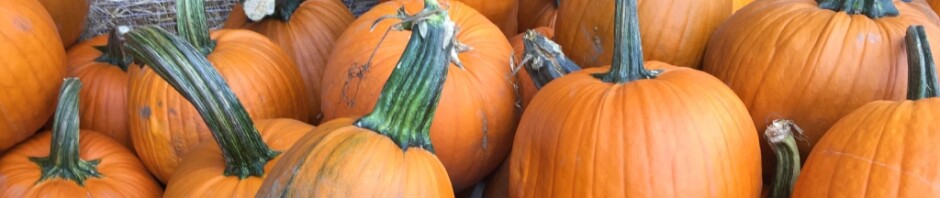
What’s New for the 18th of September: a story from Kage Baker, new music from Bua and Iron Horse, a new novel from Peter Beagle, a new collection from Patricia McKillip, a “cowboy” movie, Welsh sort of trad music, Indonesian sort of trad music, American pop and several other things as well
At no other time (than autumn) does the earth let itself be inhaled in one smell, the ripe earth; in a smell that is in no way inferior to the smell of the sea, bitter where it borders on taste, and more honeysweet where you feel it touching the first sounds. Containing depth within itself, darkness, something of the grave almost. ― Rainer Maria Rilke in Letters on Cézanne
The season we call Autumn starts in a scant few days, even though British Summer Time doesn’t ’til the end of October, but the meteorological Autumn season’s been here for several weeks now and the cooling weather with a bite in the evening air makes it apparent that Summer’s really over.
Gus, our Estate Gardener and Groundskeeper par excellence, has been checking if the fire wood (cut, stored and dried for three years before burning) is sufficient for the coming Winter; Mrs. Ware and her Kitchen staff are processing peppers, string beans and other tasty fruits and veggies; and Reynard’s assisting our brewer Bjorn in the cider pressings.
However I’m in my hidden office with a pot of Darjeeling tea and some chocolate biscuits (that’s cookies to you Yanks) to nibble on along with music playing on my earbuds (Irish trad group Bua’s ‘Within a Mile of Dublin’, ‘Leslie’s Reel’ and ‘John Broslin’ is currently playing — it’s from their concert at the Lowell Folk Festival, Massachusetts, July 24, 2010) as I put this edition together, so let’s get started…
.
Brendan found a fascinating book: ‘Reading Allen Lowe’s book American Pop from Minstrel to Mojo: On Record 1893 to 1957, I found myself agreeing with the late Tupac Shakur’s vision of the afterlife. Heaven would simply be a large night club filled with all of the late, great musicians of yesteryear. For eternity, all you need to do is stroll through and listen to the fine music… Ironically, if someone told me some years back that this vision consisted entirely of American pop music, my younger self would have concluded that they were describing Hell, but this book — among other influences — has convinced me of my folly. Early American pop music in any of its known forms — jazz, blues, ragtime, vaudeville, country or rock — is truly one of the highest achievements of the American culture.’
Cat looks at The Mystery of Grace, a novel by Charles de Lint, the second ghost story Cat believes that that author has written. Set in a small city somewhere in the Southwestern USA, or perhaps California, the story of Grace, the woman who can cross back and forth, gets a sterling review from Cat. (I’ve been informed by de Lint that Cat’s wrong as he’s written many ghost stories.)
Down the decades, we’ve reviewed most everything Patricia McKillip has published, so it’s only fitting that we finish off this time with a review by Richard of her latest book: ‘With Dreams of Distant Shores, Patricia A. McKillip delivers something that is not quite your typical short story collection. While the point of entry is a series of shorter pieces, the collection builds to and is anchored by the lengthy novella “Something Rich and Strange”, with an essay on writing high fantasy orthogonal to the usual tropes. The book then ends with appreciation of McKillip’s work (and the stories in the collection) by Peter S. Beagle, an elegant coda to a warm, thought-provoking collection.’
Richard rounds out our book reviews with the first new novel in a long time from a beloved writer: ‘Peter S. Beagle’s latest, Summerlong is an exercise in masterful, hopeful heartbreak. Deeply steeped in mythology yet relentlessly modern (if a bit sentimental), it tackles the big questions of love, compromise, dreams, and what you might do – or forgive – in the face of the sublime.’
Robert takes a look at a film that shook audiences up when it came out, for good reason: Ang Lee’s Brokeback Mountain: ‘I remember seeing Brokeback Mountain at its first showing in Chicago. I sat through it, along with a fairly substantial audience, which surprised me a little — it was an 11 a.m. showing on a Friday morning, but the house was nearly full. No one was talking much as we filed out. I walked around for about an hour in the snow and the wind. I couldn’t think of anything else to do.’
As an indicator of what a break-through film Brokeback Mountain was, Robert has an observation on Jonah Markowitz’ Shelter: ‘Before I get to the film itself, one observation: I don’t think this movie would have been made five years before it was. It could have been, but it wouldn’t have been – we are without doubt in a post Brokeback world. The reason I say this is because the film is virtually free of stereotypes. More on that later.’
Our resident Summer Queen says ‘Melinda is Neil Gaiman and Polish artist Dagmara Matuzak’s first collaboration, and the resulting illustrated poem is a unique literary work. According to the press notes accompanying this release, Gaiman wrote the text specifically for Matuzak to illustrate, hoping for a few drawings and perhaps a painting or two, and she responded with forty-eight stunning black and white drawings and eight colour plates that delineate the harsh world Gaiman’s seven year old Melinda inhabits.’
Alan Lowe’s amazing American Pop book obviously needs a companion musical offering, which is what it gets in American Pop: An Audio History. Brendan reviews it for us and notes that ‘Music and Arts of America released this companion 9-CD collection. Containing almost all of the singles described by Lowe in his book (the set ends at 1946), this gargantuan group of CDs (almost 11 hours of music) turns out to be just as important a musical document as Lowe’s original book. Some of these tracks are unbelievably rare; and more importantly, one would be hard pressed to find another document that presents the accomplishments of the American musical culture of the early Twentieth Century as well, as thoroughly, and as enjoyably as this collection.’
We noted sadly last week that the last member of The Weavers, Fred Hellerman, had passed on. Well, Gary has a look for you at one of their many recordings, The Best of the Vanguard Years. He says that they ‘helped wake Americans up to the wonderful folk music that was all around them, and helped get America singing. Perhaps we could all use a reminder of those times that maybe weren’t so much more simple after all, and a refresher course on the power of three chords, four-part harmony, acoustic instruments, and a few verses and choruses about common folks and their concerns.’
Joe K. Walsh, a talented mandolinist, singer and songwriter in the progressive stringband vein, has released his debut solo CD. ‘Borderland is full of excellent ensemble music all around, with solid contributions from all involved,’ Gary says.
British folk singer Billy Bragg and American singer-songwriter (and producer) Joe Henry have teamed up on a field recording of sorts, Gary reports. Shine a Light features the two playing and singing American folk songs on the theme of trains, recorded on trains and in stations as they rode the rails from Chicago to Los Angeles. Like the alternative Great American Songbook it is drawn from, he says, ‘It’s about trains and the people who traveled on them and the reasons they traveled.’
Robert brings us another installment in John Noise Manis’ series of Central Javanese gamelan, a volume of musical treasures from the court music tradition of Surakarta, and a volume of songs that transform some traditional modes in amazing ways.
A Welsh band live caught the ear of Vonnie: ‘Crasdant plays music to warm your heart and tells tales to tickle your funnybone. This Welsh band played on a wet windy night that, they said, reminded them of home. The two sets of instrumental music for flute, harp, fiddle, and guitar, with an impressive bit of clog dancing thrown in were varied and fascinating, and the evening was over too soon. The concert was part of the excellent Celtic music calendar put together by Music-For-Robin, in the same venue as Pipeline.’
Our What Not is from Kage Baker who was a storyteller beyond compare, be it in emails as Cat can well attest, at Ren Faires with her sister Kathleen serving up ale, lovingly critiquing quite old films, writing stories of chocolate quaffing cyborgs, whores who decidedly didn’t have hearts of gold, or space raptors who are actually parrots now. So it won’t surprise you that was a master narrator of her own stories as you hear as when she reads for us ’The Empress of Mars’, a novella she wrote.
Now let’s see what we’ve got got a performance recording for you his time… Hmmm… That’ll do nicely. Here’s Iron Horse, the great Scottish sort of trad group, performing ‘The Sleeping Warrior’ at the Gosport Easter Festival in April of ’96.
About Iain Nicholas Mackenzie
I'm the Librarian for the Kinrowan Estate. I do love fresh brewed teas, curling, English mysteries and will often be playing Scandinavian or Celtic music here in the Library here in Kinrowan Hall if the Neverending Session is elsewhere. I'm a violinist too, so you'll me playing in various contradance band such as Chasing Fireflies and Mouse in the Cupboard as well as backing my wife Catherine up on yearly Christmas season tours in the Nordic countries.