To everything (turn, turn, turn)
There is a season (turn, turn, turn)
And a time for every purpose, under heaven
Pete Seeger’s “Turn! Turn! Turn!”

We’ve given over this edition to Gary, our music editor extraordinaire, who’s telling us about the books he reviewed last year and some music from 2025 that he really liked as well. So here he is…
I didn’t review a lot of books in 2025, but those that I did review were exceptional. (I must confess I spent much of the year immersed in Henning Mankell’s series of police procedurals featuring the Swedish detective Kurt Wallander. Mankell wrote and set them in the 1990s and early 2000s, and in them he identifies a number of global societal trends that are still affecting us today. Highly recommended if you haven’t yet read them, or watched the BBC’s versions.)
First up chronologically was Simon Jimenez’s debut SF novel The Vanished Birds, which was a finalist for the Locus Award for 2020 and named one of the best books of the year by tordotcom and Kirkus Reviews, it was also selected by Jo Walton as one of the top 10 genre books of the first quarter of the 21st century (a list you should definitely check out). ‘In The Vanished Birds, Simon Jimenez has created memorable characters, crafted an intricate and epic plot spanning centuries and lightyears, and especially has done some extraordinary world building. It’s the kind of world — or really universe — building in which the details are slowly revealed in the reading without a lot of tedious explication. He does that by first introducing us — in a bit of literary legerdemain — to a small character on a marginal world and then gradually enlarging the field of view, giving us more characters in more complex situations in various settings across vast time and space. By the time you realize the scope of the tale, you’re definitely hooked.’
Next up was Mary Robinette Kowal’s The Calculating Stars, which filled in the origin story behind her highly popular Lady Astronaut series. The series imagines what would have happened if the U.S. had started the space program right after WWII, before an asteroid hits the Atlantic Ocean in the late 1950s and irreparably damages Earth. ‘When we meet her, Elma York (née Wexler) and her husband Nathaniel are horny young married professionals on vacation in a secluded cabin in Pennsylvania’s Pocono Mountains. Both work for the space agency NACA, she as a computer, he (a Manhattan Project veteran) as chief engineer. … Kowal handles the story masterfully, with just enough scientific jargon and facts to keep it feeling authentic but not enough to bog it down; her dialogue is solid and contributes to the believable characters; and especially she conveys the inner reality of a woman of the pre-feminist 1950s and ’60s who believes in her own capabilities and chafes against society’s restrictions, but often doesn’t even recognize many of the assumptions she unwittingly accepts. She even handles a few mild sex scenes with grace and aplomb.’
I read Elizabeth Bear’s The Folded Sky, the third entry in her White Space series, as soon as it was published. As Elizabeth herself pointed out, this one is a family drama, first contact novel and space opera, with a mystery thrown in for good measure. The heroine Dr. Sunya Song ‘… has been assigned to travel to a red dwarf called the Baostar that is about to go supernova. It is surrounded by Koregoi tech in the form of a sentient archive that the Synarche is just learning how to communicate with, and that’s where Sunya comes in. She’s tasked with communicating with the Baostar, all the while a small fleet of ships is ferrying away as many parts of it as can be saved before the star explodes. … The attempted murders, the unstable star, the nasty pirates are all something like McGuffins that move the plot along as we root for Sunya to survive long enough to gain confidence in herself.’
To wrap this up, my final review was James S. A. Corey’s The Mercy of Gods, the first of a new series by this duo who brought us The Expanse. It’s an edge-of-seat SF thriller in which a nearly omniscient alien power subjugates a human civilization, enslaving its top scientists, engineers and leaders on the aliens’ home planet, where they compete to the death with other slaves to solve problems for their new masters. ‘As with the crew of Rocinante in The Expanse, “Corey” (a.k.a. Daniel Abraham and Ty Franck) has created a team of distinct individuals for the reader to identify with, each having their own strengths, weaknesses and quirks. And then put them into an unimaginably stressful situation that brings out their best and sometimes worst traits. The plot draws on elements of Holocaust narratives, prison narratives and of course the campus novel, all in the midst of a fantastically constructed space opera. It’s also influenced by a classical, or rather Biblical source that I’m embarrassed I didn’t spot: The Book of Daniel, in which the Israelites are dragged off to Babylon for a generations-long captivity. The universe of The Mercy of Gods is a one that I won’t forget, and I can’t wait for the next installment in this trilogy.’
It was also the year that I discovered a pretty good SF related podcast, The Coode Street Podcast with Jonathan Strahan & Gary K. Wolfe. The two hosts engage in interviews with noted SFF writers and also have discussions (sometimes rather too in the weeds for me) of awards, cons and other genre arcana. I’ve really just dipped my toe in so far, but I very much enjoyed discussions with Jo Walton and with Guy Gavriel Kay.
Time to clear the slate of music that I enjoyed but didn’t get around to reviewing way back in 2025. (Remember that year? What a strange one it was!) Some of these were languishing on my desktop since mid-summer, but most are from late fall and even early December. Why does so much new music come out so close to the end of the year!? Anyway, I’ve rounded up a bunch of jazz releases into a couple of omnibus reviews.
I’ll start with Julian Shore Trio’s Sub Rosa, GinmanBlachmanDahl’s Play Ballads, Convergence’s Reckless Meter, and Kalia Vandever’s Another View. A couple of piano trios, a modern jazz sextet from Colorado, and a trombone-led quartet with one of today’s top guitarists in a strong supporting role.
Sub Rosa: ‘The trio shows its chops and Shore his talent for arrangement on some well chosen covers including Duke Ellington’s “Blues In Blueprint,” a lesson in abstraction based on a simple form; a romantic trip through the Beach Boys’ “Don’t Talk (Put Your Head On My Shoulder)” and a highly abstracted romp through the Jerome Kern/Oscar Hammerstein standard “All The Things You Are.” ‘
Play Ballads: The album is rife with Ellingtonia: in addition to “Satin Doll” you’ll find the Duke’s “C Jam Blues” and “Come Sunday,” his son Mercer Ellington’s “Things Ain’t What They Used to Be,” and Billy Strayhorn’s “Take the ‘A’ Train” and “Chelsea Bridge.”‘
Reckless Meter: ‘The music is modern but melodic, with a lot of swing coming out of that rhythm section and delicious harmonies from the horns. If there’s anything that sounds better to my ears than a trumpet and sax mixing unison and harmony lines, it’s when you add a trombone to the mix!’
Another View: ‘In places Vandever draws on trance-like repitition to create an aura of mania or paranoia, particularly the introductions to “Withholding” and “Unearth What You Already Knew,” and elsewhere employing a menacing style of classical-influenced composition to unsettle, especially the arco bass-trombone duet that opens “Cycle In Mourning.”
Next up are Ovella Negra’s Va de Mescles!, and Rosàlia De Souza Quarteto 55˚’s self-titled debut album of Brazilian samba, choro and more. ‘Ovella Negra is at root a piano trio, but one with a difference. Pianist Joan Frontera Luna’s vision was to create a vibrant jazz program from the popular folk music of his native Balearic Islands (off Spain’s southern Mediterranean coast, including Mallorca) and unite the music with a visual program that showcases the island’s traditional dances as well.’ … ‘De Souza, a world renowned interpreter of samba, bossa nova, and Brazilian music traditions with more than a dozen albums to her name joins with Danish pianist Peter Rosendal, Canadian bassist Graig Earle, and Danish drummer Jonas Johansen on a program of mostly originals by quartet members in various combinations, with some Brazilian classics sprinkled in.’
In music podcasts, I continued enjoying some of my old standbys: Discord & Rhyme, Slate’s Hit Parade with Chris Molanphy, and Aquarium Drunkard Transmissions. And I discovered a couple of new ones that I’ve been binging. Most recently The Late Set, in which Nate Chinen and Josh Jackson conduct in-depth conversations with jazz musicians and share the occasional number from one of those artists’ live set. But my favorite of the year is A History of Rock Music in 500 Songs, by Andrew Hickey. These are short (approximately 30 minutes) but deep episodes, begun in September 2018, covering Hickey’s sometimes quirky but definitely authoritative opinions about the way rock music has evolved. I found out about it when someone from the old Richard Thompson List posted a link to the episode about Fairport Convention’s ‘Who Knows Where The Time Goes?’, which is 178 on his chronological list.
The year just turned, so why not a song to see it off that celebrates that turning? It’s ‘Turn! Turn! Turn! (To Everything There is a Season)’ by Judy Collins who sang it at The Newport Folk Festival, fifty-five years ago. It was written by Pete Seeger in the late Fifties and first recorded in 1959.
The lyrics save for the title, which is repeated throughout the song, and the final two lines are the first eight verses of the third chapter of the ‘Book of Ecclesiastes’. The Byrds also recorded it and you can hear them sing it here. This version was recorded at the Boston Tea Party fifty-six years ago.
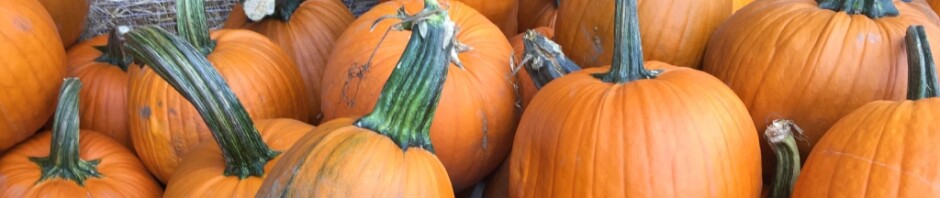
What’s New for the 4th of January: Favorite books and music of 2025
To everything (turn, turn, turn)
There is a season (turn, turn, turn)
And a time for every purpose, under heaven
Pete Seeger’s “Turn! Turn! Turn!”
We’ve given over this edition to Gary, our music editor extraordinaire, who’s telling us about the books he reviewed last year and some music from 2025 that he really liked as well. So here he is…
I didn’t review a lot of books in 2025, but those that I did review were exceptional. (I must confess I spent much of the year immersed in Henning Mankell’s series of police procedurals featuring the Swedish detective Kurt Wallander. Mankell wrote and set them in the 1990s and early 2000s, and in them he identifies a number of global societal trends that are still affecting us today. Highly recommended if you haven’t yet read them, or watched the BBC’s versions.)
First up chronologically was Simon Jimenez’s debut SF novel The Vanished Birds, which was a finalist for the Locus Award for 2020 and named one of the best books of the year by tordotcom and Kirkus Reviews, it was also selected by Jo Walton as one of the top 10 genre books of the first quarter of the 21st century (a list you should definitely check out). ‘In The Vanished Birds, Simon Jimenez has created memorable characters, crafted an intricate and epic plot spanning centuries and lightyears, and especially has done some extraordinary world building. It’s the kind of world — or really universe — building in which the details are slowly revealed in the reading without a lot of tedious explication. He does that by first introducing us — in a bit of literary legerdemain — to a small character on a marginal world and then gradually enlarging the field of view, giving us more characters in more complex situations in various settings across vast time and space. By the time you realize the scope of the tale, you’re definitely hooked.’
Next up was Mary Robinette Kowal’s The Calculating Stars, which filled in the origin story behind her highly popular Lady Astronaut series. The series imagines what would have happened if the U.S. had started the space program right after WWII, before an asteroid hits the Atlantic Ocean in the late 1950s and irreparably damages Earth. ‘When we meet her, Elma York (née Wexler) and her husband Nathaniel are horny young married professionals on vacation in a secluded cabin in Pennsylvania’s Pocono Mountains. Both work for the space agency NACA, she as a computer, he (a Manhattan Project veteran) as chief engineer. … Kowal handles the story masterfully, with just enough scientific jargon and facts to keep it feeling authentic but not enough to bog it down; her dialogue is solid and contributes to the believable characters; and especially she conveys the inner reality of a woman of the pre-feminist 1950s and ’60s who believes in her own capabilities and chafes against society’s restrictions, but often doesn’t even recognize many of the assumptions she unwittingly accepts. She even handles a few mild sex scenes with grace and aplomb.’
I read Elizabeth Bear’s The Folded Sky, the third entry in her White Space series, as soon as it was published. As Elizabeth herself pointed out, this one is a family drama, first contact novel and space opera, with a mystery thrown in for good measure. The heroine Dr. Sunya Song ‘… has been assigned to travel to a red dwarf called the Baostar that is about to go supernova. It is surrounded by Koregoi tech in the form of a sentient archive that the Synarche is just learning how to communicate with, and that’s where Sunya comes in. She’s tasked with communicating with the Baostar, all the while a small fleet of ships is ferrying away as many parts of it as can be saved before the star explodes. … The attempted murders, the unstable star, the nasty pirates are all something like McGuffins that move the plot along as we root for Sunya to survive long enough to gain confidence in herself.’
To wrap this up, my final review was James S. A. Corey’s The Mercy of Gods, the first of a new series by this duo who brought us The Expanse. It’s an edge-of-seat SF thriller in which a nearly omniscient alien power subjugates a human civilization, enslaving its top scientists, engineers and leaders on the aliens’ home planet, where they compete to the death with other slaves to solve problems for their new masters. ‘As with the crew of Rocinante in The Expanse, “Corey” (a.k.a. Daniel Abraham and Ty Franck) has created a team of distinct individuals for the reader to identify with, each having their own strengths, weaknesses and quirks. And then put them into an unimaginably stressful situation that brings out their best and sometimes worst traits. The plot draws on elements of Holocaust narratives, prison narratives and of course the campus novel, all in the midst of a fantastically constructed space opera. It’s also influenced by a classical, or rather Biblical source that I’m embarrassed I didn’t spot: The Book of Daniel, in which the Israelites are dragged off to Babylon for a generations-long captivity. The universe of The Mercy of Gods is a one that I won’t forget, and I can’t wait for the next installment in this trilogy.’
It was also the year that I discovered a pretty good SF related podcast, The Coode Street Podcast with Jonathan Strahan & Gary K. Wolfe. The two hosts engage in interviews with noted SFF writers and also have discussions (sometimes rather too in the weeds for me) of awards, cons and other genre arcana. I’ve really just dipped my toe in so far, but I very much enjoyed discussions with Jo Walton and with Guy Gavriel Kay.
I’ll start with Julian Shore Trio’s Sub Rosa, GinmanBlachmanDahl’s Play Ballads, Convergence’s Reckless Meter, and Kalia Vandever’s Another View. A couple of piano trios, a modern jazz sextet from Colorado, and a trombone-led quartet with one of today’s top guitarists in a strong supporting role.
Sub Rosa: ‘The trio shows its chops and Shore his talent for arrangement on some well chosen covers including Duke Ellington’s “Blues In Blueprint,” a lesson in abstraction based on a simple form; a romantic trip through the Beach Boys’ “Don’t Talk (Put Your Head On My Shoulder)” and a highly abstracted romp through the Jerome Kern/Oscar Hammerstein standard “All The Things You Are.” ‘
Play Ballads: The album is rife with Ellingtonia: in addition to “Satin Doll” you’ll find the Duke’s “C Jam Blues” and “Come Sunday,” his son Mercer Ellington’s “Things Ain’t What They Used to Be,” and Billy Strayhorn’s “Take the ‘A’ Train” and “Chelsea Bridge.”‘
Reckless Meter: ‘The music is modern but melodic, with a lot of swing coming out of that rhythm section and delicious harmonies from the horns. If there’s anything that sounds better to my ears than a trumpet and sax mixing unison and harmony lines, it’s when you add a trombone to the mix!’
Another View: ‘In places Vandever draws on trance-like repitition to create an aura of mania or paranoia, particularly the introductions to “Withholding” and “Unearth What You Already Knew,” and elsewhere employing a menacing style of classical-influenced composition to unsettle, especially the arco bass-trombone duet that opens “Cycle In Mourning.”
Next up are Ovella Negra’s Va de Mescles!, and Rosàlia De Souza Quarteto 55˚’s self-titled debut album of Brazilian samba, choro and more. ‘Ovella Negra is at root a piano trio, but one with a difference. Pianist Joan Frontera Luna’s vision was to create a vibrant jazz program from the popular folk music of his native Balearic Islands (off Spain’s southern Mediterranean coast, including Mallorca) and unite the music with a visual program that showcases the island’s traditional dances as well.’ … ‘De Souza, a world renowned interpreter of samba, bossa nova, and Brazilian music traditions with more than a dozen albums to her name joins with Danish pianist Peter Rosendal, Canadian bassist Graig Earle, and Danish drummer Jonas Johansen on a program of mostly originals by quartet members in various combinations, with some Brazilian classics sprinkled in.’
In music podcasts, I continued enjoying some of my old standbys: Discord & Rhyme, Slate’s Hit Parade with Chris Molanphy, and Aquarium Drunkard Transmissions. And I discovered a couple of new ones that I’ve been binging. Most recently The Late Set, in which Nate Chinen and Josh Jackson conduct in-depth conversations with jazz musicians and share the occasional number from one of those artists’ live set. But my favorite of the year is A History of Rock Music in 500 Songs, by Andrew Hickey. These are short (approximately 30 minutes) but deep episodes, begun in September 2018, covering Hickey’s sometimes quirky but definitely authoritative opinions about the way rock music has evolved. I found out about it when someone from the old Richard Thompson List posted a link to the episode about Fairport Convention’s ‘Who Knows Where The Time Goes?’, which is 178 on his chronological list.
The lyrics save for the title, which is repeated throughout the song, and the final two lines are the first eight verses of the third chapter of the ‘Book of Ecclesiastes’. The Byrds also recorded it and you can hear them sing it here. This version was recorded at the Boston Tea Party fifty-six years ago.
About Reynard
I'm the Pub Manager for the Green Man Pub which is located at the KInrowan Estate. I'm married to Ingrid, our Steward who's also the Estate Buyer. If I'm off duty and in a mood for a drink, it'll be a single malt, either Irish or Scottish, no water or ice, or possibly an Estate ale or cider. I'm a concertina player, and unlike my wife who has a fine singing voice, I do not have anything of a singing voice anyone want to hear!