If you see a faded sign at the side of the road
that says “15 miles to the love shack”
Love shack, yeah, yeah I’m headin’
down the Atlanta highway
Lookin’ for the love getaway
Heading for the love getaway
B-52s, “Love Shack”

There’s a contradance going on just now. It’s a new contradance band here on the Estate. Drink Down The Moon is the name they’ve given themselves after the novel by author Charles de Lint. They’re comprised of Catherine, the wife of Iain our Librarian on violin and hand drums, Béla on violin, Finch playing English smallpipes, which I believe are made by the esteemed Julian Goodacre, and Gus or myself as usual on concertina. It’s Gus tonight fir reason you’ll see below.
The old Church is where we hold the dances, ironic I know as the Scots Church didn’t like dances at all, but we’ve not had Services there since well before the Great War. It was used as storage ’til the Fifties when it became a space for gatherings such as Eventide meals done buffet style where the dining space was too small for all who were invited, so we do community suppers there. And the stone floors and no seating make it perfect for these dances
My left knee, injured many decades ago, is acting out, so I decided to stay in the Pub and listen to the Neverending Session which has been playing a lot of hambos (think of them as a sort of a mazurka if you wish) this evening as I write up these notes. Gary Whitehouse as always did the music…
Cat has a confession to make about Robert Heinlein’s fiction: ‘The Cat Who Walks Through Walls is, after over thirty years of my reading works beyond count by him, my favorite novel by him bar none. There are without doubt better written novels by Heinlein that stir strong passions in readers, say Starship Troopers and The Moon Is A Harsh Mistress, both of which can cause otherwise sensible readers to start hissing and spitting at each over the perceived political and social commentary in those books, and let’s not even broach the matter of Stranger in A Strange Land, as that work will really get the mojo rising in many readers!’
Another novel written in the last years of his life drew this comment from Cat: ‘Robert Heinlein’s Friday was a novel that deeply divided critics when it was published. Part of that was the gender and race politics of a male author writing a female character that got raped, part of it was the usual kvetching about every novel Heinlein wrote from Stranger in a Strange Land to the end of his writing career.’
Joel looks at a juvenile, The Star Beast: ‘Beating out The Hitchhiker’s Guide to the Galaxy by a good three decades, and Men in Black by over four, Heinlein didn’t just do this story first, he did it best. I’ve been enjoying the recent books in John Scalzi’s Old Man’s War series. The last few books have been much more about diplomacy than space battles, and are no less riveting for it. But who knew that Heinlein, the creator of the self-same military science fiction tradition which led to Old Man’s War, was himself quite capable of having his heroes save the day by talking and listening as well?’
J.S.S. Boyce has a long and thoughtful look at Heinlein’s otherworldly take on the post-apocalyptic novel, Farnham’s Freehold. It’s almost on the edge of science fiction and into the realm of human psychology or social satire, à la Brave New World or Lord of the Flies or even The Road.
He also reviewed three of Heinlein’s juveniles, which we’d now maybe call YA, Between Planets, Starman Jones, and The Rolling Stones. He says of the former, ‘The writing is competent, as always: straightforward and readable. The plot and characterization were a little thin for my taste. Heinlein’s moralizing has been known to get the better of him. One of the things he moralizes about is patriotism and integrity and sometimes he does a really good job at getting those ideas in there at no expense to the story, but not this time.’
He liked Starman Jones better: ‘RAH didn’t apologize for a certain degree of formula in these stories, an update of Alger’s from a century earlier: a young man from a modest background, through the virtues of hard work, a bit of luck, and (uniquely, in Starman Jones) perhaps taking some liberties with the truth to get his foot in the door, eventually proves his mettle and resourcefulness and saves the day.’
And he found The Rolling Stones quite curious indeed. ‘In the hands of a lesser author, the novel might seem somewhat meandering. The Stone family head off to visit Mars just for something to do, one thing leads to another and the journey continues. There are mini-episodes of adventure here and there, but the book as a whole doesn’t have a clear destination or anything clearly at stake.’
Kathleen has a confession regarding Time For The Stars: ‘Robert Anson Heinlein is inarguably one of the great formative writers of science fiction. His work is not only seminal, it’s good — well-told, well-plotted, with solid characterization. It’s also frequently thought-provoking, with underlying philosophy and speculation that stays with the reader for a lifetime. Most modern readers attribute these qualities to the more outré and/or famous novels, like Time Enough For Love and the iconic Stranger In A Strange Land. But Heinlein’s so-called juveniles are actually among the most thoughtful of his books.’
Leona liked everything about The Milk of Almonds: Italian American Women Writers on Food and Culture, including the cover and the introduction. ‘The Introduction in The Milk of Almonds is so packed with information that I could write a review just on it alone. It twines food and almonds and history and culture all together in a strong thread of friendly narrative.’
Remember the food-and-football coming of age film Bend It Like Beckham? Nathan does. ‘Jes comes across as a girl who doesn’t want to reject her family or show disrespect for her culture, but is also desperate to pursue her own dreams. How this is resolved is a story of Indian cooking, cultural absurdity, family love, and an abiding desire to play what the English call “the beautiful game,” all done without ever becoming preachy or saccharine sweet.
The Cats of Tanglewood Forest is an expansion of a much shorter work by de Lint and Vess entitled A Circle Of Cats which Mia says is ‘is not a novel, or a novella, or even, at 44 pages, a chapbook — those are merely convenient labels assigned by publishers and booksellers to assist them in categorization. Call Cats instead an enchantment, a weaving of words and pictures into pure magic. Charles de Lint is adept at converging the mundane world and the Otherworld: at touching them together briefly to produce intense moments and life altering episodes, and then gently letting each world retreat from the touch and settle back into its own normality, usually with both sides all the better for the experience.‘
Gary here with music. I’ve been enjoying the peaceful (though not soporific) sounds of Tom Gershwin’s Wellspring, inspired by the natural world in the trumpeter’s home state of Vermont. ‘The music is not programatic in any way, though: no timpani mimicking a thunderstorm or flutes playing birdsong, just solid improvisational jazz. However, the natural world’s inspiration likely accounts for the deep sense of spirituality I get from this music, even though it’s not really what’s known as spiritual jazz.’
From the archives, Big Earl loved Petit Fou, the second album by the group that was by then known as Matapat. ‘Largely driven by the incredible bass of Simon Lepage, Matapat mixes many outside influences to their style. There are shots of jazz, as on “Soupir de St-Albans,” or funk as on “La jolie Rochelle.” There’s even an East/West exploration on “La vieille galope,” with the band playing with Indian musicians. This is a band that’s unafraid to push their tradition, and it succeeds at every turn.’
He also was highly impressed by Music From Vietnam, a big set of Vietnamese music on CD. ‘Isolated for almost a half century by various conflicts, the music and art of these people have only been found in the Vietnamese community stores of Western cities, transported in for the local residents. Caprice Records of Sweden has offered up five volumes of a more readily available variety of this tradition, allowing those who don’t hunt this stuff down an easier opportunity to discover yet more great music from Asia.’
David reviewed Life and Times, a compilation album by fellow Canadian Ray Materick. ‘A solid slice of his past, and an encouraging chunk of the present, boding well for the future. A look at Materick’s Web site shows a large collection of relatively new material which is being made available and promises the re-issue of that first album. From those scuffling days, a man, a guitar and an empty street. Materick is older now, wiser, settled, but grounded and making some of the best music of his career.’
Judith loved Vested, an album of folk music from a local musician, Vancouver, Washington’s Tom May. ‘Tom has a wonderful voice that might remind one of Stan Rogers. I like it best on the quick songs, when it is less stylized. On the slower tunes I wish he’d keep it steadier, because I think it’s a dynamite voice, but at this point I think Tom must like it the way it is.’
But she was less than fond of Karen Matheson of Capercaillie’s second solo album. ‘Time To Fall is expertly overproduced with synthetic strings, tinkly piano, and other correctly swooshy noises by Capercaillie accordionist Donald Shaw. Most of the songs are written by Scottish singer-songwriter/guitarist James Grant, who largely ignores proper nouns, story lines, and historical and geographical references; most of the songs are about hope, hope of better days, hopes for loves, wishing well.’
Remember Matapat? Naomi reviewed Bourque, Bernard, & Lepage’s debut album, which they called Matapat, which was soon to be the name of their trio. ‘The members of this energetic trio all share a common goal, to familiarize their audiences with the unique culture of Quebec, and allow for future ambassadors of traditional Quebecois music and folklore to be able to share their talents. A very wonderful goal to have, and one I wish them well with.’
Our What Not caused Reynard to ponder something in the Nibbling Mouse Folkmnis puppet: ‘I’ve no idea where it’s been since it came in for review nearly twenty years ago, nor do I know how it ended up in the room off the Estate Kitchen that houses the centuries-old collection of cookbooks, restaurant menus and other culinary-related material but I just noticed it there, a very adorable white mouse puppet holding a wedge of cheese in its paws. Somebody had placed it in a white teacup on the middle of the large table so I really couldn’t overlook it.’
There are bands for which I’ve a deep liking for pretty much everything they done and so it is with Chicago’s ‘Saturday in the Park’ which I’ve heard playing off and on over the past forty years. It’s certainly an upbeat, feel good summer song much like ‘Love Shack’ by the B-52s. It was recorded forty years ago this August at the Park West in Chicago.
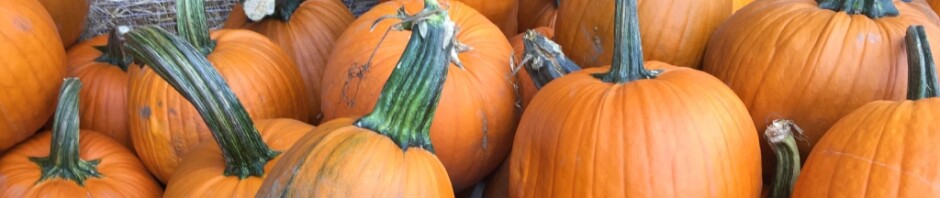
What’s New for the 3rd of August: A mix of Heinlein reviews; new jazz out of Vermont and a grab bag of archival reviews; Italian American food writing, and more
B-52s, “Love Shack”
There’s a contradance going on just now. It’s a new contradance band here on the Estate. Drink Down The Moon is the name they’ve given themselves after the novel by author Charles de Lint. They’re comprised of Catherine, the wife of Iain our Librarian on violin and hand drums, Béla on violin, Finch playing English smallpipes, which I believe are made by the esteemed Julian Goodacre, and Gus or myself as usual on concertina. It’s Gus tonight fir reason you’ll see below.
The old Church is where we hold the dances, ironic I know as the Scots Church didn’t like dances at all, but we’ve not had Services there since well before the Great War. It was used as storage ’til the Fifties when it became a space for gatherings such as Eventide meals done buffet style where the dining space was too small for all who were invited, so we do community suppers there. And the stone floors and no seating make it perfect for these dances
My left knee, injured many decades ago, is acting out, so I decided to stay in the Pub and listen to the Neverending Session which has been playing a lot of hambos (think of them as a sort of a mazurka if you wish) this evening as I write up these notes. Gary Whitehouse as always did the music…
Cat has a confession to make about Robert Heinlein’s fiction: ‘The Cat Who Walks Through Walls is, after over thirty years of my reading works beyond count by him, my favorite novel by him bar none. There are without doubt better written novels by Heinlein that stir strong passions in readers, say Starship Troopers and The Moon Is A Harsh Mistress, both of which can cause otherwise sensible readers to start hissing and spitting at each over the perceived political and social commentary in those books, and let’s not even broach the matter of Stranger in A Strange Land, as that work will really get the mojo rising in many readers!’
Another novel written in the last years of his life drew this comment from Cat: ‘Robert Heinlein’s Friday was a novel that deeply divided critics when it was published. Part of that was the gender and race politics of a male author writing a female character that got raped, part of it was the usual kvetching about every novel Heinlein wrote from Stranger in a Strange Land to the end of his writing career.’
Joel looks at a juvenile, The Star Beast: ‘Beating out The Hitchhiker’s Guide to the Galaxy by a good three decades, and Men in Black by over four, Heinlein didn’t just do this story first, he did it best. I’ve been enjoying the recent books in John Scalzi’s Old Man’s War series. The last few books have been much more about diplomacy than space battles, and are no less riveting for it. But who knew that Heinlein, the creator of the self-same military science fiction tradition which led to Old Man’s War, was himself quite capable of having his heroes save the day by talking and listening as well?’
J.S.S. Boyce has a long and thoughtful look at Heinlein’s otherworldly take on the post-apocalyptic novel, Farnham’s Freehold. It’s almost on the edge of science fiction and into the realm of human psychology or social satire, à la Brave New World or Lord of the Flies or even The Road.
He also reviewed three of Heinlein’s juveniles, which we’d now maybe call YA, Between Planets, Starman Jones, and The Rolling Stones. He says of the former, ‘The writing is competent, as always: straightforward and readable. The plot and characterization were a little thin for my taste. Heinlein’s moralizing has been known to get the better of him. One of the things he moralizes about is patriotism and integrity and sometimes he does a really good job at getting those ideas in there at no expense to the story, but not this time.’
He liked Starman Jones better: ‘RAH didn’t apologize for a certain degree of formula in these stories, an update of Alger’s from a century earlier: a young man from a modest background, through the virtues of hard work, a bit of luck, and (uniquely, in Starman Jones) perhaps taking some liberties with the truth to get his foot in the door, eventually proves his mettle and resourcefulness and saves the day.’
And he found The Rolling Stones quite curious indeed. ‘In the hands of a lesser author, the novel might seem somewhat meandering. The Stone family head off to visit Mars just for something to do, one thing leads to another and the journey continues. There are mini-episodes of adventure here and there, but the book as a whole doesn’t have a clear destination or anything clearly at stake.’
Kathleen has a confession regarding Time For The Stars: ‘Robert Anson Heinlein is inarguably one of the great formative writers of science fiction. His work is not only seminal, it’s good — well-told, well-plotted, with solid characterization. It’s also frequently thought-provoking, with underlying philosophy and speculation that stays with the reader for a lifetime. Most modern readers attribute these qualities to the more outré and/or famous novels, like Time Enough For Love and the iconic Stranger In A Strange Land. But Heinlein’s so-called juveniles are actually among the most thoughtful of his books.’
Leona liked everything about The Milk of Almonds: Italian American Women Writers on Food and Culture, including the cover and the introduction. ‘The Introduction in The Milk of Almonds is so packed with information that I could write a review just on it alone. It twines food and almonds and history and culture all together in a strong thread of friendly narrative.’
Remember the food-and-football coming of age film Bend It Like Beckham? Nathan does. ‘Jes comes across as a girl who doesn’t want to reject her family or show disrespect for her culture, but is also desperate to pursue her own dreams. How this is resolved is a story of Indian cooking, cultural absurdity, family love, and an abiding desire to play what the English call “the beautiful game,” all done without ever becoming preachy or saccharine sweet.
The Cats of Tanglewood Forest is an expansion of a much shorter work by de Lint and Vess entitled A Circle Of Cats which Mia says is ‘is not a novel, or a novella, or even, at 44 pages, a chapbook — those are merely convenient labels assigned by publishers and booksellers to assist them in categorization. Call Cats instead an enchantment, a weaving of words and pictures into pure magic. Charles de Lint is adept at converging the mundane world and the Otherworld: at touching them together briefly to produce intense moments and life altering episodes, and then gently letting each world retreat from the touch and settle back into its own normality, usually with both sides all the better for the experience.‘
From the archives, Big Earl loved Petit Fou, the second album by the group that was by then known as Matapat. ‘Largely driven by the incredible bass of Simon Lepage, Matapat mixes many outside influences to their style. There are shots of jazz, as on “Soupir de St-Albans,” or funk as on “La jolie Rochelle.” There’s even an East/West exploration on “La vieille galope,” with the band playing with Indian musicians. This is a band that’s unafraid to push their tradition, and it succeeds at every turn.’
He also was highly impressed by Music From Vietnam, a big set of Vietnamese music on CD. ‘Isolated for almost a half century by various conflicts, the music and art of these people have only been found in the Vietnamese community stores of Western cities, transported in for the local residents. Caprice Records of Sweden has offered up five volumes of a more readily available variety of this tradition, allowing those who don’t hunt this stuff down an easier opportunity to discover yet more great music from Asia.’
David reviewed Life and Times, a compilation album by fellow Canadian Ray Materick. ‘A solid slice of his past, and an encouraging chunk of the present, boding well for the future. A look at Materick’s Web site shows a large collection of relatively new material which is being made available and promises the re-issue of that first album. From those scuffling days, a man, a guitar and an empty street. Materick is older now, wiser, settled, but grounded and making some of the best music of his career.’
Judith loved Vested, an album of folk music from a local musician, Vancouver, Washington’s Tom May. ‘Tom has a wonderful voice that might remind one of Stan Rogers. I like it best on the quick songs, when it is less stylized. On the slower tunes I wish he’d keep it steadier, because I think it’s a dynamite voice, but at this point I think Tom must like it the way it is.’
But she was less than fond of Karen Matheson of Capercaillie’s second solo album. ‘Time To Fall is expertly overproduced with synthetic strings, tinkly piano, and other correctly swooshy noises by Capercaillie accordionist Donald Shaw. Most of the songs are written by Scottish singer-songwriter/guitarist James Grant, who largely ignores proper nouns, story lines, and historical and geographical references; most of the songs are about hope, hope of better days, hopes for loves, wishing well.’
Remember Matapat? Naomi reviewed Bourque, Bernard, & Lepage’s debut album, which they called Matapat, which was soon to be the name of their trio. ‘The members of this energetic trio all share a common goal, to familiarize their audiences with the unique culture of Quebec, and allow for future ambassadors of traditional Quebecois music and folklore to be able to share their talents. A very wonderful goal to have, and one I wish them well with.’
Our What Not caused Reynard to ponder something in the Nibbling Mouse Folkmnis puppet: ‘I’ve no idea where it’s been since it came in for review nearly twenty years ago, nor do I know how it ended up in the room off the Estate Kitchen that houses the centuries-old collection of cookbooks, restaurant menus and other culinary-related material but I just noticed it there, a very adorable white mouse puppet holding a wedge of cheese in its paws. Somebody had placed it in a white teacup on the middle of the large table so I really couldn’t overlook it.’
There are bands for which I’ve a deep liking for pretty much everything they done and so it is with Chicago’s ‘Saturday in the Park’ which I’ve heard playing off and on over the past forty years. It’s certainly an upbeat, feel good summer song much like ‘Love Shack’ by the B-52s. It was recorded forty years ago this August at the Park West in Chicago.
About Iain Nicholas Mackenzie
I'm the Librarian for the Kinrowan Estate. I do love fresh brewed teas, curling, English mysteries and will often be playing Scandinavian or Celtic music here in the Library here in Kinrowan Hall if the Neverending Session is elsewhere. I'm a violinist too, so you'll me playing in various contradance band such as Chasing Fireflies and Mouse in the Cupboard as well as backing my wife Catherine up on yearly Christmas season tours in the Nordic countries.