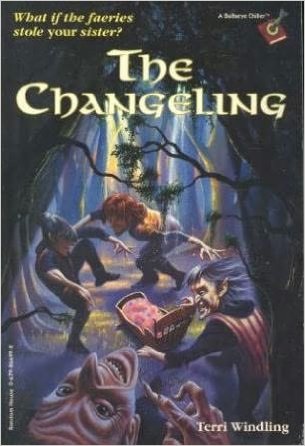
 Charlie and his family live in a time when a silent horror walks the streets, striking people at random and stealing their lives away. Called consumption, it’s as inexplicable and uncontrollable as any ghost. When consumption comes for Charlie’s two brothers, then for his father, Charlie and his mother and little sister flee the city to live with Granny Carroll in the Blue Ridge Mountains.
On Granny’s farm, high up in an isolated mountain clearing, Charlie’s family at last can hope that they’re safe from consumption. But Granny tells of other hauntings, of the Good Neighbors who came along in the boats with Charlie’s grandparents and the other immigrants from Ireland. The Good Neighbors (which is what the wise call the faerie folk, so as not to draw their attention) are tricksy and dangerous. Sometimes they, too, have been known to steal people in the night.
But if Charlie’s family unwittingly brought the Good Neighbors with them from Ireland, they also brought a fiddle, and memories full of the old, powerful tunes. Granny Carroll played, and she taught Charlie’s dad, and Charlie’s dad taught Charlie. And it’s a good thing, too, because the Good Neighbors in Granny’s mountains have a fiddler of their own…
This is a simple story, simply told. Terri Windling draws on extensive research into the changeling legends of Europe and elsewhere, as well as tales of the Good Neighbors and their Native American counterparts, binding all of this folklore convincingly into the life of a family in the days before automobiles and recorded music were common. She makes the reader believe that consumption and faerie neighbors could be just as mysterious and frightening, and that someone who could remember and make music carried with him a power to bring events to life, to bring change.
The Changeling is part of a series for young readers, called Bullseye Chillers. But Windling’s writing style is ageless. The protagonist, Charlie, is a boy, but as Windling writes him, it’s easy for any reader to identify with his dilemma and his thoughts and feelings as he works and struggles his way toward the solution. The description and characterization are spare, but compelling. Windling draws each character with just a few words, but they stand firmly and move believably through their world.
Windling’s vision of the Good Neighbors is simple, but it’s also complex. When seen by humans, some of the faerie folk are wicked, some are good, and some are neither. But Windling gives the reader the sense that in their own world, they have their own rules. The one thing humans and their Neighbors share for certain is the love of a good tune.
(Bullseye Chillers, 1995)
