
I have yet to encounter a Rough Guide collection that is less than excellent in terms of selection, production and presentation, and these two new CDs maintain the series’ tradition of quality music.
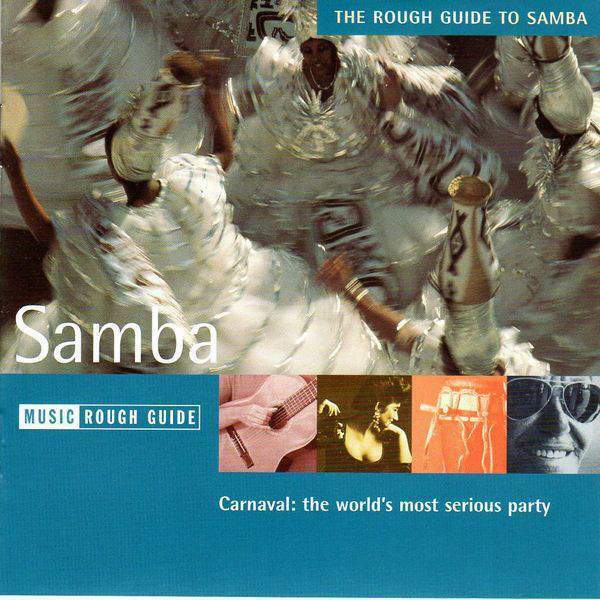 Rough Guide to Samba
Samba is subtitled “Carnaval: the world’s most serious party,” and explores the close links between samba and Brazil’s annual bash. It’s not all party music, though; several mellow samba-cancão tracks provide a respite from the lively samba beat. There’s plenty of variety in other ways, too: vocal styles, instrumentation, male and female singers, and instrumentals all demonstrate the wide range of this popular New World musical celebration.
The album opens with the call-and-response type of chant known as condomble, led by Leci Brandão; this one has nothing but percussion backing the vocals. Then, for contrast, there’s the suave urban samba of Moacyr Luz. His song, “Jogo Rasteiro,” features his cool vocal style backed by lots of guitars playing arpeggios, and the usual complement of percussion. Paulo Moura’s group plays an instrumental version of the old standard “Pelo Telefone,” in the jazzy choro style, with a hot clarinet carrying the melody and a trombone on counterpoint. Yet another face of choro is shown in “Choro No. 2” by the marvelous guitar duo of Barbieri-Schneiter, with lots of classical and jazz influences.
But there are plenty of examples of carnaval-style sambas, with their Portuguese guitars, deep bass “surdo” drum, and choral responses behind a lead singer indulging in flights of improvisation. The aging but still powerful Dona Ivone Lara is captured in an energetic live track. And several of the samba “schools” are represented with excellent numbers like “Mangueira Chegou” and “Nostradamus.”
Some younger practitioners of samba are included. Osvaldo Pereira turns in a hip-hop style of urban samba, complete with horns and a pseudo speaking style vocal. The Familia Roitman plays an engaging version of a well-known 1930s song, “A Cabeça.” And the sublime Luciana Mello closes the album with a lilting a capella rendition of “O Mar Serenou,” over the sounds of a tropical thunderstorm — very sexy and effective.
Merengue and bachata, the national musical forms of the Dominican Republic, have gained international fame in the past decade. These related styles of extremely lively dance music have swept the world, and this collection, “Latin beats from the Dominican Republic streets,” shows why.
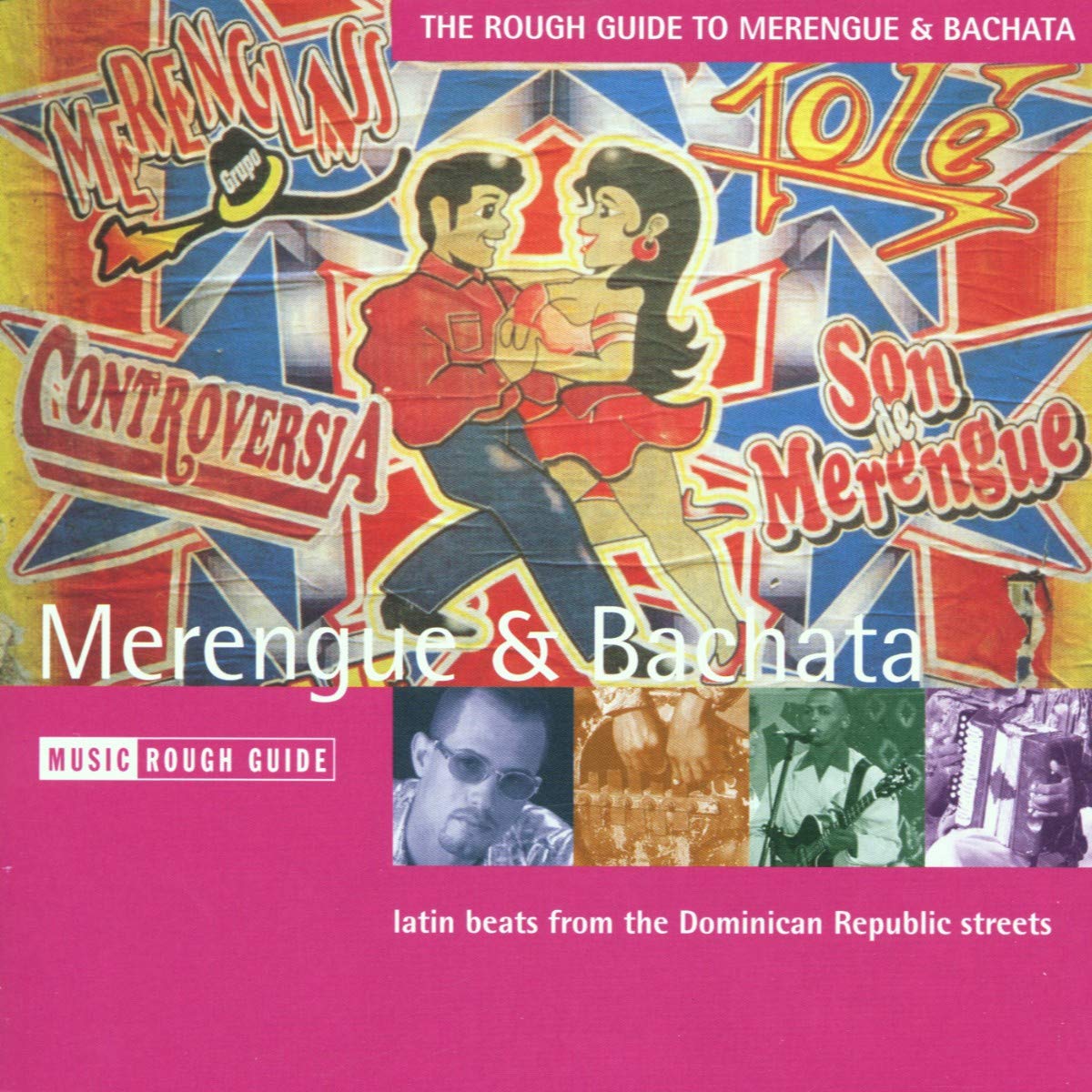 Rough Guide to Merengue & Bachata
Merengue & Bachata has less variety than the samba collection, but this music is endlessly fascinating to listen to. Just don’t drink a lot of coffee before you play it, because your average merengue piece is like a triple shot of espresso, with extra caffeine. If your feet aren’t moving and your nerves jangling after a few tracks, check your pulse — you may be dead!
Merengue and bachata both have roots deep in African music. The basic elements of merengue are a fast 2/4 rhythm beat out on bongos, congas or similar drums and accented with the rasp of a metal grater called a guayo, trebly guitar played with a staccato fingerpicking style, tenor vocals and prominent bass. Some modern styles include synthesizers. Bachata, which grew out of the bolero, is similar to merengue but tends to be slower, with acoustic instruments more prominent. The more traditional “merengue tipico” band features accordion and saxophone as the main instruments, while newer forms such as “rap-a-rengue” and “techno-rengue” have hip-hop style vocals and beats, and electronic instruments.
Merengue & Bachata opens and closes with tracks by Antony Santos. The first is a brisk merengue, the closer an even faster bachata with sax and accordion.
The selections on this CD lean more toward merengue, with the bachata tracks providing variety. Several of the bachata selections feature an interplay between the bass and the melody that reminds me of Captain Beefheart’s experimental blues. In between the verses, the bass hits an off-tempo series of dissonant chords that cut right across the rapid-fire playing of accordion and sax or guitars.
Some of the most interesting pieces here are the blind tenor Teodoro Reyes’ “El Matatan,” a bachata with lots of staccato guitar arpeggios behind Reyes’ powerful nasal vocals; Samuelito Almont’s merengue tipico, “Que Pena,” with lots of interplay between the sax and accordion; Luis Melo’s “Que Diran la Gente,” a slow bachata that sounds almost like a Mexican corrido; and Pedro Veras’ “Te la Compro,” a fairly sedate merengue with Veras alternating singing and spoken improvisations in his strong baritone over jagged, angular guitar picking.
Blas Duran’s “house” version of “Crei,” is a rap-a-rengue with Duran’s bass-baritone vocals over a weird but effective foundation of accordion, bass saxophone and deep surdo drum — if American rap sounded more like this, I could listen to it!
As usual, these Rough Guide CDs give plenty of background on the music and musicians, including identifying the sources of the individual tracks. These are an excellent starting place for an exploration of these captivating New World musical styles.
(World Music Network, 2001)
