Singer-songwriters in the Americana field are as plentiful as mushrooms in the spring. I certainly can’t review all of the releases that land on my desk, but here are some recent releases that, to me, rise above the rest of the pack.
Anna Tivel’s Heroes Waking Up
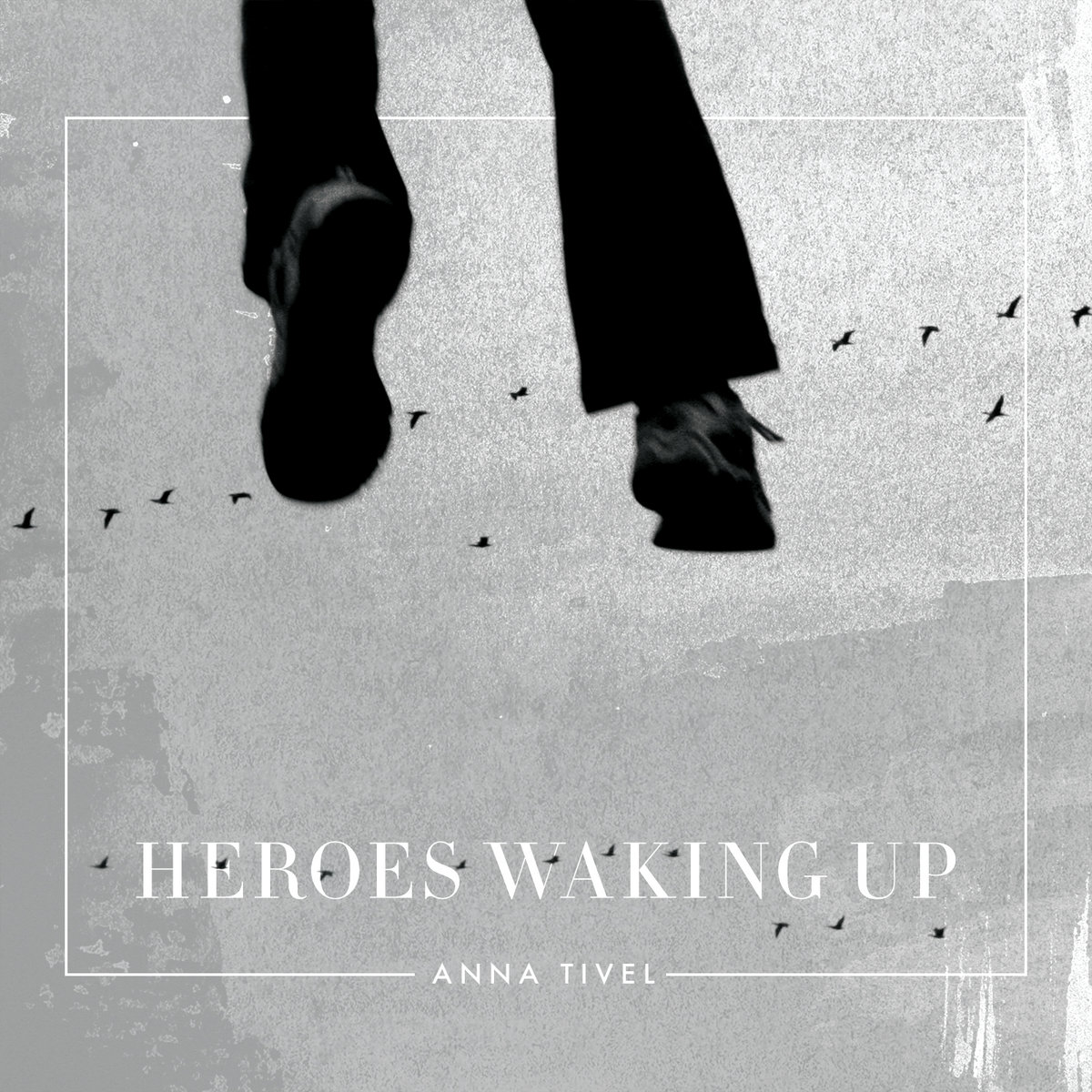 Anna Tivel sings her songs of world-weariness and hope in a voice that sounds a lot younger than her words. The Northwest-raised Tivel currently calls Portland home, but she’s spent a lot of time on the road and with her own thoughts and a guitar. Heroes Waking Up is her third album, and I find it far above the general run of singer-songwriter folk.
I’m not usually taken with girlish, whispery voices, but Tivel sings such hard-won, emotionally stark and honest verses with hers that I was immediately won over. And she casts her poetry in dark colors, the tunes taking unexpected melodic twists and down-turns that call to mind the likes of Bowerbirds, Everybodyfields and Blind Pilot.
I’m going through the tracks and trying to pull out exceptional ones to highlight in a brief review, but not succeeding. The two that hit me the hardest, I guess, are two that aren’t currently available in video form or on Soundcloud. “Lillian and Martha” is maybe the sunniest of these 11 songs, but even its message of the triumph of love rests on a bed of melancholy. The titular characters are two long-time lovers who the listener senses will barely have time to savor the joy in finally being able to get married after 50 years together, because their health is fading even if their love isn’t. And “Black Balloon” is a somewhat cryptic portrait of a man braving a storm (real or metaphoric doesn’t matter) out of an unwillingness to abandon his home. What to make of lines like this one in the first verse? “Get back little doggies I’m not your man, I was never the savior of anything, just a hungry laborer reticent to belong to a world that so soon forgets.”
But I don’t think there’s a weak track. The haunting love song “Wild Blue Field,” the elegiac remembrance of a young man lost in war titled “Shadow Of A Son,” the dark-country war song of “Two Pencils And A Photograph,” the ode to the lonely road “Slow Motion,” and more, every one has at least one breathtaking moment, when tune and words combine in a way you never expected and stop you in your tracks. Tivel sings volumes without ever turning up the volume. Take “Dial Tone,” for instance:
Heroes was recorded by Austin Nevins, who has played with the likes of Josh Ritter, Anais Mitchell and The Mountain Goats; here he plays guitar, lap steel, banjo and pump organ. A handful of other musicians help Tivel flesh out these songs in arrangements that are never fussy or cluttered. It’s the kind of album that can renew your faith in singers, songwriters and folk music.
(Fluff & Gravy, 2016)
Anna Tivel has a website and is on Facebook. You can sample and buy Heroes on Bandcamp.
Aoife O’Donovan’s In the Magic Hour
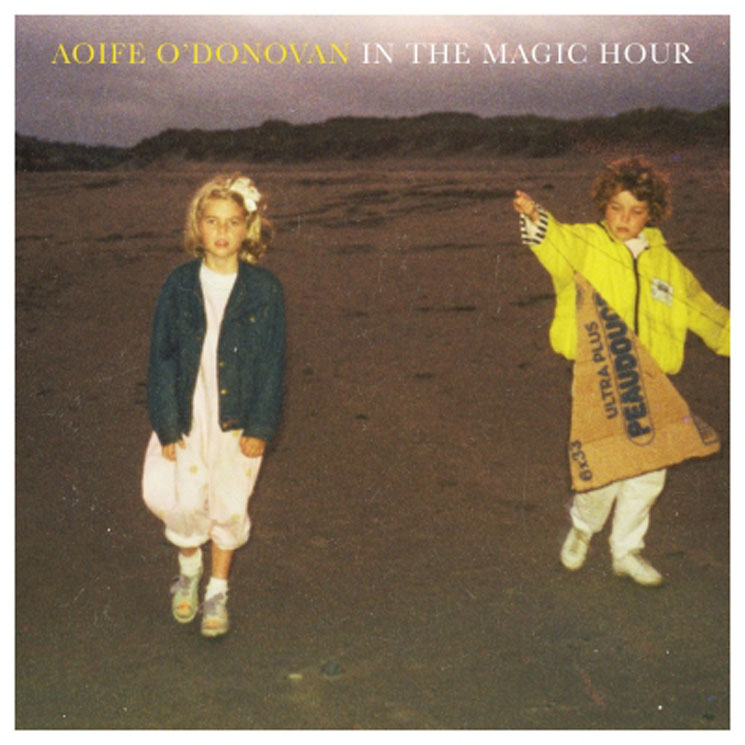 As is typical of me, I much prefer the arrangements of Aoife O’Donovan’s songs on the second, acoustic disc in the limited-edition version of her latest releast In the Magic Hour. This is O’Donovan’s second solo release since the stellar chamber-Americana group Crooked Still went on extended hiatus or broke up. It’s still folk-pop of the sort on her debut solo release but with added heft and depth. The kind that if an artist is lucky (or preternaturally gifted as O’Donovan is) comes with age and maturity and some brushes with mortality. In her case it was the death of her Irish grandfather, the one she spent many childhood summers with in the village of Clonakilty. The cover photo is of her and her sister playing in the beach twilight there.
“I wish I was young,” she sighs on the sort-of title track “Magic Hour.” That’s one of several top-notch tracks on the official release that are repeated in stripped-down arrangements on the second disc. The others are the heartbreaking “Porch Light,” the momentous “The King Of All Birds,” and the gently nostalgic “Stanley Park.” The disc is rounded out by two heartfelt covers, one of Springsteen’s “Nebraska” and the other a spot-on, languid take on Joni Mitchell’s “You Turn Me On, I’m A Radio.”
The main disc’s arrangements and production, by Portland’s Tucker Martine, are far from cluttered, but they do feature some vocal reverb and some cello charts, and a modern sheen that I prefer less than the warm glow given the acoustic takes. Still, songs like “Hornets” and “Magpie,” written for her grandfather, and especially the elegiac “Donal Og,” which features his recorded voice singing in the fade-out, are head and shoulders above your average Americana recording.
Fans of all kinds of folk and Americana, from Shawn Colvin to Alison Krauss, will find much to love in In the Magic Hour. Spring for the deluxe double-disc version.
Here’s a video of “Magic Hour,” the “electric” version.
(Yep Roc, 2016)
Matt Patershuk’s I Was So Fond of You
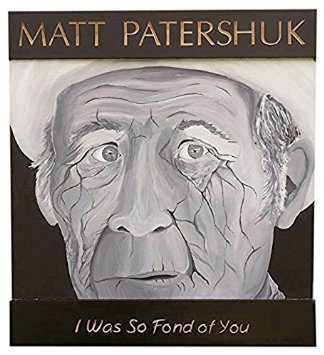 Canadian Matt Patershuk sings his country-tinged folk songs in a beautiful, slightly frayed bass baritone that is refreshing in a world of tenors, falsettos and screechers. It helps that the songs are sturdily constructed by Patershuk, and the album recorded with great dexterity by Steve Dawson at his Henhouse studio in Nashville.
Patershuk seems to be a bit of a late starter, as this is his second album of a career that only got started in 2011. He writes and sings like a veteran, though, proving once again that the best songs are highly specific and thus universal. Specifically, this album revolves around the tragic death of Patershuk’s sister Clare, killed by a drunk driver in 2013. In the title track he croons an ode to her to a slow, sad waltz tune, while he uses another number, “Harviestown,” to fantasize about taking revenge on her killer.
Mortality is a thematic streak through many of the songs, including “Mean Coyotes” about the gruesome end of a broken-down horse, “Little Guitar” a ballad about an instrument played by a broken veteran, and “Pep the Cat-Murdering Dog,” a truth-based tale about the execution of a canine for the death of a prison warden’s feline. “Burnin’ The Candle At Both Ends” is a spiffy honky-tonk shuffler, “Prettiest Ones” an ode to good songs, and “Smoke A Little Cigarette” a swinging bit of bad mental health advice.
The album ends on a tender note, another love song to his sister and the “Tennessee Walker” she once loved.
Here’s a video of a live duo recording of “Burnin’ the Candle At Both Ends.”
I Was So Fond of You was essentially recorded live with no separation. It’s played by a crack band featuring Dawson on all kinds of guitars, the multi-talented Fats Kaplin on fiddle, mandolin, banjo, accordion and more, and with Anna Egge providing lovely harmonies. Beautifully packaged. Highly recommended.
Black Hen, 2016
Corin Raymond’s Hobo Jungle Fever Dreams
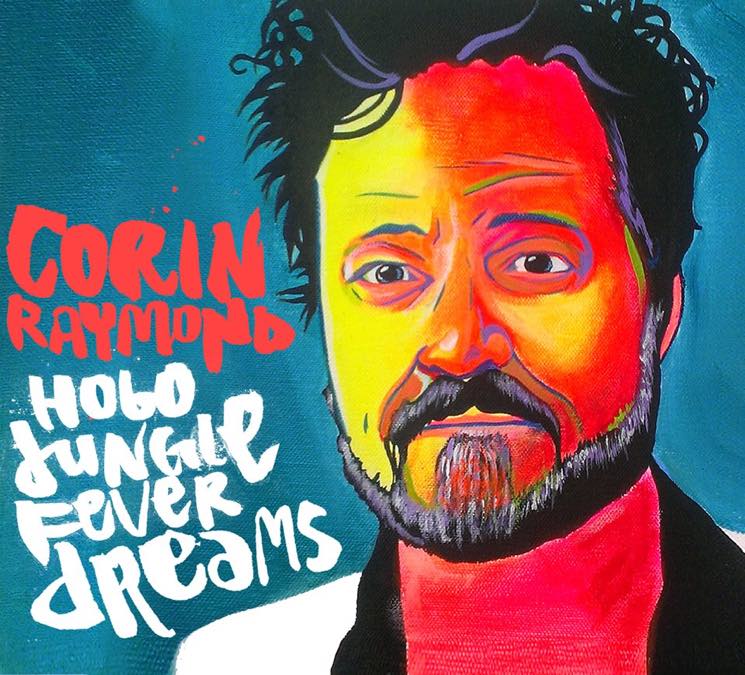 Where some musicians, like Matt Patershuk for instance, take a minimalist approach, Canadian songwriter and storyteller Corin Raymond take an ultra-maximalist one. He crams as many words as possible into each stanza, verse and chorus, and into the album’s liner notes too. Fortunately, he does it in a way that’s quite entertaining.
The 10 songs on Hobo Jungle Fever Dreams run a gamut of styles, reflecting the way those songs came together on the road and with a varied handful of collaborators. On some, like the opener “Hard On Things” and the tour-de-force street scene “Morning Glories,” he pretty much talks the verses over a musical setting. The former is a dark-tinged strummed country blues with portentous arco bass as he enumerates the things that he’s hard on. The latter is a Tom Waits-style piano ballad that paints a picture of down-and-outers who refuse to let their condition get them down. He does sing the choruses though, in an unexpectedly sweet tenor, with harmonies from Sarah Harmer. Here’s a lovely performance video of that song.
The haunting “Under The Belly Of The Night” recounts in soulful fashion the deaths of certain famous musicians, while “Two Miles Of Train” sets a talking blues over a bare-bones freight-train rhythm with some swell mouth harp from Micheal Pickett. Raymond rocks out in greasy bluesy fashion on one of the only songs here that he didn’t write or co-write, Doug Norquay’s “Best Demented Cowgirl Face,” as well as on the honky-tonk shuffle of “I Only Drink A Little.” The denoument is the lovely folk gospel of “Take Me To The Mountain” in which an old soul pleads for another little while before he dies.
The packaging and accompanying booklet are amazingly designed and illustrated with a dozen or more day-glow psychedelic portraits of the musicians. All in all, Hobo Jungle is a rollicking fever dream of an album by a writer and musician who seems to be overflowing with tunes and tales.
(Rascal Records, 2016)
