
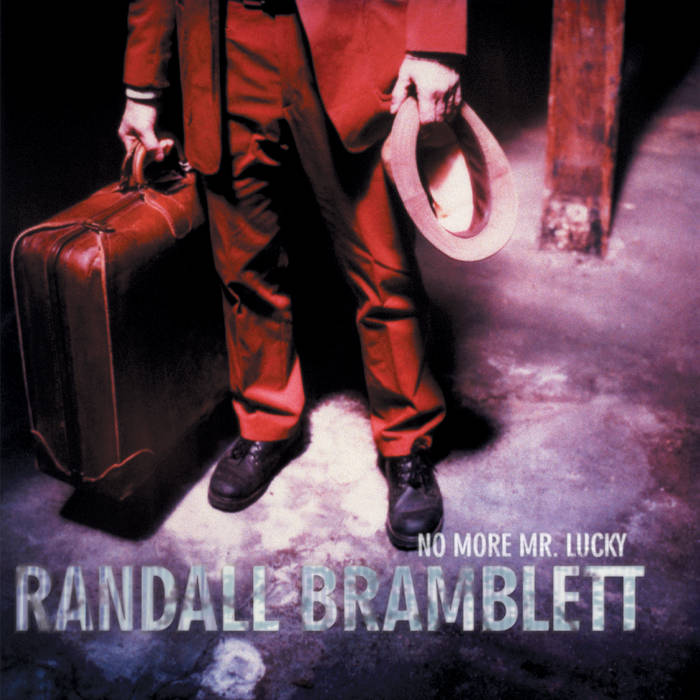
 Georgia native Randall Bramblett has recorded an infectious blend of jazzy pop, r&b, soul and country-rock in No More Mr. Lucky. It’s his fourth record in a career as sideman and solo artist that spans a quarter of a century.
Bramblett released two solo r&b-type albums with New York session players in the mid-Seventies, then went on to play with Southern rock and soul acts — including Sea Level, Gregg Allman, Robbie Robertson and Levon Helm — for the remainder of the decade and into the Eighties. In the late Eighties, Steve Winwood recruited him for his comeback tours, and Bramblett also toured with Traffic on the English country soul supergroup’s 1994 reunion.
His first album for New West follows on the heels of 1998’s See Through Me (Capricorn), a more stripped-down and rootsy effort than Mr. Lucky, which sees him returning to form with this set of keyboard- and horn-laden tracks. He co-wrote all 11 songs with his long-time collaborator Davis Causey and/or Jason Slatton, both of whom play guitars here.
At first listen No More Mr. Lucky seems out of place on New West’s roster of alternative country and singer-songwriter acts. But even when Bramblett resembles “Nothing Like the Sun”-era Sting, there are deft touches that keep this record grounded close to the singer’s Georgia roots. A bit of dobro here, a twangy electric guitar or strummed acoustic there, a 12-bar blues structure somewhere else. And the lyrics are rife with rootsy images: fishing, planting sunflowers, driving lonely roads. Producer John Keane, who has worked with alt-country and folk acts like Vic Chesnutt, Bottle Rockets, Cowboy Junkies and the Indigo Girls, has somehow created a recording that is at once densely layered and open, airy.
You know right away that you’re in deep soul territory with the opening bass blast of “God Was in the Water,” a slow, scorching r&b number. Bassist Michael Rhodes (a prominent country session player whose recent credits include Rodney Crowell’s Houston Kid) lays down a deep funky bass groove behind snaky arpeggios on an electric guitar that sounds as though it was run through a Leslie cabinet — a time-honored blues effect.
Bramblett’s lyrics have an impressive poetic quality, and “God Was in the Water” establishes the album’s theme of searching for something lost, usually love or redemption. Here, a clumsy God is fishing for souls, “but no one’s biting.”
In “Aching for a Dream,” it’s a character inspired by Beat poet Neal Cassidy, searching for his own soul and unable to slow down and look at himself. “I can see you stumblin’ down the lonely railroad tracks/And some lonely voice you can’t get rid of/Makes you have to count all the ties/And who’s gonna stop you?” run the almost spoken lyrics, over a dusty, Southwestern-feeling wash of twangy reverb-laden guitar and tinkly piano. Bramblett’s soprano sax solo flutters like a butterfly buffeted by the desert wind.
“Hard to be a Human” is a satiric portrait of Adam as Everyman, “walkin’ in the garden, goin’ by the plan/Dreamin’ ’bout my baby/Apple in her hand.” A funky gospel-style chorus backs Bramblett’s silky voice, as pumping Hammond organ and saxes emphasize the groove.
“Disappearing Ink,” the final track, is the only overtly country song, a medium shuffle played mostly on acoustic guitar and brushed snare drum. Make Tim White’s keyboards an accordion and maybe add a steel guitar and you’ve got a sure-fire alt-country classic; Bramblett’s lyrics are easily a match for Jay Farrar’s at his most poetic: “Pocket full of silver, a hat full of rain/You keep some for yourself/And some you give away.”
“Lost Enough” is a lush, aching ballad of loss, with a chorus that is bleakly hopeful: “You run … but where are all your answers? You cry … but where are all your tears? When you’re lost enough, you’ll find them.” “Sunflower” is in a similar vein, with the simple and sweet chorus of “I bought myself a sunflower” answering the emptiness of the verses, which spell out the boredom of a routine life. The nimble but despairing lyrics of “End of the String” bely the tune’s arrangement as an Allman-style hard-rock anthem: “Newspaper change softly chimes/Five fingers in a pocket with a couple of dimes/Well I think I’m gonna count my rosary beads” … “Trees in the park like broken bones/Everybody in the world looks far from home/Everything’s broken/Maybe it’s just me…”
The highlight of this remarkable album of remarkable songs is “Get In Get Out,” a frantic, organ- and horn-driven bit of jazzy r&b. The verses are rap-like, spoken lines of loss and despair, bolstered by an insanely catchy chorus: “Get in get out breathe out the dark/All you can do is save yourself/Leave the rest behind.”
Mr. Lucky is one of those albums that’s almost impossible to classify: full of joyful melody and despairing poetic lyrics, crossing genres from jazzy pop to country soul. It’s an impressive tour-de-force of songwriting and performance from a major but overlooked talent.
Find out more at New West Records.
(New West, 2001)
