
Something interesting is going on in Italian folk music. Judging from these three recent CNI releases, it’s something of a fin de siecle Italian version of the British and American folk-rock movement of the Sixties. These three groups, each hailing from a different region of Italy, are combining their native folk music idioms with various aspects of World Music. The result is fascinating and mostly a lot of fun to listen to.
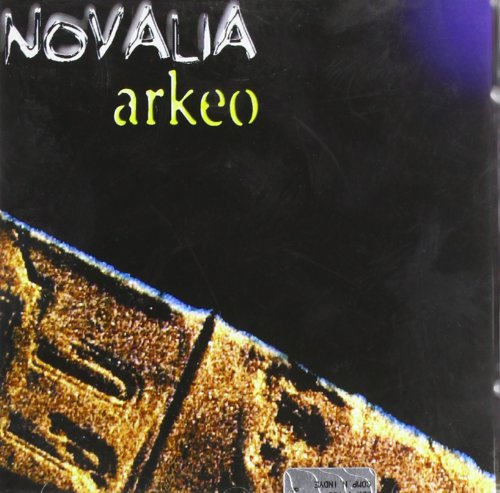 Novalia’s Arkeo
This group of five men from the central Italian region of Lazio has been together since 1985, according to the CNI label’s website. This CD prominently features the vocals of Raffaello Simeoni, who also plays a variety of keyboards, stringed instruments and bagpipes (Galician and Balkan). He has a powerful baritone and, like all the vocalists on these three CDs, sings in a highly emotional manner.
Novalia’s music sounds very Mediterranean, with a variety of Euro- and African beats and loops. In addition to Simeoni’s instruments, other members play bass, electric guitar, piano, drums, bouzouki, as well as samplers and other electronics. In some cases, they manage to sound atmospheric without being spacey, but at other times, the heavy orchestration detracts from the music’s primitive feel and energy.
The CD opens with “La Ballata della Cecilia,” which is described in the liner notes (which are offered in Italian and English) as a traditional feminist folksong of the Lazio region. It’s quite a powerful and affecting piece, heavy on the traditional-sounding stringed instruments over layered percussion.
Among the other high points are a flute-oud section in the middle of the second track that has a notably Italian sound, a wonderful instrumental section featuring strings, flutes and pipes in the third track, and hypnotic vocals on the eighth track, which is taken from a Bulgarian tune. Unfortunately, this same track has a bass drum loop that is extremely heavy and detracts from the intriguing melody.
I had similar complaints about several other tracks, in which the melody or the delightful mix of instruments is blown away by layers of drums and heavy bass. The vocals too are often so heavily echo-laden that it further emphasizes Simeoni’s over-the-top delivery. I guess that’s the only way to get some people to pay attention to “folk” music these days, but I find it off-putting after a while.
 TancaRuja’s in terra e in chelu
TancaRuja, another all-male quintet, bases its sound on the music of Sardinia, according to the label’s website. None of the liner notes are in English, and interestingly the lyrics are printed in two dialects — I presume Sardinian and mainstream Italian. Sonically, this band leans much more toward Africa, with a little of the Middle East thrown into the mix. It’s a much more stripped-down sound, with fewer instruments and a lighter hand in the production booth. Aside from acoustic and electric guitars and bass, the band uses a lot of different drums and percussion instruments, but hardly any of the wide array of ethnic instruments favored by Novalia.
Vocalist Beppe Dettori has more of a pop-oriented tenor, and in general, producer Alberto Erre relies far less on echo and other effects.
This CD starts off with a strong track too, with an African-style rhythm, chanted vocals, and a complex melody line on a lute or oud. Several other tracks have rhythms that reminded me of Johnny Clegg’s South African group Savuka. In other places, as in the third track, the sound is more Central African, with a 6/8 time signature, talking drums, acoustic guitar and some kind of a marimba-type instrument.
Other nice touches are the acoustic ballad “Cantadore Canta,” Arabic-style vocals in “Fin’a chent’annos,” arresting harmonies in “Eni Ca…” and a jazzy flute part in “Vado Via.” In several tracks, though, TancaRuja lays on the electronica and echo-laden vocals, although not as heavily as the other two bands.
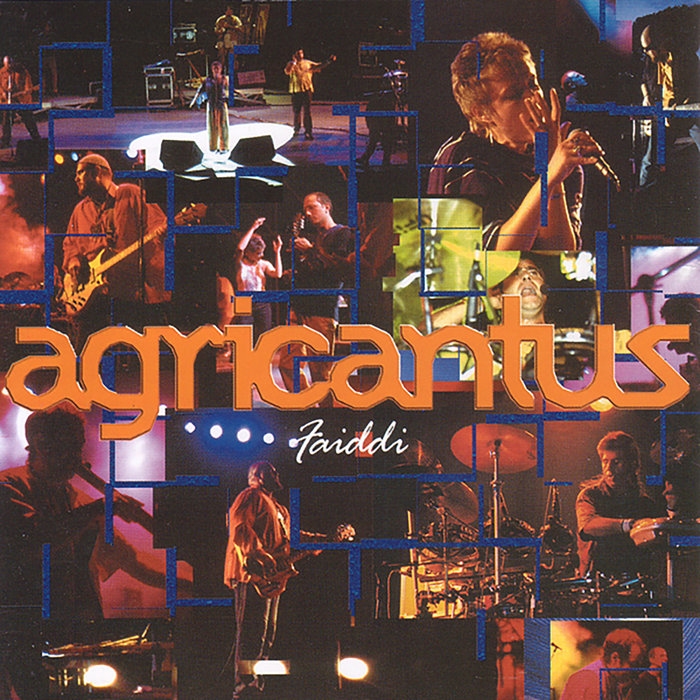 Agricantus’ Faiddi
Agricantus, which is Latin for “song of the wheat fields” (more or less), has been around for quite a while. Faiddi is something like their 10th album, including a “best of” CD that apparently enjoyed some American success. Another quintet, Agricantus has two vocalists, the Swiss-born Rosie Wiederkehr, and percussionist Tonj Acquaviva. Wiederkehr’s high alto mixes well with Acquaviva’s powerful baritone.
Most of the group hails from Palermo, from which it draws what Italian influences it still has. Of the three groups, Agricantus is the most World Music oriented, with lots of synthesizer, loops, trance and dance beats, heavy vocal echo and layered percussion. This group has strayed farthest from its folk roots and seems aimed squarely at the dance clubs of Europe.
The disc starts off strongly with “Li vuci de l’omini,” with a shout from Acquaviva, followed by a funky beat and bass line, and very soulful vocals.
The two singers often trade lead vocal duties, and do duets on several tracks. Wiederkehr, who doesn’t have a particularly strong voice, frequently employs a vocal technique that’s a cross between a Bedouin ululation and the yodel-like skip used by Dolores O’Riordan (The Cranberries). It’s a styling that’s effective in small doses, but Wiederkehr uses it a bit too frequently for my taste.
In addition to the opening track, I particularly like “Carizzi r’amuri,” which features Giuseppe Panzeca on the Persian setar in a lengthy improvised intro, leading into a funky 6/8 piece with vocals by Wiederkehr.
These three CDs are very professionally performed and well-produced discs with excellent sound. All of them are an intriguing blend of various parts Mediterranean folk, Euro-pop and World Beat.
(Compagnia Nuove Indye, 1999)
