
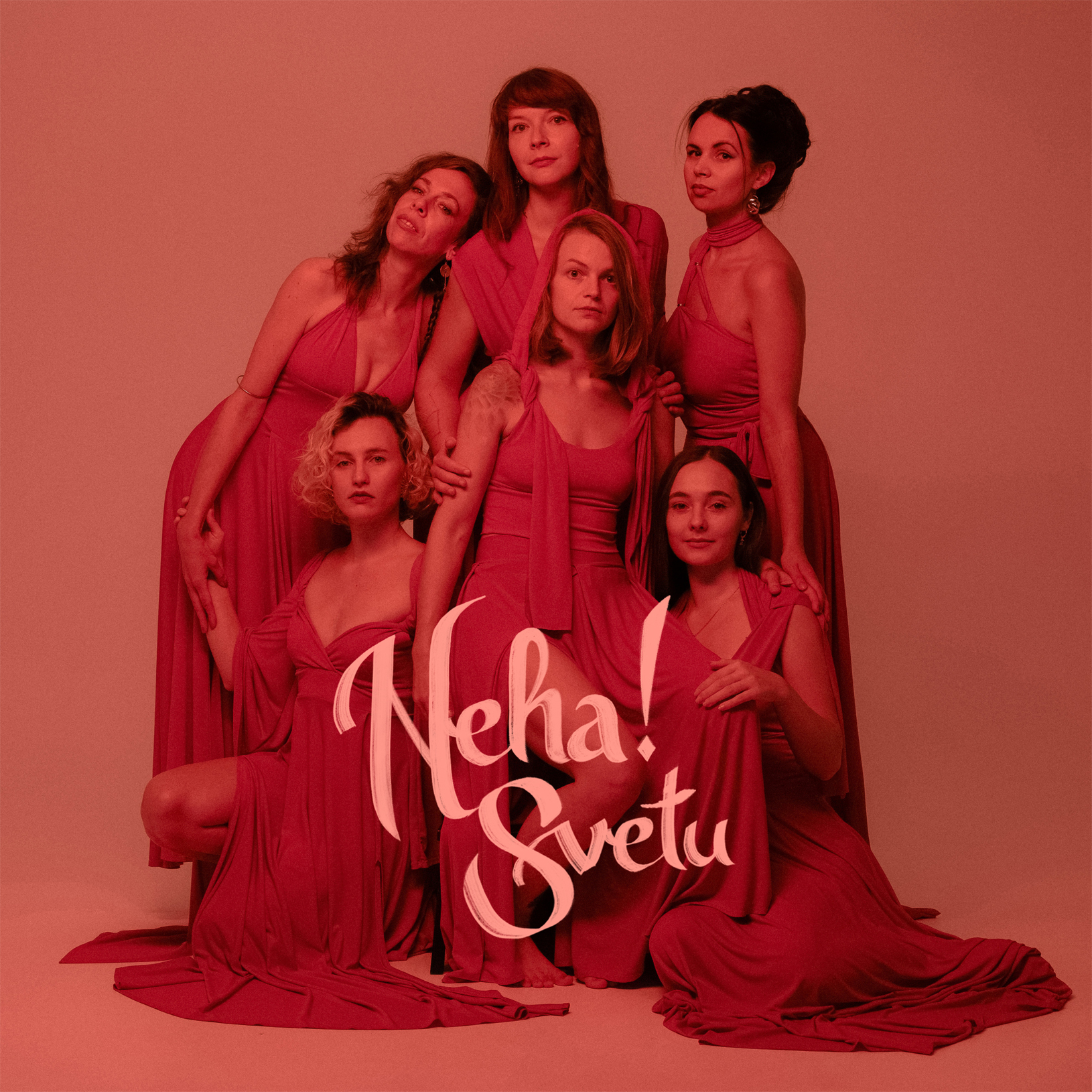
 The world can always use more Balkan vocal groups. One of the newest is the women’s ensemble Neha!, which came together during the Covid pandemic in 2020 in Slovakia. The group was founded by Zuzana Vranka Žiaková, who in addition to being a singer is an animator, cultural organizer and all-around artist combining visual arts, music, and digital technology to promote Slovak world music internationally. She was joined early on by choir director Bohdana Ljashko, who helped refine the singers’ passion for polyphonic music into a spellbinding live act.
The group’s name Neha! translates to “tenderness” in recognition of the singers’ attitudes of care and support toward one another, each with her own personality and set of strengths and interests. In addition to Žiaková they are singer Denisa Parobeková; Belinda Rašnerová, an artist with wide-ranging interests from music to visual arts, dance, and performance; Mária Valentová, a singer, full-time mother, and co-creator of women’s circles focused on ritual singing rooted in Slovak traditions; Kristína Kikon Kluvánek, voice researcher and sound designer; and Sára Halíková, musician and performer, visionary and social activist.
Svetu is their debut album, recorded in 2024 with assistance from guest musicians including beatboxer Emil “Esso” Smoliga, percussionist Roman Turtev, cellist Juraj Škoda, harpist Andy Aquarius, and percussionist Michal Fedor. Some of the singers also provide percussion. Its 10 traditional songs come from six countries, the spare accompaniment from the guest instrumentalists adding to but never overshadowing the vibrant vocal performances.
This music is also a feminist manifesto, defiantly presenting folk songs from the Balkan cultures that in their original forms often denigrate women. The accompanying booklet explains the meaning and background of each song and adds context and a modern perspective that is often lacking in other presentations of traditional folk music from various cultures.
Take for example the final track, the delightfully upbeat “Rumelaj” from the Rumelian Roma region of Romania. It’s a quick-stepping dance number that gets faster as it proceeds, a cajon providing the beat as the women sing what they admit is a controversial song. As they say in the liner notes:
A young man cries that his heart has been broken by a woman he calls a ‘proud slut.’ We can do nothing about the history of a world where women have been and are being humiliated, subjugated and abused. But we can take our strength, freedom and rights back and sing even this song with pride and respect for all women, however they manage to get by in their lives.
Aside from all that, this is simply beautiful music, from uplifting rhythmic tracks like the Slovakian love song that opens the disc, “Konopa,” the Bulgarian round dance “Bre Petrunka” featuring superb beat boxing, and the Serbian “Domačine,” a thank you to the host for hospitality; to more solemn fare like the tender Ukrainian folk love song “U Lisi” featuring plucked harp, the atmospheric Ladino (Spanish Sephardic Jewish) “Mi dimandas,” a bride’s list of conditions, and the chillingly solemn a capella Slovakian wedding ceremony song “Oddavac še budu.”
Beautiful traditional songs presented in creative arrangements, stunning performances by singers and musicians, and a generous booklet with notes about each song and an introduction to each singer — Neha!’s Svetu is a must have for anyone who enjoys Central European polyphonic singing, or really world music of any kind. This is a top disc of the year for 2026.
(CPL-Music, 2026)
| Website | Facebook | Insta | YouTube |
