
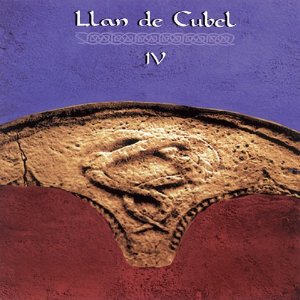
 Brendan Foreman wrote this review.
As the popularity of the music of Ireland and Scotland increases, there has been a renewed interest in similar traditional musics of Europe, particularly those areas which can be conceived as “Celtic” in any way. One region that has received a lot of attention is the Iberian peninsula. It is generally believed that the group of Celtic tribes who eventually became the Irish and Scottish emigrated to the British Isles from northern Iberia. Although this would ostensibly explain some of the commonalties between northern Iberian and Irish societies, one should keep in mind that, in between that supposed emigration and now, there was several centuries of Roman rule, quite a few Barbarian invasions, and then almost five hundred years of Moorish rule. Nevertheless, no matter how tenuous the “Celtic” nature of any part of Spanish society might be, there is no denying that much of the traditional music of Spain and Portugal sounds remarkably like that of Ireland and Scotland, as attested by this CD, among others.
Llan de Cubel is a six-member band — Elias Garcia on bouzouki, guitar, and keyboards; Guzman Marques on fiddle; Fonsu Mielgo on percussion and tin whistle; Marcos Llope on flute and lead vocals; Jose Manuel Cano on guitar; and Flavio Rodriguez on the Asturian bagpipes — from the province of Asturia. This is a large area of Spain along the northern coast, an area whose cultures seem often remarkably different from those on the southern side of the peninsula. Judging by its native music, this region of Spain seems also to have preserved much of its pre-Moorish culture.
Nearly all of the tracks on this CD are native Asturian tunes and songs, from the sprightly opening song “Cabraliega,” about a gifted woman of the county Calabres, to the sweet, haunting lullaby “Durme nenu.” However, as the reader can see from its line-up, Llan de Cubel uses virtually the same instruments as any traditional Irish band, and the harmonic and rhythmic structures of these songs are extraordinarily similar to those of Ireland and Scotland. The result is a CD of music that, were it not for the songs sung in Spanish, would sound as if it came directly from somewhere in the British Isles.
Some highlights here include the three-tune medley of bouncy bagpipe tunes “Alborada d’Amandi,” “Entemediu de Nemesion,” and “Alborada’l Tigre Xuan.” The “alborada” is a bagpipe tune that is often played early in the morning. On this track, Llan de Cubel uses its full roster of musicians to build a rollicking “wall of sound.” The gentle love song “Llonxana” features some very pretty bouzouki work and nice harmony singing. With its slightly off-center rhythm, this is one of the most Mediterranean-sounding tunes here. There are even a couple of Asturian jigs here, known as “muneres” in Spanish.
Llan de Cubel plays its music with vigor and obvious love. Unfortunately, their music’s similarity with Celtic music works against this CD. There is a vague blandness that pervades much of the songs here. This quality is really hard to pinpoint, but there is a feeling that this music has been modified too much to suit more Irish and Scottish tastes, especially when compared to other recordings of traditional Iberian music, such as the country dances contained in the Rough Guide to the Music of Portugal. Although the material is obviously authentic (attested to by the extensive liner notes) and the musicians are clearly native to this music, it is very hard to shake the notion that Llan de Cubel is “Celtifying” the music for its listeners.
(Fono Astur, 1995)
