 Brendan Foreman penned this review.
Since the Sixties, when the original members met as students in Chile’s Santiago Technical University, Inti-Illimani (pronounced “intee-E-gee-mane”) has been one of the most widely known Chilean bands across the world. Throughout their long and fruitful career, the members of Inti-Illimani have been associated with both Chilean traditional music and Latin American progressive politics.
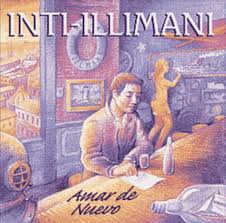
In Amar de Nuevo, their fourth album on the Xenophile label, Inti-Illimani explores the passionate world of Latin American Creole music (to which they have dedicated the CD). Combining the sounds of a myriad of instruments — guitar, flute, violin, clarinet, charanga, saxophone — and using the youthful vocals of their newest member, Daniel Cantillana, they play these songs with a verve and a light, masterful smoothness that is entirely intoxicating.
Composed mostly by singer and guitarist Horacio Salinas and poet and lyricist Patricio Manns, the songs of this CD span virtually every aspect of love and sex as well as the many hardships that arise from the two. The music spans various Latin American genres: the tense, slow bolero; the sensual, fast-paced salsa, and the Latin orchestra- backed serenade, among many other styles. The lyrics, written mostly by the poet Patricio Manns, are amazing pieces of art on their own.
The first track, a light bolero called “Antes de Amar de Nuevo” (Before Loving Again) gives advice for the newly single:
Before loving again, wash your heart With water and ash that are true That way the newcomer will know that you have forgotten The other one who filled up your adventurous life“La Fiesta Eres Tu” (The Party is You) is a fast-paced, tremendously sensual song in which the narrator serenades the woman of his desire: “Girl, brown-skinned and loving/Your dress has been torn/Perchance I see your leg/With the eyes of a wounded wolf.”
Later, in “Negra Presuntuosa” (Presumptuous Black Lady), the narrator implores, over a beguiling, interlocking clarinet and violin duet:
Black lady, Black lady that I love, enjoy Presumptuous black lady, look That I am dying, give me Life from your mouth, a mouth That is stepping on my heels of libertyThe vocals themselves contribute a fascinating rhythm to this song, as the first words of each new statement actually comprises the last word of each sung line (an effective trick that Alanis Morisette seems to have picked up somewhere as well). But Inti-Illimani saves most of their emotional power for the sorrowful songs. In the crooning song “La Indiferencia” (Indifference), we witness, over a lush string orchestra, the slow, painful drift of two lovers:
That is how indifference kills my love So that you watch my road towards oblivion Since forgetting comes from absenceThe bolero “El Faro” (The Lighthouse) contains a fascinating interplay between on-the-beat clarinets and a hyper-syncopated guitar. The singer, an obsessed lover, laments his “shipwrecked” love.
The disappointed narrator of “La Carta del Adios” (The Letter of Good-bye) solemnly leaves his lover with these poetic words:
The land of love has something unexplainable And for me it only sowed the soul with withered flowers I leave you my sobbing without a single moan And a defenseless garden bathed in anguish From that which it lost The last song of this CD is the only one with any sort of political overtones and no real connection to the subject of love. “Corrido de la Soberbia” (Ballad of Arrogance) is a humorous manifesto narrated by a down-and-out musician (“a proud bard and vagabond”) who complains bitterly of the apparently better-off “owners of the world. Sung with a carousing, almost drunken exuberance (making it a little unclear who exactly who represents the “arrogance” from the title), the lyrics artfully reflect many of the complaints of the down-trodden:
In the boxcars of this train that is lifeYou travel in first class with your head highI wander on foot with my routine of dyingAnd even my death rides in third class only At the end of the song, he warns ominously that “Until one day the roles are reversed … Be careful because the moment is arriving.”
Celebrating (if not cursing as well) the ways of love, this recording is an excellent representation of some gorgeous Latin music and lyric. Although all of the singing is in Spanish, the liner notes give both the original lyrics as well as the English translations. They also provide full documentation of the many, many musicians involved with the recording. The poetry of Manns’ lyrics, the artful arrangements of Horacio Salinas, the fine musicianship of the entire band, all combine to make this CD an amazing piece of art.
(Xenophile, 1999)
Diverse Voices is our catch-all for writers and other staffers who did but a few reviews or other writings for us. They are credited at the beginning of the actual writing if we know who they are which we don't always.
It also includes material by writers that first appeared in the Sleeping Hedgehog, our in-house newsletter for staff and readers here. Some material is drawn from Folk Tales, Mostly Folk and Roots & Branches, three other publications we've done.
More Posts

