 Naomi de Bruyn penned this review.
According to the notes I found at the website, “‘harv’ means ‘harrow,’ a farm instrument used to level land. And in Swedish, ‘harv’ also has the connotation of a really intense experience, which is the definition that aptly describes ‘Harv’s’ approach.” I would have to agree with this, in fact both definitions are rather apt. The first because Harv is something “new,” the land is being levelled so something new can be sown. And secondly, the experience of listening to this duo is nothing short of intense. In person, they must be rather explosive!
Harv consists of two young men, both 22 years old, who play the fiddle, Magnus Stinnerbom and Daniel Sanden-Warg. They bring together a unique blend of innovation, energy, and a bit of attitude, which can be seen in the photos on the CD liner and heard in their sound. It has a lot of “brass” and seems to be forging a path all its own.
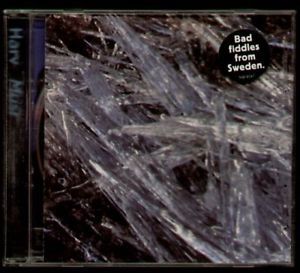
Magnus plays the viola d’amore (5 playing strings/5 resonating strings, an instrument which is made by Anders Norudde of Hedningarna), the viola, and the willow flute. Daniel plays the viola d’amore (4 playing strings/4 resonating strings), the jews harp, and the moraharpa (the oldest preserved form of the nyckelharpa). The duo met at a high school for musicians and have been playing together for seven years. Their first performance together, they scored a new music rendition for “Hamlet” in 1996. They come from Karlstad, Sweden, and are known as the ‘”Bad fiddles from Sweden.”
On this CD, the duo are joined by two impressive guests for a few tracks. Roger Tallroth of the group Vasen on guitar, and Bjorn Tollin of Hedningarna on percussion. Twelve of the fifteen tracks are traditional songs, while the other three are original pieces composed by Stinnerbom. They are all filled with vitality and a passion which makes the entire CD a delight to the ears and the soul.
“A-kassa” was written by Magnus and is the first track on the CD. According to the liner notes, he wrote it after being broke for a few months and finally receiving his unemployment money. He wrote it when he realized that he needn’t live on noodles everyday. And this song reflects that feeling of ecstatic happiness and relief which only comes from being lifted out of one state of survival into a more comfortable position in life.
All of the traditional tracks are beautifully played, becoming the duo’s own. They really do have a unique sound that they give to each. One track for which this is particularly prevalent is “Reinlender,” a song which Magnus learned from his father, Leif Stinnerbom — a well known fiddler in his own right, who apparently infected the boys like a disease. “A Harv-disease,” as the liner notes state. Apparently they played it over and over and over again the next spring. It is a contagious piece, as the duo have warned, flirting from dark and almost menacing to sprightly and almost bouncy. Each time I listen to it I find something else hiding within the simple melody.
The final tune on the CD is another of Magnus’ original scores, being the one they did for the “Hamlet” production. It is a stately and sad piece, meant to be played each time someone died in the play. There is great emotion carried along upon the strings and soaring notes of this particular track.
If you like the fiddle, and you appreciate good fiddle music, then Harv is for you. In fact, you could say it is a ‘Must’ (no pun intended). If you do not, then I wouldn’t suggest it. I wish them well on their furrowing of a new path and may their music grow strong and lasting. If you’d like to learn more about Harv, you can do so via the NorthSide Music Site: http://www.noside.com
(Northside, 2000)
