The Elftones are a duo from North Carolina, Mara Beamish on violin and Roger Gold on acoustic guitar. They describe their music as a blend of Irish, Scottish, Canadian, old-time and original tunes. A lot of their work is playing for dances, then together with a caller, Bree Kalb.
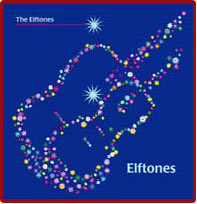 Elftones is their first album. It is fairly traditional album showcasing their repertoire, ranging from Carolan tunes like the well-known “Sheebeg Sheemor” to four of Roger Gold´s own tunes. Often with this kind of music the tunes are mostly put together into sets. And as with the other two albums reviewed here, each tune was recorded live in the studio.
Beamish is a competent fiddler and Gold an accomplished guitar player, but on this first album they have not really settled down and found their own style. On the odd occasion they seem more concerned with what is played than how it is performed. But that is a minor remark. The album as such is very varied, from the rousing dance tunes, like the opening “Calliope House,” to the soft and thoughtful, like “Wandering Canadian.” Here Elfstones are at their best when they steer away from the obvious guitar-player-backing-fiddler-style and let their instruments take part on equal terms. “O´Carolans Draught” is a lovely example of this, with the guitar providing a counter-melody. “Betsy Liken” is another shining example, with the guitar playing the tune and the fiddle just filling in. This is a nice debut, full of promises of more to come.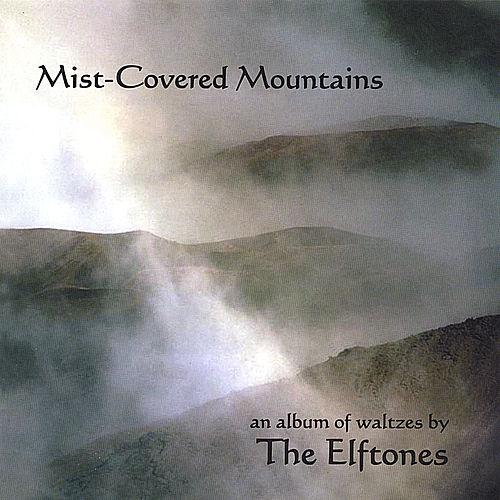
Mist-Covered Mountains is a bit more unusual, being an album of waltzes. Two of the tracks from the first albums are repeated on it, “Wandering Canadian” and Roger Gold´s own “Audrey´s Waltz,” dedicated to his wife. In spite of featuring only waltzes, this is a very varied album. At times, it has quite a jazzy feeling, especially in the opening “Dark Moon” by Ted Erhard, wherein Gold adds some bass guitar to the sound picture. Also the all-guitar-variation of Maurice Ravel´s “Pavane for a Dead Princess” has much more jazz in the performance than Ravel probably would have thought possible.
There are some lovely traditional tunes as well. “Passover Waltz” is a another set of variations, this time over a Jewish prayer melody. It opens as a guitar piece with Beamish joining halfway into it. The title tune is performed in a slow, romantic fashion, bringing out the beauty of it. The album shows a slight change of direction for the Elftones, a move from the strictly traditional to a more modern approach. I think it is a path worth pursuing for them.
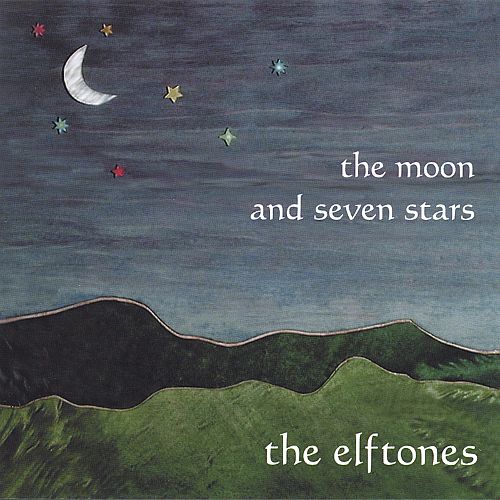 With The Moon and Seven Stars, the Elftones are back to the format from their debut. We are again given a selection of sets, usually with two or three tunes in each set. The traditional tunes are mixed with quite a few from known composers, notably two by Ronnie Cooper of the Shetland Isles and two by Gold, one of which, “The Shuttle Through the Shed,” is performed mainly on mandolin, a new instrument in Gold´s armoury.
Fairport Convention fans, like yours truly, can note that two tunes recorded on the Full House album are present here. Ronnie Cooper´s “Miss Susan Cooper,” the first part of Fairport´s “Flatback Capers,” is given a nice rhythmic background by Gold´s guitar, while “Puff Adder Reel,” the last part of “Dirty Linen” is performed as close to the Fairport version as possible with just a fiddle and a guitar.
All through the album Beamish and Gold show a lot more confidence than on the debut. They have found their style as a duo and playing together for many years certainly has paid off.
I find the Elftones a rather charming acquaintance. If you are set to explore them, I suggest you start either with The Moon and Seven Stars, for the more traditional approach, or Mist-Covered Mountains, for a modern approach. From what I hear on the albums I also suspect they are a fine live act, so do not hesitate if they come your way.
You can find out more about them, and order the albums, on their website.
(Elftones Productions, 1998 – 2001)
