 Some parts of Harney County, Oregon, are among my favorite places on this planet. They include Steens Mountain, the Alvord Desert, and the Malheur National Wildlife Refuge, which lately has been in the news around the country because it was occupied by a group of armed anti-government thugs.
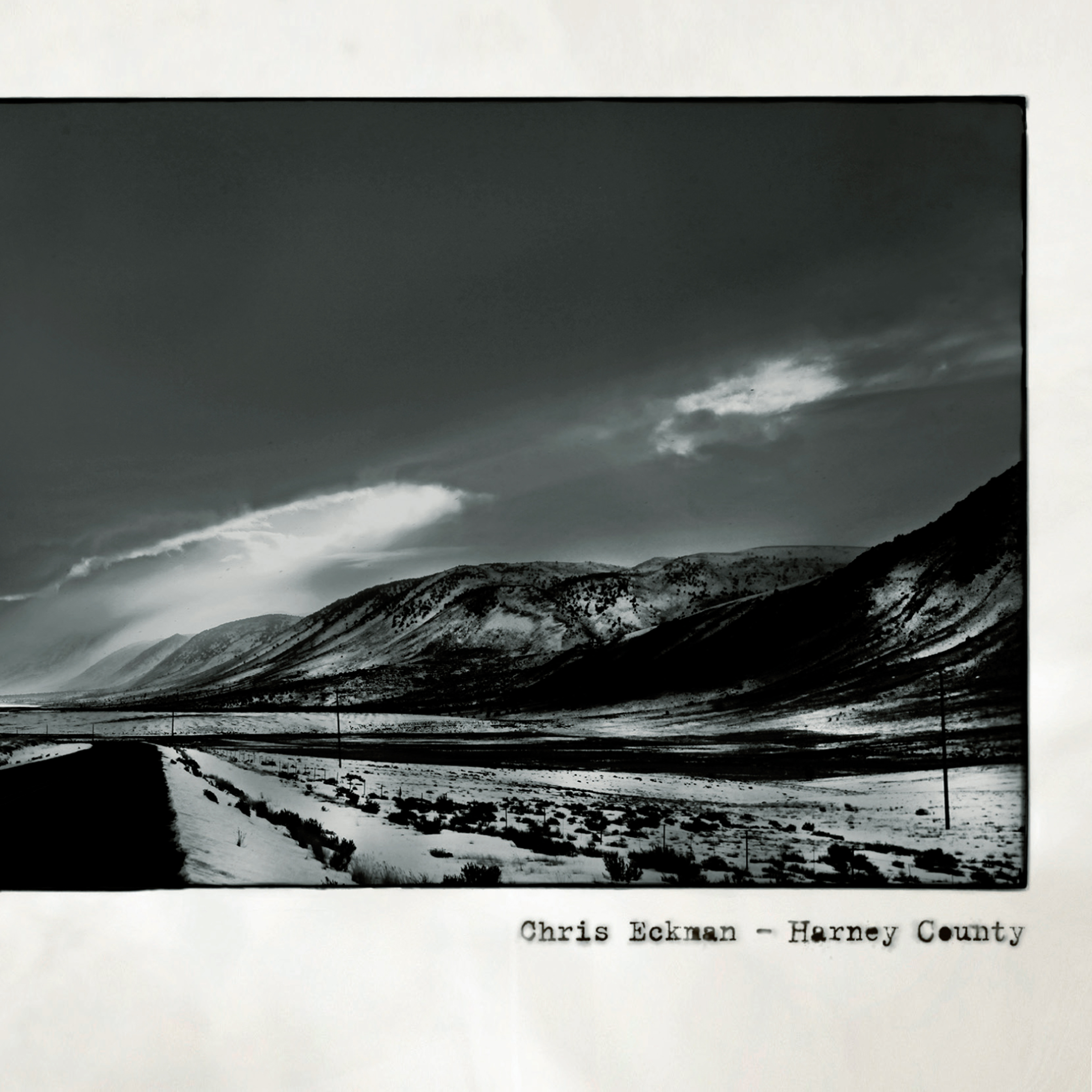
Harney County is also one of Chris Eckman’s favorite places. Eckman is best known as one of the founders of the internationally acclaimed folk- and country-rock band The Walkabouts. He’s also a songwriter, singer, producer and soundtrack creator, plays in several side projects and records solo. In 2013 he released a short album on Germany’s Glitterhouse label called Harney County. I obtained the album and checked it out but couldn’t find a way into it before it got buried in the pile of projects awaiting review.
The recent occupation and standoff at Malheur, which has led to one shooting death so far and is still ongoing at this writing, helped me find my way into this record, and I’m glad it did. It’s a quietly moving album, somewhat akin to recent work by Portland’s Willy Vlautin, both his novels and music made with his legendary band Richmond Fontaine – in the sense of its spaciousness, the sparse and airy sound of the music and the terse, prose-like construction of the lyrics.
The album has eight songs, seven by Eckman plus the old English folksong “Katy Cruel,” reworked in a way that would fit on a Nick Cave album. Eckman’s gruff baritone is in the same neighborhood as Cave’s, though he uses his in a more subdued manner, at least on these songs.
They’re not specifically “about” anything in Harney County as such, but the characters and the sounds are definitely inspired by the high-desert landscape. “Rock Springs” is a real place, but the characters in this eponymous song never get there, they are just headed there in a car they stole in Montana. This 11-minute ballad is the album’s center of gravity, no doubt. Other real places are name-checked in several other songs.
“And the road’s a shimmer on the sagebrush sea, cut between the highlands and the deadwood trees, and though we started early we got here real late,” he intones in the chorus of the opening track, “Nothing Left To Hate,” accompanied only by his own strummed acoustic guitar and Žiga Golob’s double bass. I had to smile at that, because Harney County is so isolated that, no matter where you start from, you always seem to get there late. The words don’t name a particular place, but they describe the entire locale.
Eckman evokes sense-memories in songs like “The Conifer Smoke,” a tale of estranged siblings meeting in some sort of encampment, something to do with “lost causes.” Paul Austin of The Walkabouts adds some stabbing electric guitar notes that highlight the tense drama.
We’re not told explicitly what killed the title character in “Requiem For The Old Skool Heavy,” just that he was the protagonist’s mentor at the game of life and taught him to keep his guard up. This one begins as a desert-dub piece and rises to a rock crescendo with the description of a shootout of some kind. It’s almost too close to current events for comfort.
Another desperate protagonist is driving dementedly through the countryside, unwilling to stop for anything in “Many Moons.” “The town sign says come again, but I will not,” he rasps out in the opening line. This one really moves, with rocking drums, a heavy, distorted bass drone, and wailing harmonica.
Even the song titles evoke the kinds of existential quandaries that can go through your mind in a landscape like this: “Sound Of No Return.” “Ghosts Along The Border.” Says Eckman on his website: “Here the events and characters are imagined but the places are real and the roads are ones I have driven myself. I can see in my minds eye where these roads rise and where they bend.” I can too. But the magic of this music is that you might, too, even if you’ve never been to Harney County. This is a haunting, intensely evocative album. Any fan of gritty Americana should seek it out.
(Glitterhouse, 2013)
Chris Eckman is on Facebook with The Walkabouts.
