
 As a Celtic fiddler and music promoter, my likes in music are wide and rather eclectic, ranging from Laurie Anderson to the fine pipin’ of the Goodacre Brothers… and even the Penguin Cafe Orchestra. But what is listened to the most is what might best be called “comfortable” music. And one of the genres of Celtic music best to me liking for a cold, rainy evening when I’m not performing with my band mates, is Northumbrian. Now I must confess that me first exposure to this music was when I learned of Billy Pigg, a Northumbrian piper whose recorded out is on The Border Minstrel whilst reading Charles de Lint’s The Little Country. This novel included Pigg as a character and made me aware of the music from this region. As the Northumbrian Smallpipes Society Web site notes, “Billy Pigg, 1902-1968, was said by many pipers to have been the best Northumbrian Small pipes player ever, but some musicians declared him to be a ‘bad’ piper. He learnt from the Clough family, and then extended what they taught him by enhancing his style and expanding his repertoire. Several of the present day pipers acknowledge his influence on their playing, particularly those who were lucky enough to hear him perform live.
Northumbria, is an area along the English-Scottish border encompassing the modern counties of Durham, Tyne and Wear and Northumberland. What makes the music unique is the pipes. A web site set up by the Northumberland County Council explains very nicely the uniqueness of these pipes:
 Northumberland has not just one but two unique musical instruments, both of which are types of bagpipe. The first is the Northumbrian small pipes, which are often just simply called the Northumbrian pipes. For this instrument, the “bag” is inflated by bellows under one arm (rather than by blowing into it, like the Scottish bagpipes) whilst the other arm is used to gently deflate the bag through the various “pipes” or chanters. The music is light, lilting and melodic.The second instrument is the slightly larger Northumbrian half-long pipes, also known primarily an outdoor instrument). A recent discovery has been the find of written music for the half-long pipes, published in 1733, some 60 years before the oldest known Scottish bagpipe.
The other primary instrument is the fiddle which will surprise no one. What’s really nice is the interplay of pipe and fiddle with a bit of percussion thrown in. Charles says in his dedication to The Little Country that there are “…all those traditional musicians who, wittingly or unwittingly, but with great good skill, still seek to recapture that first music.” It seems to me that Northumbrian music is one of those “first musics” in that it feels fresher and more traditional than say some of the Scottish musics which appear to have recreated from scratch.
And yes, Scottish not English. It’s obvious to me that the bleedin’ border’s in the wrong place — it should be south of the Northumberland region! Of course, being of Scottish ancestry, my preference would be that this region be part of an independent Scotland!
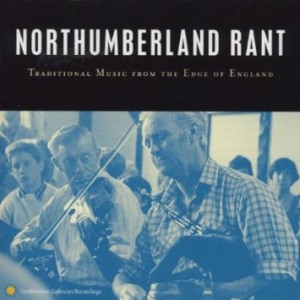
Ah, but you want to hear ’bout the CDs. Well, let’s talk ’bout Northumberland Rant: Music from the Edge of England. Simply put, Northumberland Rant is a superb collection of tunes by many of the best traditional musicians from England’s north easternmost region. It features the ever so sweet distinctive sound of the Northumbrian small pipes, along with fiddle, accordion, and other instruments. All of the cuts span the period from 1954 to 1998. But all sound quite clear and well-recorded to me ear. Of course, it has cuts by the aforementioned Billy Pigg (“Archie’s Fancy / Holey Ha’penny”), but it also has the High Level Ranters with their mix of fiddle, concertina, accordion, guitar on such set of tunes as “LaRusse / The Winshield’s Hornpipe / Jane’s Fancy / Da Road to Houll,” and one of me favourite players, Kathryn Tickell, on “Mr. Nelson’s Birthday Waltz,” a sweet dance number that shows her at her very, very best. Some of the other excellent Northumbrian musicians included here are Jack Armstrong, Willie Taylor, Joe Hutton, Anthony Robb, Pauline Cato, Chris Ormston, and Will Atkinson. It doesn’t matter if you’ve never heard Northumbrian music or own everything that Tickell has done; you’ll want to get this CD!
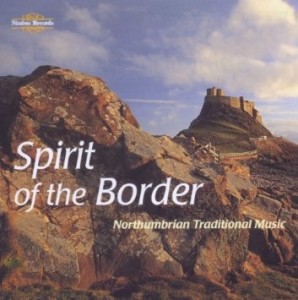
And likewise holds true for Spirit of the Border: Northumberland Traditional Music, a tasty collection of material that features a single apparently ad hoc band featuring Chris Ormston on Northumbrian/Scottish Small pipes and a whole bonnie bunch of other pipers, plus three fiddlers and a viola player! This CD really feels more coherent than Northumberland Rant as it’s just a single band involved. It has been correctly noted that Northumberland is the only part of England with a local music-dialect, in which certain melodies are recognizably distinct from the tunes of any other English region. Spirit of the Border features Northumberland’s best pipers and fiddlers recorded in private sessions over a weekend at Dunstan Hall, Northumberland, a favorite gathering place for musicians for generations. It is different than the other CD mentioned as it’s obviously done on spec, but it’s no less charming. If I was forced to choose between the two albums, I couldn’t, nor will you want to.
(Smithsonian Folkways, 1999)
(Nimbus, 1999)
