
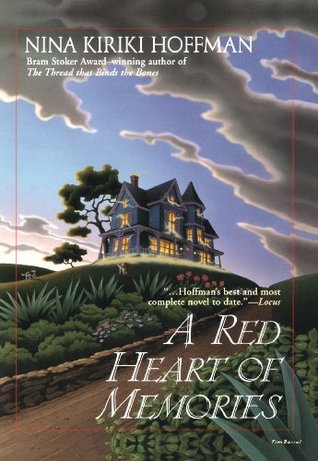
 Rebecca Swain penned this review.
This book might be more successful as a kind of fictionalized self-help manual for people surviving abuse than as a novel, in my opinion. Hoffman introduces intriguing ideas and characters, but she doesn’t do enough with them to make this book interesting or particularly enjoyable.
Matt (Matilda) is a homeless woman who can talk to inanimate objects. As the book opens she has an extraordinary meeting with Edmund, who is a witch and can commune with things like stone walls and libraries. He has magic — literal magic; he can fly, for example. He also has some sort of spirit guide which advises him when he is uncertain of which action to take next. The two lost souls befriend each other and begin traveling together, searching for the mysterious red boy and the event so terrible Edmund can’t bear to remember it.
During their adventures they discover a mind-boggling secret about Edmund’s sister, and stay overnight in a house occupied by the ghost of a young boy. They also uncover truths about magic, about themselves, and about terrible things that have happened in their lives. A complete list of the actual events occurring in this novel would make it sound very exciting. Alas, it isn’t.
One problem with Hoffman’s narrative is that too much of it goes on in peoples’ heads. Although external events do occur, they are so heavily interspersed with peoples’ thoughts that the action is slowed down. Even the horrifically violent event on which the plot rests is remembered, not acted out in real time. People spend a lot of time thinking at things, and at each other, instead of doing things, or even talking out loud. The ability to communicate mentally is important to Hoffman’s story, but she deploys it in such a way that it is death to a fast-paced plot.
When people do talk the dialogue doesn’t help. Characters can’t decide what to do, which place to visit next, how to proceed, and they spend too much time checking with each other. “Are you all right?” “Is this what you want?” “Will this hurt you?” This is wonderful for real-life interpersonal relationships, but it is an absolute brake on action in a novel. Sometimes we want to see characters charge recklessly into battle instead of stopping first to ask, “Do you feel absolutely comfortable with this step we are about to take?”
Another problem is that external events are just too easy. The magic is sweetly benign; inanimate objects willingly do anything Matt and Edmund want them to, and people accept each other with few reservations. It’s all too perfect. Hoffman does attempt to point out some interesting dangers inherent in magic, but she doesn’t allow this thread of her story to develop into any exciting near-disasters. These dangers are quickly recognized and limited by more experienced magic-wielders, with the complete compliance of all objects and people involved.
I think this novel could mean a great deal to people who have been in abusive situations. Hoffman handles this subject matter with compassion and some wisdom. Her story might lead some survivors of abuse to discover new ways of thinking about their experiences. The magic in the story is a compelling representation of the power of possibility in each life, the idea that we are all stronger and more capable of achieving miracles than we know.
But as a novel it just isn’t very interesting. Hoffman could have done so much more with the elements of this plot. I assume she achieved the book she wanted, but if you are looking for a wild, nail-biting ride through magic and redemption, this isn’t the book you want.
(Ace, 2000)
