
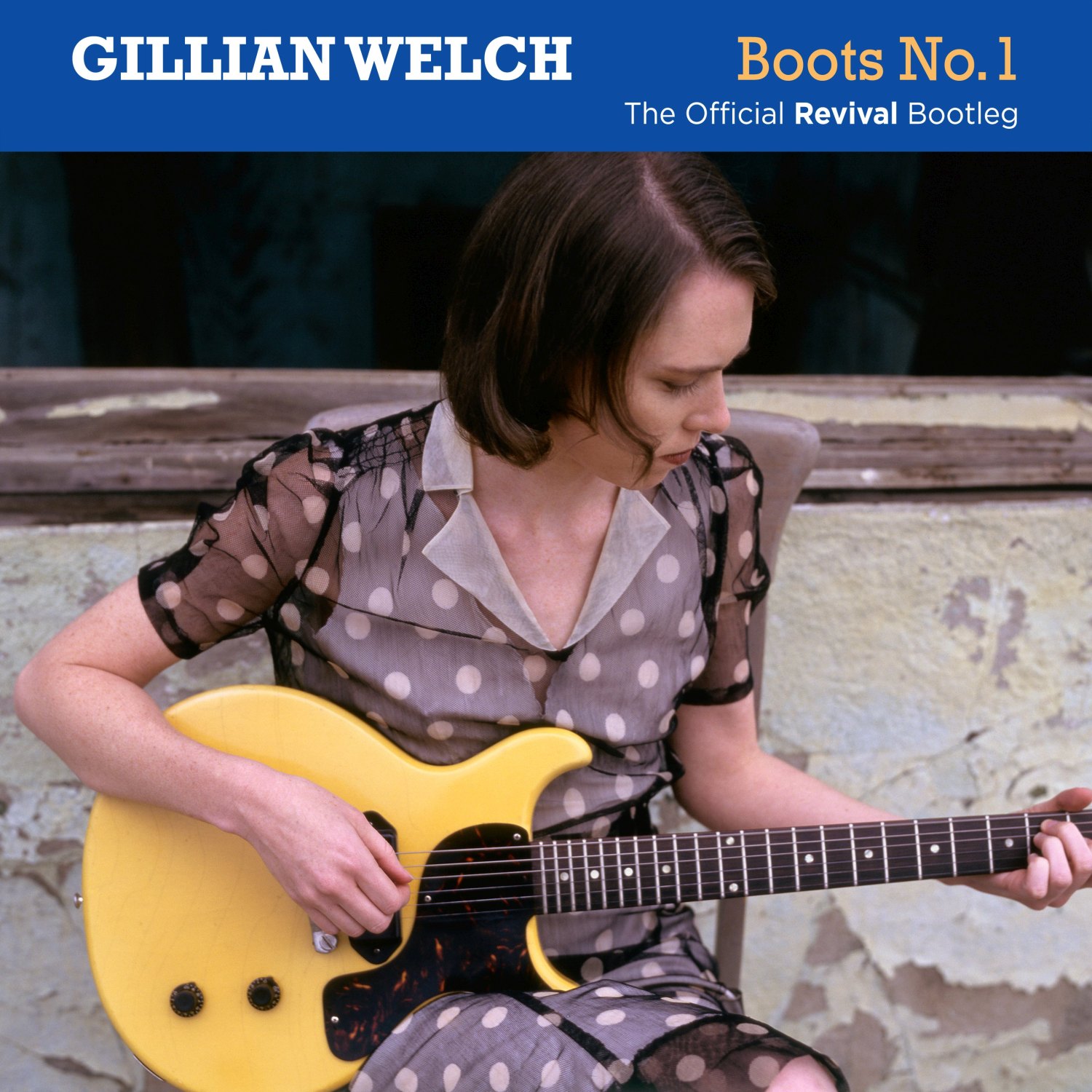
 Gillian Welch is marking the 20th anniversary of her inaugural release Revival with a two-disc set of alternate versions, outtakes and demos from that album’s recording sessions. I’d rather have a new Gillian Welch release, but speaking as a fan, it’ll do for now.
I didn’t truly become a fan of Gillian Welch and her partner David Rawlings until their third release Time (The Revelator). It came out in 2001, a good five years after Revival and became my chief source of musical comfort in the wake of the September 11 attacks. I subsequently became something of a completist, collecting all of the official releases and a number of unofficial ones, seeing them in concert as often as I could, and joining an internet discussion group.
Time is still one of my desert island discs, but I’m not sure what I would do without “Orphan Girl,” which is on Revival and is one of their most popular songs. This album is worth having if for nothing more than the two versions of “Orphan Girl” it contains, which makes at least a half-dozen versions I have now. One of these is an alternate version that consists of just Welch and Rawlings playing and her singing solo except for his harmonies on one chorus; the other is a home demo with lyrics that have one small but crucial difference, which only highlights how perfect a song the final version is. Both of them are superior to the one on the official release, which is too slow and was tarted up by producer T Bone Burnett with bass guitar and electric guitar.
If you’re familiar with the original release, the major difference between its songs and these alternates and demos lies in the role played by Rawlings. The two are an inseparable unit, musically, his voice complementing hers and his picking style perfectly fitting the songs’ moods. They were young, it was their first record, and there really wasn’t anybody like them recording in Nashville. So even though Burnett himself is something of an outsider on Music Row, he still tried to shoehorn them into what was perceived as a more commercial sound, which meant using session musicians instead of just this couple. It was the last time Welch and Rawlings let that happen.
It’s no surprise that I like most of these alternates better than what ended up on the album. The real treats, though, are the outtakes like Robert Earl Keen’s “Go On Downtown” and Welch’s unreleased response “I Don’t Want To Go Downtown,” and an early version of “Red Clay Halo” which ended up on Time when it was much more ready for release, and Welch’s “Wichita,” previously heard only on bootlegs. Also notable are a couple of more unreleased ditties, the rockabilly “455 Rocket” and the Johnny Cash-style shuffle “Dry Town.”
The Boots No. 1 accomplishes the mission of any good archival release. It reminds me of what was best about the original release, plus it gives me some more alternate versions of great songs, studio-quality versions of unreleased songs, and some insight into the album’s (and the artist’s) evolution. And it whets my appetite for their next release from the vaults.
(Acony, 2016)
