
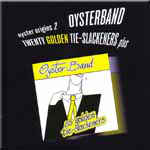
 It would be difficult to overestimate the impact of the Oysterband on my music listening habits, or on my love of folk and world music. Indeed, without the Waterboys and the Oysterband in the 1980s, my love of traditional music might never have come into being, and where would I be today? I’ve been listening to this instrumental disc for the past few days since it arrived in my mail box, searching for the roots that became young shoots of exquisite musical expressions of outrage, for that charming but dangerous lurch that comes through in Deserters, or the incredibly articulate outrage of Shouting End of Life, or the irreverent glee of Holy Bandits. Yet I couldn’t begin writing until after last night, when it hit me, there at ceili dancing class, where I take Auntie’s little darlings every week for a three quarters of an hour of step dancing, and then one dance shared between adults and exuberant young people aged three to ten. In the middle of “The Haymaker’s Jig,” my partner, an older gentleman named Pat, looked at the little wild women marching around in a zig zag row to form their arch, gave an exasperated wink and said, “They’re cute aren’t they?” Yes they are. And that’s sort of the way I feel about Slackeners. There’s great music here, without the usual production veneer, sometimes swaying almost off course, but great fun. Yes, Kim, it’s the music, the people, and the conversations that led to the discs you know by heart.
And there’s heart in this music: it was made for dancing with obvious affection and more than a little indulgence by the early Oysterband (John Jones, Ian Kearey, Alan Prosser, Chris Taylor, and Ian Telfer). As the liner notes put it, “Hearing it after 20 years and more, it seems strikingly naive — and none the worse for that…but all of the [tracks] attest to a ferment of ideas and experiment and a time of endless playing pubs and squats and village halls and kitchens.” This reissue of an instrumental album produced in 1984, with two bonus tracks from 1980, gives a glimpse of the band’s formative period, providing the occasional hint of what was to come.
This is dance music, the straight shot, played with verve and a few unique twists. As the band note, they had little exposure to the wider music industry at this point, and this comes through in the arrangemetns and selection of tunes — mostly traditional numbers, peppered by a few originals by Jones, Prosser (“P’s and J’s”), Taylor’s “Spaghetti Junction”, Telfer’s “Dixie’s” and one by early band mate Chris Woods (“Mrs Forster’s”). Hell, there’s even a basson on the second bonus track, “News of the Victory/The One-Horned Sheep” — here used to round out the sound. I certainly enjoyed several old favorites like “Speed the plough” and “The Clare Jig.” And I couldn’t help but wish that they’d rememberd this sound a bit more when they recorded Deserters, which suffers from some of the musical excesses of the late 1980s, despite the fact that it’s got some of the best raw material of their long career.
This is an album meant for those who love not only the Oysters, but their people as well, because this is the music they made for the folks who joined them in those kitchens, pubs and village halls. In some ways the band steps aside slightly, and after last night’s epiphany I now imagine the sound of feet, and the smell of cigarette smoke, sweat and beer that accompanied these tunes in the early days. But a word of caution here: because it doesn’t have the Oysters’ early selection of traditional songs or their fledgling efforts at original songs, some fans may find it more difficult to parse for clues as to what the band later became, when compared to its companion “origins” disc. Me, I fell in love with the music as well as the lyrics, and have enjoyed Slackeners a great deal. I’m hoping that their other early recordings will be reborn as discs soon to be spinning in my stereo.
Do I need them for the sake of completeness? Naw, I just like the music.
(Running Man, 2003)
