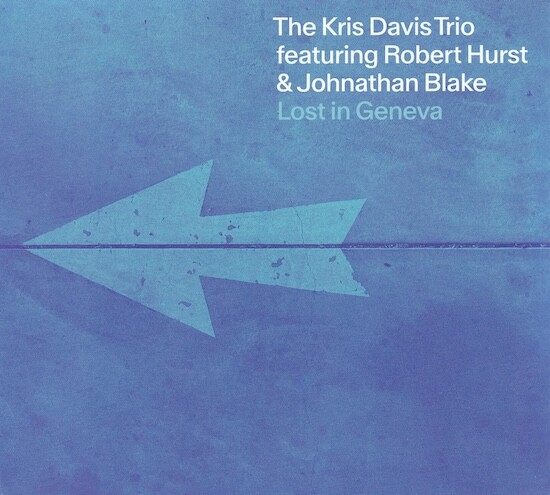
 Kris Davis Trio’s Lost in Geneva stands a good chance of being my favorite jazz album of 2026. I admit I’m biased in favor of piano trios, and there’s a lot of new music I haven’t listened to this year but even so, this album stands head and shoulders above the field as far as I’m concerned. Any late comers are going to have to be grand indeed to match it.
I’ve long been an admirer of Davis’s music but a lot of it has seemed above my pay grade. She’s a world class composer and she grapples with lots of amazing ideas, all of which she is fully capable of exploring. She often is described as a percussive player and she is, but she’s also able to muster great nuance. And both are in ample display on Lost in Geneva. And when I found out that she’s frequently inspired by bird song … well, case closed.
This sensitive trio tracks 11 songs in a little under an hour on this outing, but it feels like longer, in a good way. They explore a lot of moods and ideas, with bassist Robert Hurst and drummer Johnathan Blake constantly living in a deep groove and yet responding nimbly to Davis’s melodic turns. That comes from countless hours logged on the road and on stages around the world since the release of their 2024 debut Run the Gauntlet (which I’m definitely going to revisit).
The two opening tracks kick things off nicely. “The Subtext” finds Davis’s left and right hands rapidly firing varied motifs and themes at the listener while always keeping up an engaging melodic structure, while Hurst and Blake do something similar rhythmically. This is one of those that I can listen to on repeat and always hear something new. It’s followed with the subtler but deeply engaging “Congestion Pricing,” inspired by New York City’s ongoing experiment in reducing vehicle traffic at peak times. Beginning with an open, freely flowing feel, the piece progresses into ever more frenetic spaces while always remaining grounded.
The centerpiece is Hurst’s piece “The Bluesy Bird in Bob’s Backyard” with a delightful melodic motif and a deep melodic groove. The group improvised two short introductions to it, both engaging in Davis’s love of bird song; “Mourning Dove” leads into “Bluesy Bird” and “Northern Flicker” ends the album.
There’s plenty more, including a couple of ballads, the lovely title track and the delicately twirling “The Ballerina”; the discordant and flighty “The Deer Fly,” Blake’s rhythmically emphatic “Clues,” and a cover of Morton Feldman’s, angular, modernist “Nature Piece 5.” I expect to be engaging with this record for a long time to come.
(4166 Records, 2026)
