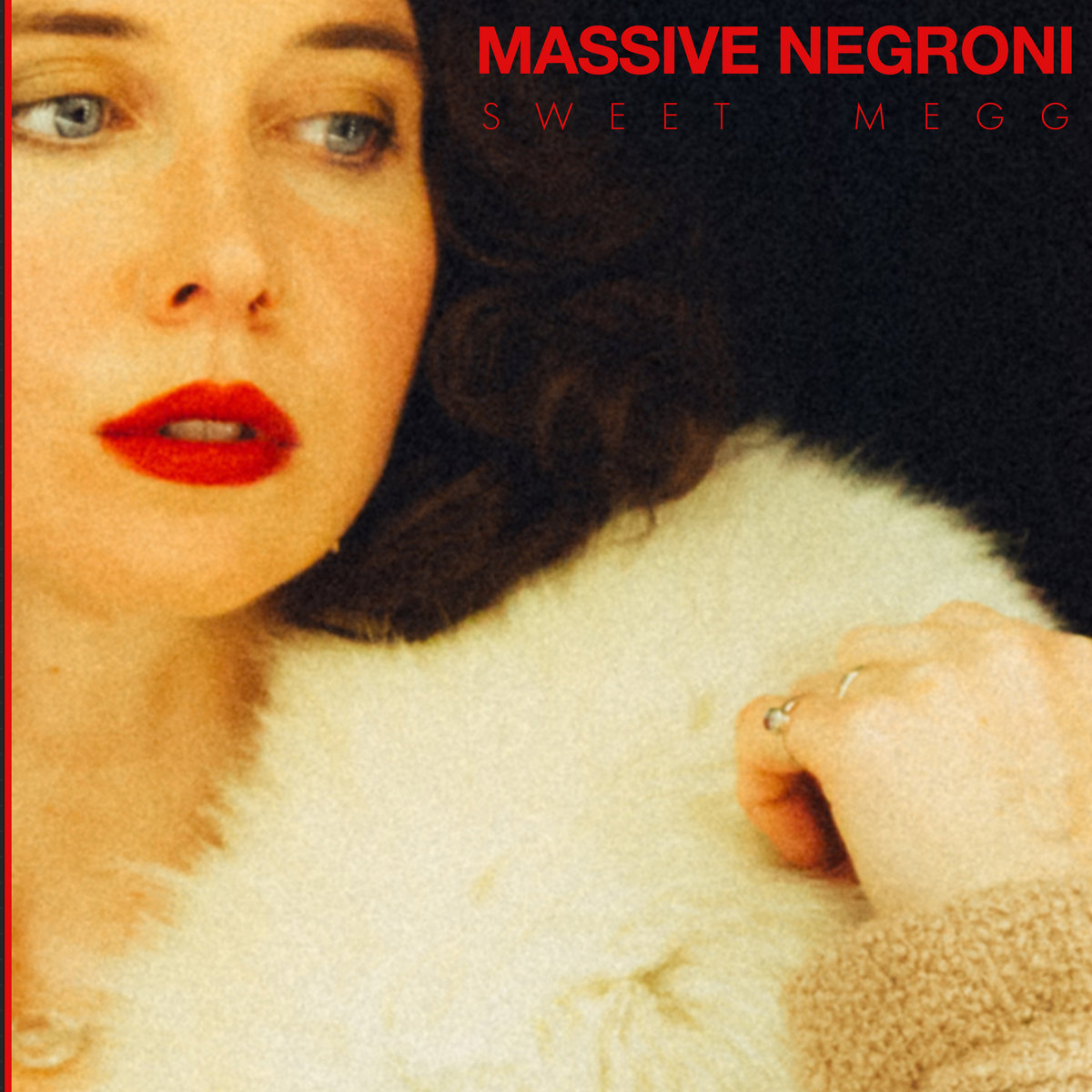
 Sweet Megg grew up as Megg Farrell in New York City, came up singing folk music in the bars and coffee houses of the East Village and Brooklyn, studied jazz singing in Paris, did a stint in Cirque du Soleil, and is now based in Nashville, where she’s currently singing a jazz-flavored version of Americana, or possibly an Americana-tinged type of jazz. Either way, it’s mixed with a dash of classic country and a bit of the blues, and boy does it swing.
It’s the type of material you’d have heard on the dance floors of Texas and Oklahoma in the heyday of western swing, but here presented as a stripped down affair, the sassy chanteuse fronting a quartet that features guitarist Thor Jensen, bassist Dylan Perillo, and drummer Chris Gelb. The 12 tracks range from Tom Waits to the 1960s French cabaret singer Barbara to Duke Ellington to ’60s blues and R&B singer Sugar Pie deSanto and elsewhere besides. It’s a genre bending tour de force, if you need any more cliches!
Truly, this album is great fun. It kicks off (more or less) with one of Tom Wait’s best, “Come On Up To The House,” rambles through standards like “Honeysuckle Rose,” “Where Or When,” the jaunty “We’ll Be Together Again,” and Duke’s “Solitude,” with side trips to Barbara’s sultry “Gare de Lyon” and deSanto’s “Slip In Mules,” an answer song to the R&B hit “High Heeled Sneakers.” “Where Or When” is amazing, a slow roll with a lovely vocal, pointilist guitar solo, and a hair-raising bowed bass solo for good measure.
Megg hits it out of the park on her cover (with more or less the original lyrics) of the 1930s 12 bar blues “Weed Smoker’s Dream.” The album is bookended with short takes on another standard, “Right Or Wrong,” the first an intro, the second a verse and chorus, given a shimmering sort of production almost like an old wire recording.
Sweet Megg and her quartet are a perfect match for the material here. Great arrangements, performances full of swagger and soul, this is a top notch presentation.
| Website | Insta | Facebook | YouTube |
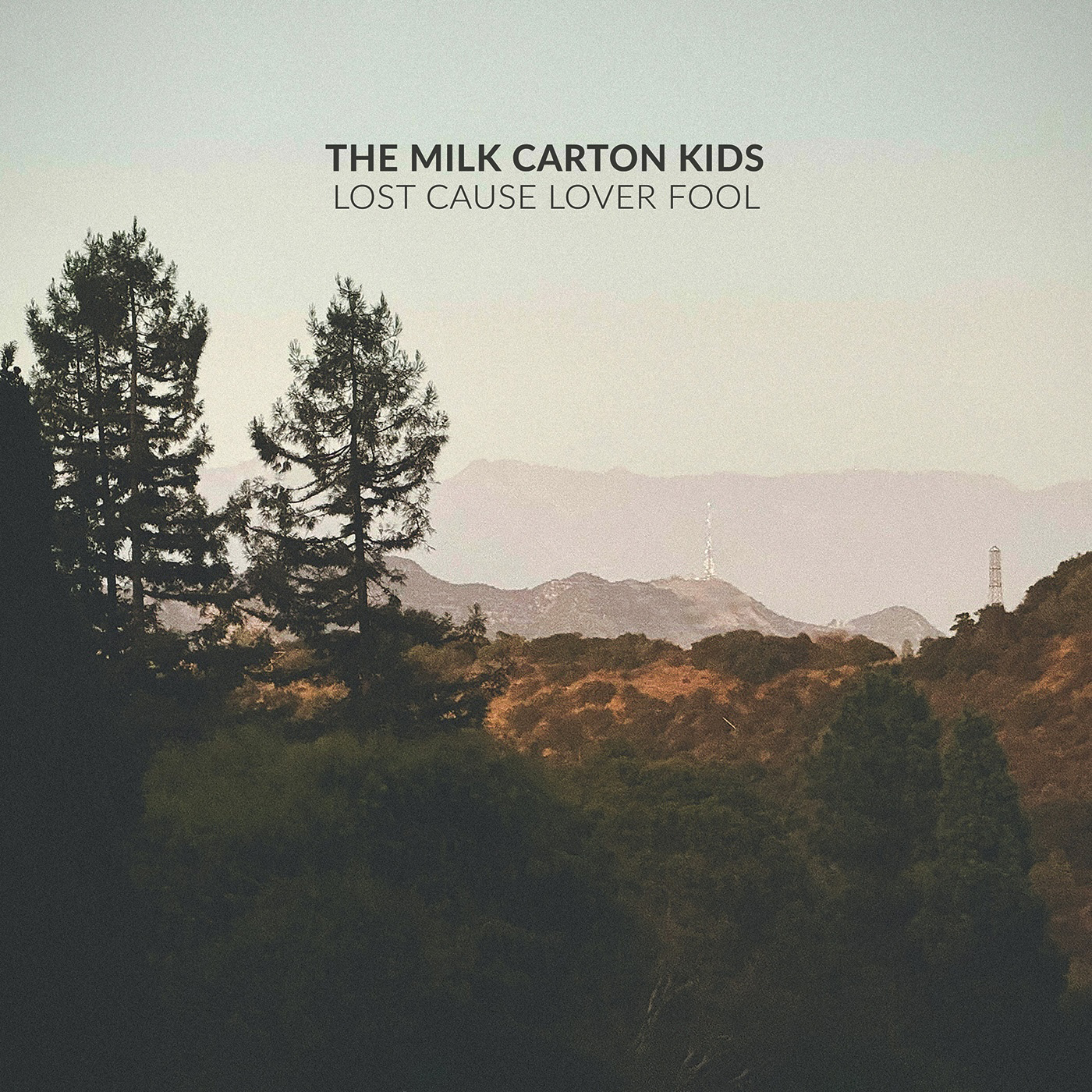 Lost Cause Lover Fool is The Milk Carton Kids’ seventh studio album, and it follows a similar pattern to the rest of their catalog that has endeared them to a big slice of the Americana audience: quiet, introspective, sadboi country folk songs, Everly Brothers vocal style with Welch-Rawlings acoustic accompaniment.
The Kids are Kenneth Pattengale and Joey Ryan, singer songwriters who came out of Los Angeles and built an audience and a career on their fiercely independent streak and insistence on doing things their way. Along the way they’ve become solid members of the Americana musicians’ community, hosting the Americana Music Association’s annual awards show at Nashville’s Ryman Auditorium, setting up their own Sad Songs Summer Camp for budding musicians, and founding the Los Angeles Folk Festival in 2024, which already has featured performances by Emmylou Harris, Waxahatchee, Sierra Ferrell, Willie Watson, Valerie June, and more.
This one follows their formula without being formulaic. Two voices, sometimes in unison but mostly in harmony, two guitars, with one sometimes swapped out for a banjo; an occasional double bass or drums. Songs about life’s intimate moments, like the infinitely sad title song about a love that’s irrevocably over. Remembering quietly happy times out in Nature on “Blue Water.” A sad soul at the end of his life contemplating how it was wasted in pursuit of wealth rather than holding on to the riches of family and hearth (“My Place Among the Stones”). The contentment of being on the road in a friendship that doesn’t require words to be intimate in “A Friend Like You.” The jaunty “Young Love” that expands and updates the sentiment behind the Carter Family’s gems like “Are You Tired of Me My Darling” and “I’m Thinking Tonight of My Blue Eyes.” And, perversely, the least sad song on the album, “Sad Song,” in the voice of someone who’s always got a sad song “livin’ in my heart” when everybody else is having fun. “I’m still having fun but I know how it ends.” Who can’t relate to that?
Musicians aren’t always best able to explain their songs, but Pattengale nails it in the liner notes: “By enlarging small feelings until they’re inhabitable, the record looks for eternity not in the sweeping or monumental, but in the intimate specifics that usually pass too quickly to notice.” A perfect record to listen to during life’s small, quiet moments.
| Website | Insta | Facebook | YouTube |
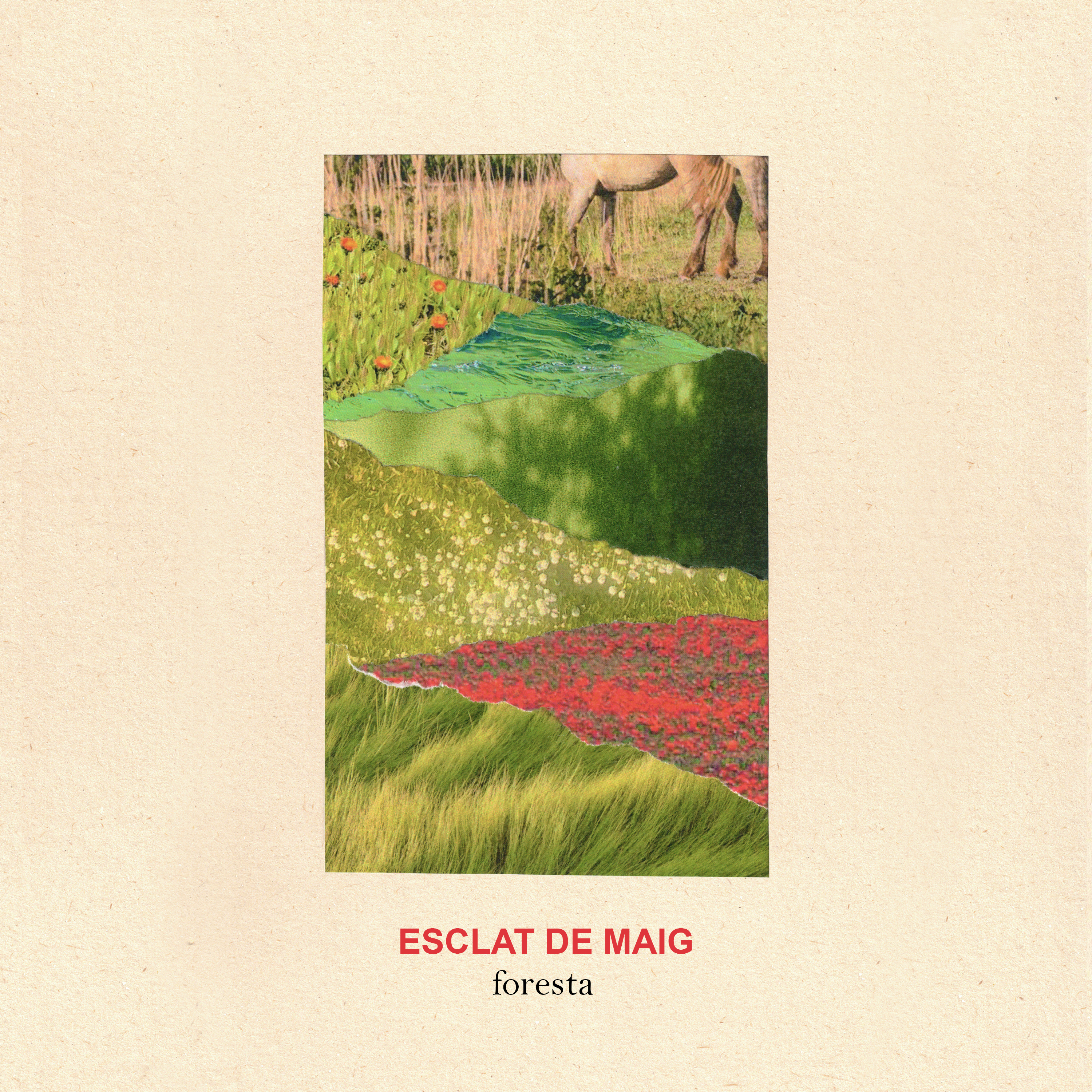 Foresta is a group of young musicians from Catalonia who present the folk tradition of their region in the form of Irish and American folk songs. The result is an appealing blend of the familiar guitar and fiddle based tunes of Appalachia and Ireland with lyrics in the Catalan tongue.
The core of Foresta are two composers and singers, multi-instrumentalist Ion Cortada and fiddler Marta Pairó, who got together in 2023 to explore American and Irish folk music in a Catalonian setting. On this, their first record, Ion mostly plays acoustic guitar and a little diatonic accordion. They’re joined on various tracks by Martí Quevedo on mandolin, Joan Tomàs on double bass, and Marta Palou on diatonic accordion.
Like many Catalonians, the Forestas have a strong tie to the land in their native region of Girona, which is in the extreme northeast of Iberia, bordering France and the Mediterranean (the band’s name is a bit of wordplay that can be interpreted both as “outsider” and “forest”). Their first single, the very appealing “L’últim dia de quatre camins,” which was inspired by the “Route of the Four Refuges” trail from the Mediterranean to the Pyrenees, is about hiking, the outdoors, and friendship.
You’ll likely recognize some of the melodies here, like the one used for “Els mals amants,” (the bad lovers) which has appeared in “Sweet Betsy From Pike” among others. “Una ombra d’alzina,” a parable about an ancient oak, is another in waltz time, featuring just Ion and Marta in a guitar-fiddle duet with harmonized vocals, and some subtle bass from Tomás. Not sure who’s playing the banjo in “La meva Louisiana,” but it’s a nice addition to the sound. “Tots els amics de Barcelona” (all the friends from Barcelona) is a quick-stepping reel with some very nice fiddling from Marta. Altogether, a very nice debut.
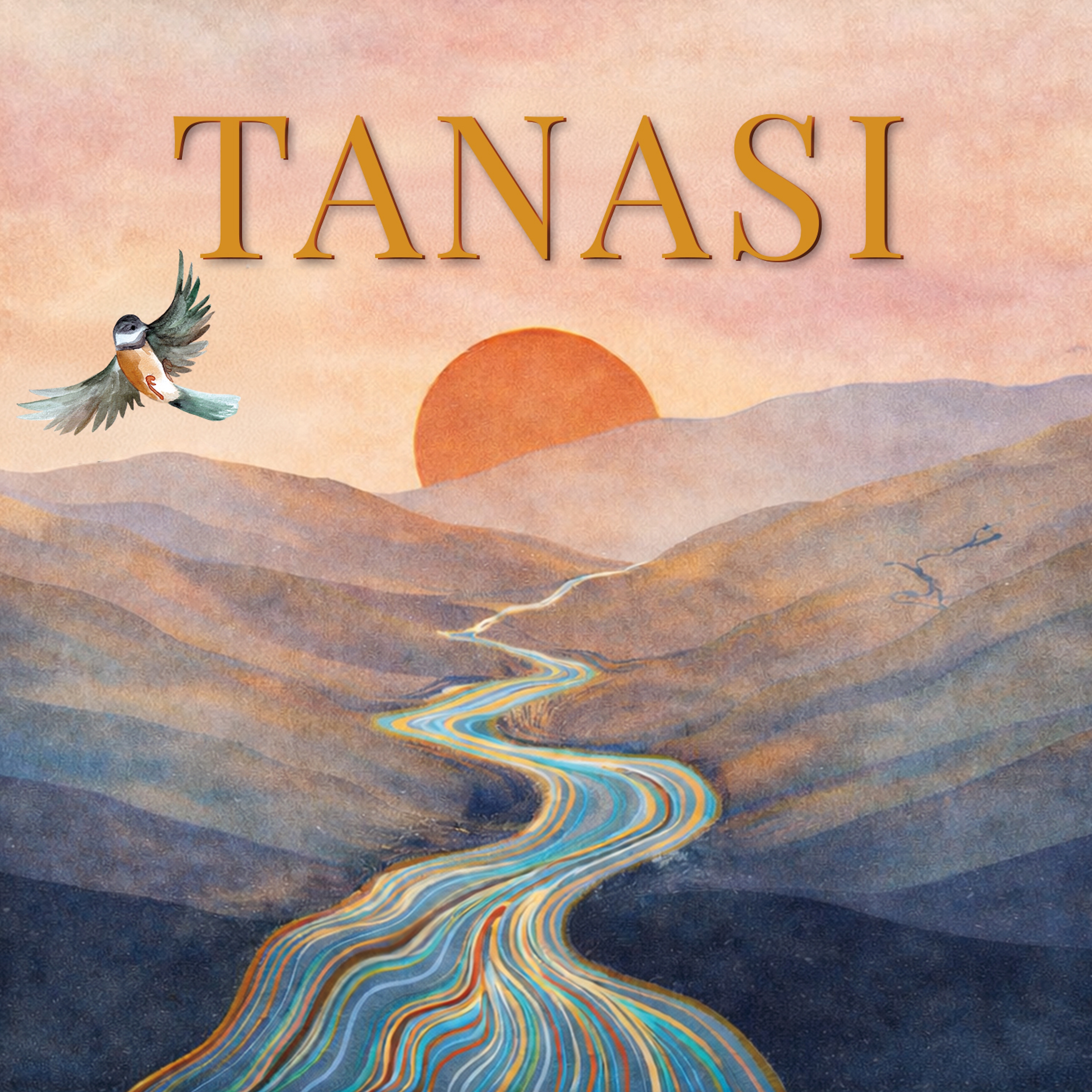 Similar to the way Foresta sets Catalonian folk songs to Appalachian and Irish music, the U.S.A. based worldgrass band Tanasi translates African and South Asian tunes and songs to an American stringband setting. As their press release says, not so much shoehorning one style of music into another, but finding “the natural meeting points where rhythm, melody, and human connection overlap.”
Tanasi’s core is the trio of Billy Cardine on Dobro and other slide instruments, Anya Hinkle on guitar, and Mary Lucey on banjo and upright bass, and Hinkle and Lucey sing, mostly in duets. They’ve got some serious cred, having appeared on stages and at festivals from Carnegie Hall to Bonnaroo to MerleFest, and they’re recipients of a National Endowment for the Arts 2025 USArtist International Grant. Cardine has collaborated with major international artists such as John Paul Jones, Edgar Meyer, Jerry Douglas, and Debashish Bhattacharya, while Lucey has been in top contemporary string bands The Biscuit Burners and Uncle Earl, and Hinkle is an award winning songwriter and solo artist.
Cardine is recognized as a pioneering voice in modern slide work, collaborating with artists including John Paul Jones, Edgar Meyer, Jerry Douglas, and Debashish Bhattacharya. Lucey helped define contemporary string band music through The Biscuit Burners and Uncle Earl, while Hinkle is an award-winning songwriter with internationally celebrated solo releases.
Together they make some sweet music that any lover of modern stringband music will celebrate. For myself, I’m very happy when the Dobro and other slide instruments take center stage, and Cardine’s instrument does just that here. Add to that the close harmonies of Hinkle and Lucey and there’s just so much to like here. Case in point the first single and opening track “Mahalla / Let’s Hold On,” a South African tune they learned from musicians there and to which Hinkle added some English lyrics. Coloradan Cody Wright plays an electric bass on this one that highlights its South African origins.
In a similar vein “Get Up/Ore Mi Kini Se” was inspired by a traditional West African Yoruba chant, the banjo, Dobro and guitar standing in for traditional percussion instruments in a layered polyrhythmic pulse. Once again, contemporary lyrics in close harmony are a nice touch.
The two sing wordless vocals on the jazzy “The Fif” which sounds like it was influenced by Bhattacharya. Purely instrumental tracks include the Dobro-forward “Pickin’ in the Pines” and the suite “Rock the Cradle Joe / Ducks on the Millpond,” the first part of which puts Lucey’s banjo front and center, with lots of physical percussion in the second part. And there are two sweet song covers: Jimmy Cliff’s “Many Rivers to Cross” is a deeply felt version inspired by the devastation of Hurricane Helene, and George Harrison’s “Give Me Love (Give Me Peace on Earth)” feels especially relevant right now, and everything you could ask for in a bluegrass cover of a Beatle’s song.
Highly recommended to fans of contemporary bluegrass and stringband music in all its forms.
(Sweet Megg self released, 2026)
(Far Cry/Thirty Tigers, 2026)
(Microscopi, 2026)
(Tanasi self released, 2026)
