
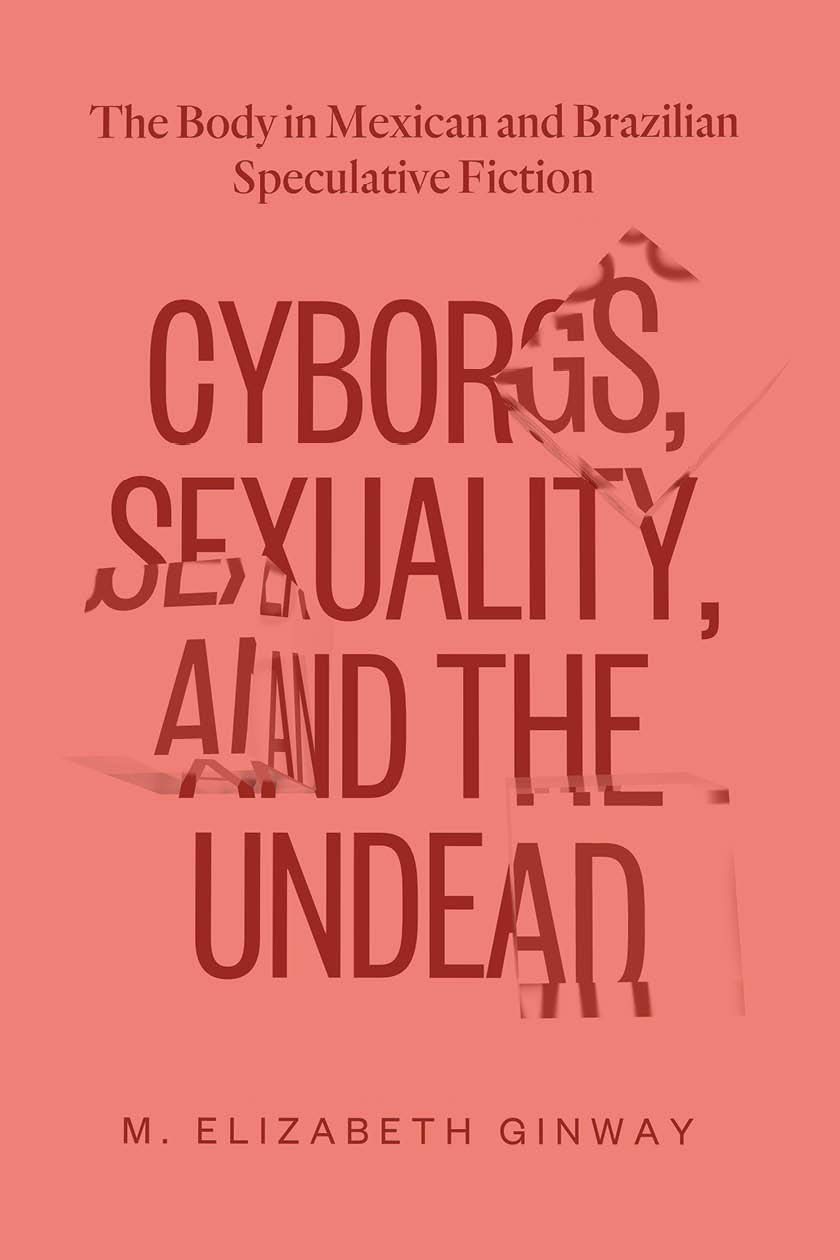
 Cyborgs, Sexuality, and the Undead: The Body in Mexican and Brazilian Speculative Fiction by M. Elizabeth Ginway represents a very specific examination of parts of the Latin American genre scene. Like many literary examinations, this volume expands upon Ginway’s previous related work, holding it to focus upon Brazilian and Mexican works, as well as materials dealing with depictions of the body of a person in some fashion.
Ginway devides the book, after introductory explanations, into four chief sections. These deal in turn with Cyborgs, baroque queer issues of sexuality, zombies, and vampires. Mind, each of these is dealt with in a broad sense. As a result creatures somewhat unlike a modern view of a vampire or cyborg appear, to the point that a fully robotic figure is place into the cyborg section for the purposes of analysis. Similarly stories that simply play upon death in exchange for something are mentioned in the vampire portion, and the definition of zombies is wide enough that Invasion of the Body Snatchers receives a passing mention.
Most of the materials covered follow fairly clearly, with subdivisions in metaphor and narrative the use of hearing for all (although the zombies get a special focus) which aids in categorizing these stories and interpretations of them. While this is over all extremely effective, it does we need to read least one questionable element.
The second section seems the most obviously out of place, as the other three deal in specific rypes of SF entities as they relate back to the body and various themes. While the material in this section does deal with the body and theme, it has a slightly more nebulous focus than the others. This will not be appreciated by some readers, though the contents are still of great interest.
A fair amount of work has been done in an effort to make the text more approachable. This includes translations of all material quoted from pre-existing stories, each sitting alongside the original text. These parallel sources are invaluable, allowing those not fluent in Spanish to follow the arguments and evidence presented, while leaving the original escripts available for those with the necessary skills. Citation and summarization are also used frequently, helping to familiarize someone for whom various Works might be less familiar. For an english language volume dealing with works primarily popular in Spanish, this is again very easy to appreciate.
A wonderful index is included, as are incredibly detailed notes as to references and citations which are given only a nursery number and few words in the text proper. The bibliography is also quite extensive, and will be extremely useful to any reader who wishes to look up the material is referenced in the text. In particular the many century or more old stories and novels from Mexico and Brazil each have an entry, and provide a wealth of stories which has not yet fully penetrated the American consciousness.
This book will be difficult for those who are not familiar with academic writing, as well as those who flat a significant amount of background in the chosen areas, both Geographic and conceptual, of study. Ginway does well to provide background for readers, however this is not a substitute for existing familiarity. To those interested in the subject matter, it is well worth a read. To those who are familiar with none of it, it may not be the place to start.
(Vanderbilt, 2020)
