
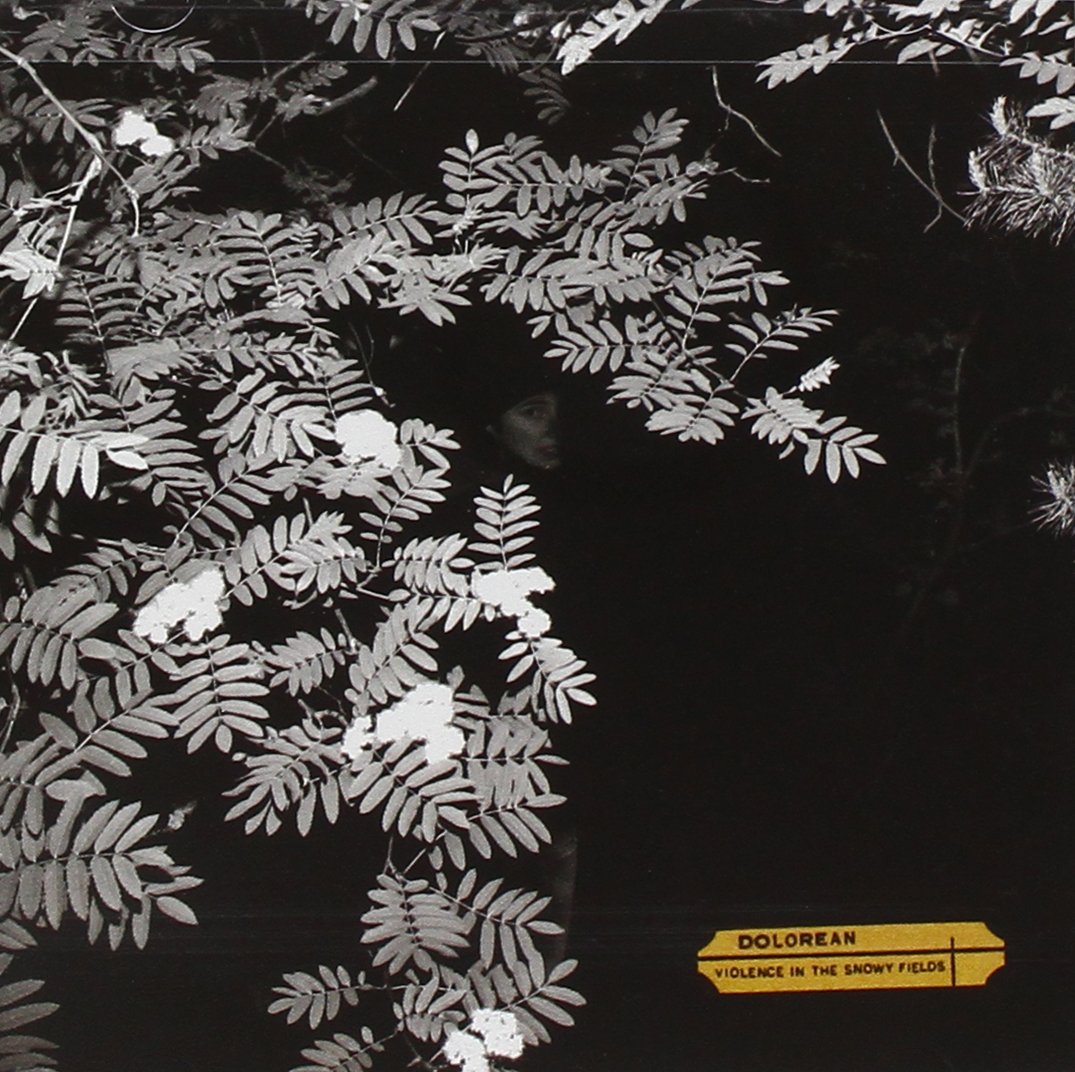
 No sophomore slump here. In fact, quite the opposite. Dolorean, the Portland, Oregon, based combo fronted by Al James, has followed its 2003 debut Not Exotic with a knockout of a record. Where their previous effort was pared down to the basics, Violence in the Snowy Fields is more textured, more nuanced, and more truly a band record.
For someone who wants to make country-flavored folk music, James is a fan of all the right musicians. Folks like Townes Van Zandt and early, demo-era Willie Nelson, but he channels them through his thoroughly modern taste, with echoes of Nick Drake, Elliott Smith and other confessional songwriters. And he’s not averse to laying on some Harvest-style rock and some Byrdsian harmonies — with both the beat and the backing vocals supplied by drummer Ben Nugent.
This record resonates with lots of biblical allusions, if not outright quotes of the Good Book. James states his thesis pretty directly in the opening track “The Search,” a country shuffle with piano and acoustic guitar, plus some jangly guitar in the middle eight. “Where is the place of understanding/where can wisdom be found?” he asks in the harmony-drenched chorus, paraphrasing the book of Job in the Old Testament. And the title track, which starts off the second half of this short album, takes us right to the end of the New Testament, as he welcomes the coming of the horsemen of the apocalypse: “I may go down in flames, but I shall not burn,” he says. More of those sweet harmonies, with the beat and guitars of the aforementioned Harvest-era sound.
I don’t find much irony anywhere in the album, which is refreshing after a decade when that was the chief mode of operation. Except perhaps in “The Righteous Shall Destroy the Precious,” a creepy first-person dirge of anticipated vengeance: “The chaff must be burned away,” the singer intones, and he’s the one who knows wheat from chaff.
Elsewhere, James’ characters aren’t quite so sure of themselves. In “Holding On,” the protagonist admits being unwilling to let a relationship end: “I’m holding on … to everything,” he sings in a reverb-drenched voice of deep melancholy, backed in this slow waltz by Jay Clarke’s vibes and a pair of mournful violins. That kind of obsessive love crops upagain and again. In “To Destruction,” an ecstatic love song with dark overtones, the singer laments that he’s on his way down and he’d like to spend some time with is lover before he gets there: “Your arms are the place I like the best,” he says, over pedal-steel accents and twangy baritone guitar. The character behind “My Grey Life” sings “I believe in second chances/for everyone but you,” to a quiet arrangement of acoustic guitar and cello. And the final track, “In the Fall,” reports a creepy attempt by the singer to drown himself out of frustrated love: “But it was dark and cold, so I swam to the surface and I went home…”
Even the tender moments have their dark side. In “Dying in Time,” the protagonist tells his lover he thinks they should die at the same time … preferably after a long life together. And the fellow in “Put You to Sleep” is singing a lullaby to comfort his lover, who has recurring nightmares of violence — but are her memories of violence at his hands, or another’s? Good question.
Dolorean’s enigmatic Violence in the Snowy Fields is a refreshingly lovely record, simple in sound but not simplistic in its portrayal of complex emotions and relationships.
(Yep Roc, 2004)
