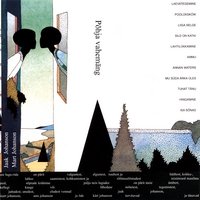
 The Johanson family of Talinn, Estonia, have been making music for more than two decades. In the tradition of singer-songwriters the world over, they combine traditional material with their own songs and tunes, often using poems from their own and other lands as lyrics. The nucleus of the group are brothers Jaak and Mart Johanson, who both play guitar and sing. They are occasionally joined by brother Ants and sister Kart, and, on Globus Diei by other musicians as well. And they frequently frame their songs with recordings of the world around them: sounds of nature, particularly birds, and people in public or semi-public places like bus stations, pubs and waiting rooms. Some of these ambient recordings were made by Jaak Johanson, and some are from existing sources.
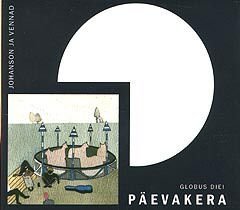 A couple of guys singing and accompanying themselves on guitars is the formula for folk music in Estonia as in many other places around the world. The Johansons’ version is fairly lively and engaging, in part because it’s delivered in Estonian, an unfamiliar language that’s full of rolled Rs and other interesting sounds. The songs sound similar to some Nordic folk songs, except for the way a lot of syllables are often crammed into one phrase.
Nordic Interlude is a recording of songs the Johansons gathered from 1980-1990, recorded live in 1993, released on cassette and CD. Globus Diei is a similar collection, recorded in 2000. Mart has a beautiful tenor voice and Jaak a light baritone that are very effective as a duo. And when their other brother and sister join in, they’re a wonderful quartet.
Some of the best songs are unaccompanied solos and duets. Nordic Interlude opens with Jaak and Mart singing a capella the traditional “runo-song” titled “Boatbuilding.” Kart sings unaccompanied except for the sound of a rainstorm on the sing-song “Broken Bridge,” a children’s game song. The four do a very lovely version of the traditional Irish ballad “Annan Waters,” in English no less. And the disc closes with another a capella song, a hymn of sorts learned from their grandfather, “Father’s Words,” which fades out into the sound of a nightingale in the forest. Nordic Interlude‘s title track is a solo Nordic fiddle set against the background of travelers boarding a ship.
Globus Diei is less varied in content, consisting mostly of guitar-and-vocal songs by one, two or four voices. The main exception is “Song Festival,” a pastiche of short songs and recorded soundscapes. Some of the best cuts are the old folksongs, such as the opening track, “Herdboy,” the closer, “Old Sauna” (Kart singing) and “Game of Rich and Poor,” which sounds like a field recording.
All in all, a little more variety would help these recordings. But throughout, the music and performances are exemplary. It’s fine introduction to the folk music of a country that’s under-represented on the world music scene.
(self-released, 1993 and 2000)
